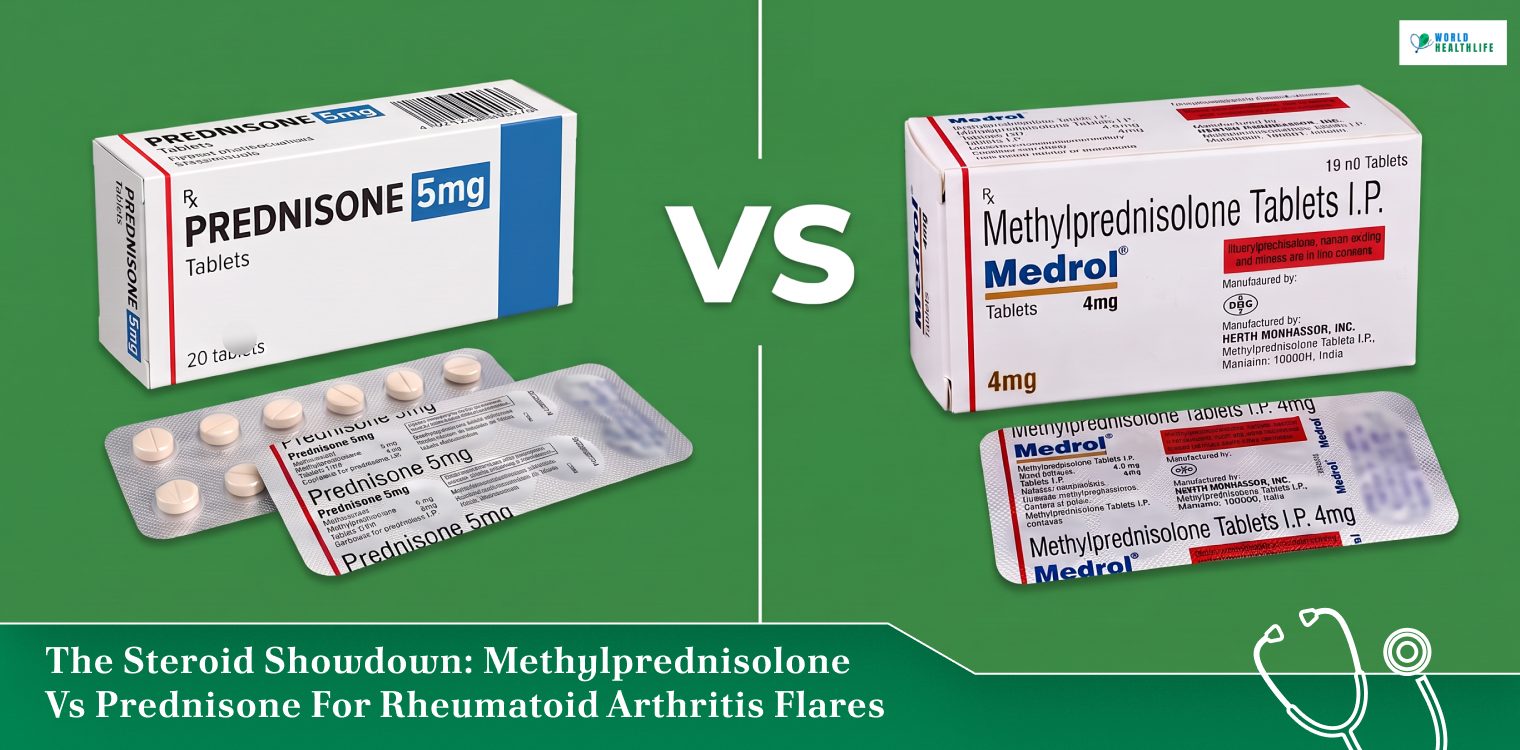
If you are suffering from rheumatoid arthritis, then you must have heard about the effectiveness of anti-inflammatory drugs. So, which one is better between methylprednisolone vs prednisone, for treating rheumatoid arthritis?
Before people get to know about the difference between the two. It is always best to know why something is prescribed for a condition. For instance, both methylprednisolone and prednisone are effective for many conditions.
Out of the many, rheumatoid arthritis sees a significant reduction with the use of either of the two drugs. Moreover, as the medication is only available through a prescription, it makes it less prone to drug abuse.
In case you are someone who wants to know the answer to this, you have reached the right place. The following article will be talking about which medicine is better for the treatment of RA. So, keep reading till the end to learn more.
What Is Rheumatoid Arthritis?

Before talking about the comparison and difference between methylprednisolone vs prednisone, let me tell you a little about what rheumatoid arthritis is.
Rheumatoid arthritis is one of the most common autoimmune diseases that affect the joints and bones of the body. This is a chronic inflammatory disease that affects the joints of mainly the hands and the feet.
Just as in the case of any autoimmune disease, the immune system of the body attacks the healthy tissues of the joints in the case of rheumatoid arthritis. As a result of this, you can experience painful swellings over a long period of time.
Methylprednisolone Vs Prednisone

Thankfully, there are a number of medicines that are available to treat rheumatoid arthritis. Two of the most common ones are methylprednisolone and prednisone.
Methylprednisolone: What Is It?

One of the most popular medicines that are used to treat arthritis and rheumatoid arthritis is methylprednisolone.
It is a corticosteroid used to control the body’s defective immune system and prevent it from attacking healthy joint tissues.
This medicine is available as an injectable and an oral solution. It can also be taken as a tablet.
Popular brand names for this medicine include Medrol and Solu-Medrol.
Methylprednisolone: Side Effects
There are a number of side effects that this medicine causes. And these side effects can be both mild or severe. Some of the common side effects of methylprednisolone are as follows:
- Nausea
- Vomiting
- Dizziness
- Trouble sleeping
- Increased sweating
- Changes in appetite
- Heartburn
- Acne
Here are some of the serious side effects of methylprednisolone that you need to take a look at:
- Rose in blood sugar
- Unusual weight gain
- Depression
- Changes in the menstrual cycle
- Extreme joint pain
- Slow wound healing
- Seizures.
Prednisone: What Is It?

Similar to methylprednisolone, prednisone is also a corticosteroid that is prescribed to patients who are suffering from arthritis. More specifically, from rheumatoid arthritis.
However, that is not the only condition this drug is used for. It also treats other immune system disorders, cancer, allergies, and even breathing problems.
While methylprednisolone is frequently given via standard injections, prednisone itself is primarily prescribed as an oral tablet or liquid solution.
When an intravenous (IV) version of this specific compound is required in clinical settings, medical professionals will typically administer prednisolone.
That is the active form that prednisone converts into inside the body.
Prednisone: Side Effects
Similar to methylprednisolone, there are a number of side effects that may arise when you take prednisone. Some of the common side effects of taking prednisone are as follows:
- Nausea
- Vomiting
- Heartburn
- Increased sweating
- Trouble sleeping
- Acne
Here are some of the serious side effects of taking prednisone that you need to take a look at:
- Arrhythmia or irregular heartbeat
- Muscle cramps
- Unusual weight gain
- Fever
- Sore throat
- Mental health or mood swings
- Abdominal pain.
How Do They Work?
Methylprednisolone acts as an intermediate-acting synthetic glucocorticoid. It is nearly 5 times more potent than cortisol or hydrocortisone.
This increased potency does not mean it causes five times the side effects.
Instead, it simply means that a smaller biological dose of methylprednisolone is required.
In turn, this helps to achieve the exact same anti-inflammatory benefits as a larger dose of standard cortisol.
Methylprednisolone Vs Prednisone: Similarities

If you are looking for similarities between methylprednisolone and prednisone, the most important is that both are corticosteroids. This means they have almost similar effects on the body.
Both medicines reduce inflammation in the bones and suppress the immune system so it does not attack healthy tissues.
Not only do these medicines work to do the same thing, but they also have similar side effects.
For example, both medicines share similar common side effects.
They include irritability, agitation, and indigestion. They can also cause facial hair growth in women and increased blood pressure.
Methylprednisolone Vs Prednisone: Differences

However, there are a number of differences between the two as well. The first and the most obvious difference between these two is the fact that they have different brand names. While the common brand name for prednisone is Rayos, that for methylprednisolone is Medrol.
There is another difference between these two medicines. And that is the nature in which they are available.
For example, while methylprednisolone is available in the form of a tablet and an injectable, prednisone is available in the form of a tablet and an oral solution.
However, there is another difference between the two medicines.
The main difference between methylprednisolone and prednisone is the fact that one is slightly stronger.
Moreover, it is more effective than the other. But that also depends on the form of the drug that you are taking.
Methylprednisolone Vs Prednisone: Which One Should You Choose?
There are several points of comparison for both the drugs that help assess their efficacy for a condition. Here we are with all the essential points that can help you make the call:

| Point of comparison | Methylprednisolone | Prednisone |
| Drug type | Corticosteroid | Corticosteroid |
| Brand name | Medrol, Solu-Medrol, Depo-Medrol | Rayos |
| Form | oral tablet, oral solution, injectable | Oral tablet, oral solution |
| Term of treatment | short term | short term |
| Side effects | Headache, nausea, indigestion acne | Loss of appetite, trouble sleeping, acne, nausea |
This is one of the things that mostly affects people who are choosing the medicines. So, which one should you choose?
If a rheumatoid arthritis flare is severe and the pain is debilitating, your doctor might choose an injectable form of methylprednisolone.
This helps rapidly reduce severe autoimmune inflammation and provides much quicker relief by bypassing the digestive tract.
However, please note that steroids should never be used to treat infections.
Because these medications suppress the immune system, taking them during an active infection can make it significantly worse.
However, if a child is suffering from rheumatoid arthritis, you should opt for prednisone. This is because the oral solution of prednisone is much more effective and less harmful than oral methylprednisolone.
Methylprednisolone Vs Prednisone Strengths
Both methylprednisolone vs prednisone has varying strengths in which they work and display their effectiveness. The drugs have almost similar effectivity when looking at the conditions they treat – from inflammatory conditions to ulcerative colitis.
In terms of strengths, methylprednisolone is stronger than prednisone – it is evident through the following. For a particular condition, 4 mg of methylprednisolone works the same as 5 mg of prednisone.
This implies that the former has the same effectiveness as prednisone even at a lower strength.
The Liver Connection: How Your Body Processes Each Drug
While both medications perform similar anti-inflammatory duties, your body processes them very differently.
Prednisone is a prodrug. This means it is inactive when you swallow it.
Additionally, your liver must first metabolize and convert it into its active form, prednisolone, before it can fight joint inflammation.
On the other hand, methylprednisolone is already in its active state. It does not rely heavily on liver conversion to start working.
For individuals with compromised liver function or specific metabolic differences, a doctor will often prefer methylprednisolone because its efficacy is more predictable.
Crucial Warning: Why Corticosteroids And Infections Don’t Mix
It is vital to understand that while a rheumatoid arthritis flare causes intense pain, this swelling is an autoimmune response. Also, it is not an infection.
Because both methylprednisolone and prednisone work by suppressing an overactive immune system, they weaken your body’s ability to fight off bacteria, viruses, and fungi.
If you are suffering from an active infection taking either of these medications can cause the infection to spread rapidly and become life-threatening.
For instance, avoid it when you are suffering from a urinary tract infection, pneumonia, or an open, infected wound.
Furthermore, always disclose any recent fevers, chills, or illnesses to your physician before starting a steroid regimen.
The Tapering Rule: Why You Can Never Stop Suddenly
Your doctor may prescribe a Medrol Dosepak, which is methylprednisolone, or a round of prednisone. In that case, you must never stop taking these medications cold turkey.
When you take synthetic corticosteroids, your adrenal glands stop producing your body’s natural cortisol.
Stopping abruptly can crash your system, causing acute adrenal insufficiency. This leads to severe fatigue, dizziness, vomiting, confusion, and a dangerous drop in blood pressure.
Your healthcare provider will always provide a strict, gradual step-down schedule (taper) to safely wake your adrenal glands back up.
Manage Your RA Flare Effectively
When weighing methylprednisolone vs prednisone, there is no universal “winner.”
Methylprednisolone offers slightly higher potency milligram-for-milligram and bypasses the need for liver conversion, making it excellent for rapid relief.
Conversely, prednisone remains the highly effective, deeply trusted workhorse of systemic autoimmune treatment.
Ultimately, the choice depends entirely on your specific liver health, how your body tolerates side effects, and your doctor’s preferred dosing strategy.
Whichever option you are prescribed, remember that steroids are powerful tools designed for short-term control.
Moreover, always follow your tapering schedule precisely, monitor for side effects, and keep an open line of communication with your rheumatologist.
Disclaimer: The information provided in this article is for general informational purposes only. It does not, and is not intended to, constitute medical or health advice. Please consult a qualified healthcare professional for medical guidance or expert health assistance.