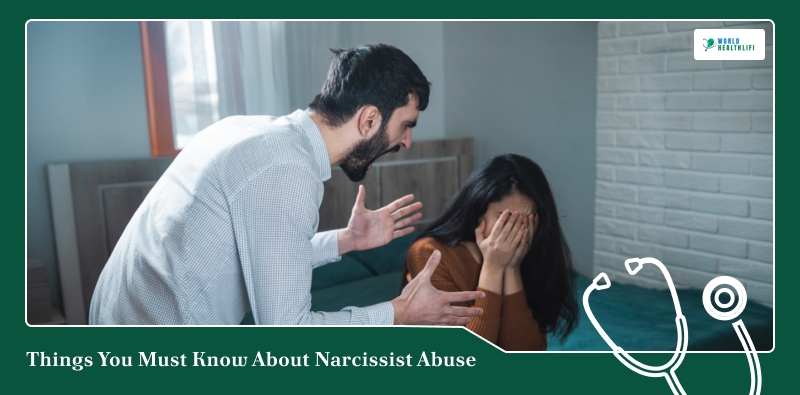
You’re sorry again. This time, you don’t even know what your fault is! Now you are replaying the argument in your head.
In reality, you are desperately trying to figure out where it went wrong. The worst part is that somehow, every time, you end up back at the same conclusion. In other words, it is your fault. Your overreaction. Your sensitivity. Every time.
If you still think the other person loves you, you are wrong. This is not love. Psychologists call this narcissist abuse. The worst part is that millions of people live every day, suffering narcissist abuse.
However, they are not aware of what is happening to them. Even they don’t know who is to blame for the brawls that occur every day. If not them!
What Actually Is Narcissist Abuse?
Narcissist abuse is the result of manipulation, control, and emotional torture by someone with narcissistic traits. You cannot identify it easily. Narcissists make it seem like they actually care about you.
Most importantly, there is no physical bruise. That’s why people do not initially accept that you are suffering from abuse. In fact, you also look charming and cheerful every day.
The point is that you don’t have a visible reason to sulk or complain. However, that’s what makes narcissist abuse so dangerous.
Who Actually Suffers From Narcissist Abuse?
Above all, it happens in romantic relationships. However, it can also be between parents and children. Or, between friends, colleagues, and bosses. In other words, wherever there’s a power dynamic, a narcissist will find a way to exploit it.
Pro Tip To Identify Narcissists:
Between phases of cruelty, they will behave in a warm, caring way. In addition, you will often find them apologizing. But do you know what confuses victims the most?
Narcissists often act as the person they were in the beginning. In other words, a person with zero toxic traits or personality issues. Again, that’s where you feel that they deserve a second chance.
Or it will be really wrong to leave them when they are trying to act better now! However, what you fail to realize is that it is a massive cover-up for their narcissism.
The Signs of Narcissist Abuse (That Are Easy to Miss)
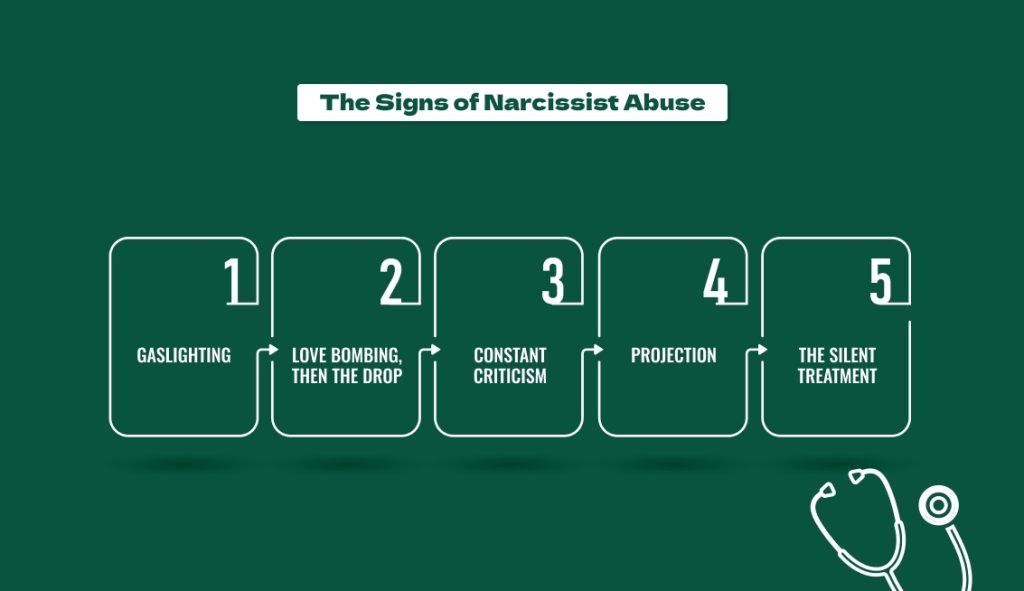
Narcissists don’t hand you a list of rules on day one. However, they slowly start to take control of you. So, by the time you realize that they are toxic, you are deeply involved in the relationship.
But let me tell you some signs that will help you to detect an obvious narcissist before you start facing episodes of narcissist abuse:
Gaslighting
What is gaslighting in simple terms? You bring something up. However, the narcissist denies it happened. Or they say it happened differently. Or they tell you you’re too sensitive.
To clarify, they portray that you’re imagining things. Gradually, they make you feel that you always do this. After enough rounds of this, you stop trusting your own memory.
But by now, you are trapped. Again, how do you know that you are trapped?
You start double-checking yourself constantly. Most importantly, you apologize just to end the argument. Even when you know, somewhere deep down, that you were right. That’s how gaslighting works.
Love bombing, then the drop
Early on, narcissists shower you with attention. So much so that it feels almost overwhelming, but if you don’t realize that it’s a trap, you can’t defend yourself when the drop hits you. incredible.
So, what does love bombing look like? To clarify, you will hear constant compliments. Or a cozy discussion on plans. However, the warmth gradually disappears.
But you start feeling insecure. In other words, you start to doubt and even blame yourself. In most cases, the victims feel they did something wrong that annoyed the other person.
Constant criticism
This is a critical trait that you cannot ignore from day 1. Does nothing you do feel right to your partner? You should know that this is a common form of narcissist abuse.
To clarify, they find fault in the way you talk, dress, or handle the situation at work. It’s nitpicking dressed up as concern. Above all, this attitude will grind your confidence. Not only in your relationship, but also in your private space and work life.
Projection
Psychologists believe that projection is the worst toxic trait of narcissists. At first, they will lie in the relationship, now and then. Again, I am not talking about only cheating here!
But they won’t stop there. However, they will accuse you of lying instead. Again, they will use this as a window to emotionally move away from you. But when you ask them, they will tell you that you have been acting coldly!
But that’s not the only pattern. However, the basic trend remains the same every time.
The silent treatment
It usually happens when you start defending yourself. They will stop complaining or alleging. Just plain and simple withdrawal.
However, they will come back again after some days and act as if nothing happened in between.
The Cycle That Keeps You Stuck
One of the most important things to understand about narcissist abuse is that it follows a pattern. Every time.
It starts with idealization. It is that early phase where they make you feel like the most special person in the world. You’re their person. They’ve never felt this way before. Everything is electric.
Then comes devaluation. In this stage, you start facing criticism. You also notice coldness in behavior.
For example, you will witness moments of cruelty that come out of nowhere. But right after, you will experience sweetness. This feeling will make you question whether the cruelty really happened.
Then you will face discard. In other words, you will face emotional withdrawal. Sometimes physical abandonment. In other words, you’re left confused, heartbroken, and desperately trying to understand what you did wrong.
After that, when you are just about to find your footing, you will face hoovering. In this stage, your narcissist partner comes back. Often, with apologies. Maybe you will get a glimpse of the person whom you actually loved on day 1. And the whole thing starts over.
This cycle can repeat for years. Decades. But the longer it goes on, the more it damages you. That’s because you start to believe the highs are real and the lows are your fault. Whereas, they’re not. Both are part of the same calculated pattern.
What Narcissist Abuse Does to Your Mind and Body?

A lot of people don’t do anything when they face narcissistic abuse in the early days. However, it leaves a major impact on people. But have you wondered why you cannot fight back?
You are not weak. But constant manipulation actually changes the way you think. It also changes the way you see people.
A lot of people go through the Narcissistic Abuse Syndrome. Its symptoms are very similar to those of PTSD. The typical symptoms are:
- Flashbacks
- Difficult Breathing
Healing After Narcissistic Abuse
The healing process is not easy. But why?
The reason is that you are caught in confusion. For a few days, you will think that everything is sorted. Most importantly, you will feel completely relieved. But just after that, the doubt will hit you again.
But don’t lose hope. This back-and-forth feeling means you are actually healing gradually. Just be patient! BUt you need to clarify whether it’s narcissist abuse or reactive abuse you are suffering from.
Reactive abuse is much different. But here the victims are compelled to reach by pushing them beyond the threshold tolerable limit.
After some days, you will be able to spot the pattern of toxicity. That’s when you will act cautiously and avoid unnecessary brawls. Most importantly, you will not let the other person take control of your emotions.
If This Feels Familiar
Can you now see that you are also a victim of narcissist abuse? Are you also living your days among apologizing and self-editing?
Just know that this is true. You actually have a narcissist partner. Again, you are really encountering narcissist abuse.
Most importantly, it is time to realize that you are not the problem or its source. So, stop succumbing to all the blame.