Imagine your heart as a highly efficient house. The internal plumbing relies on four tiny, flawless doors. Moreover, these doors are the mitral, tricuspid, aortic and pulmonary valves.
They need to swing open completely and snap shut tightly with every single heartbeat.
On the other hand, when you develop valvular heart disease, those dependable doors start to fail.
Either they become too stiff to let blood pass through smoothly, or they become loose and floppy. As a result, blood goes backward into the heart’s chamber.
This mechanical failure forces your heart to work twice as hard just to keep your body oxygenated. Additionally, this leads to wear in your muscles over time.
What makes the disease so dangerous is its quiet progression. During the early stages, your body is incredibly good at compensating for a faulty valve. This means you might feel completely fine while the structural damage worsens slowly.
In developed countries, this damage is usually caused by simple wear and tear as we age, alongside calcium buildup that turns once-flexible tissue into stone.
However, on a global scale, untreated bacterial infections like rheumatic fever still destroy thousands of heart valves every year.
Because a malfunctioning valve directly threatens your entire circulatory system, understanding how to recognize the early warning signs is a significant aspect.
Besides that, the following guide will ensure you are able to identify the specific type of valve failure. Also, you will be able to explore modern and minimally invasive treatments, which are absolutely vital for protecting your long-term health.
The Risks Of A Faulty Pump: Understanding The Two Mechanical Failures
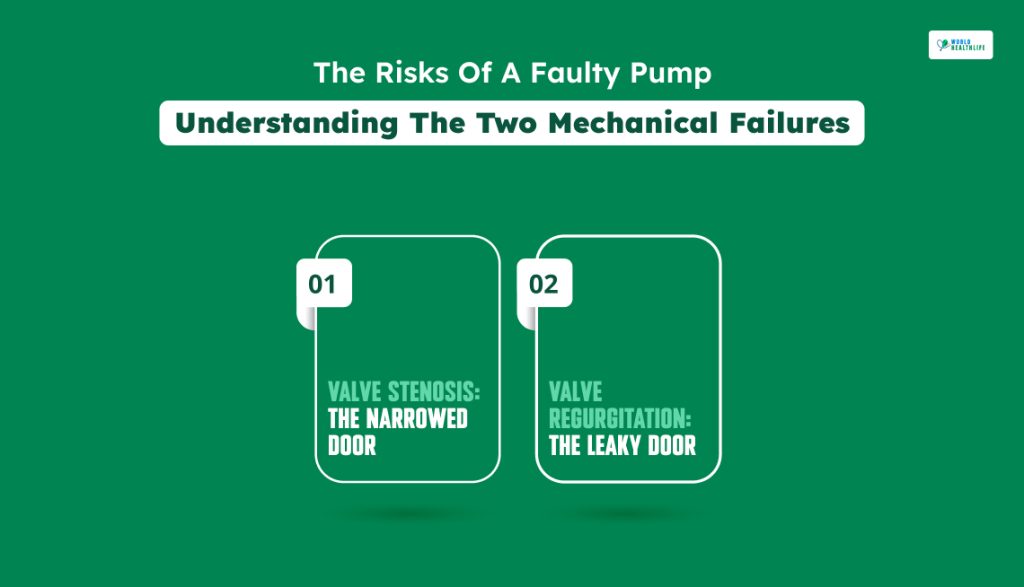
To fully understand how valvular heart disease disrupts your body, you first need to look at the two distinct mechanical errors. These can happen to these delicate tissues.
Valve Stenosis: The Narrowed Door
Valve stenosis occurs when the valve flaps become stiff, thick, or fuse together. Additionally, the opening becomes incredibly narrow, restricting forward blood flow.
This forces the heart muscle to pump with massive pressure just to push blood through the tiny gap.
Valve Regurgitation: The Leaky Door
When it comes to valve regurgitation, the occurrence is due to valve leaflets not close tightly. Instead of sealing shut, they let blood leak backward in the wrong direction.
As a result, your heart ends up re-pumping the exact blood over and over again. This leads to severe volume overload.
Recognizing The Signs: Common Symptoms
Many individuals living with early-stage valvular heart disease experience no symptoms. However, the structural degradation will eventually progress.
Once the heart gets tired of overcompensating, noticeable physical warning signs emerge.
- Shortness of Breath or Dyspnea: Feeling completely winded during light walks is a primary sign. It can also happen while lying flat in bed. This occurs because fluid backs up into your lungs.
- Chronic Fatigue: This is a persistent, heavy exhaustion that sleep cannot fix. It is triggered by a drop in your heart’s overall oxygen delivery.
- Chest Pain (Angina): You may feel pressure, tightness, or sharp discomfort. This pain typically flares up during physical exertion.
- Heart Palpitations: A scary, fluttering, or skipped-beat sensation can occur. The heart beats erratically to overcome the faulty valve.
- Peripheral Edema: This is stubborn fluid retention, causing visible swelling in your ankles, lower legs, or abdomen.
Symptom Overview Matrix
| Symptom Name | Immediate Sensation | Underlying Cause |
| Shortness of Breath | Feeling completely winded during light walks. It also happens when lying flat. | Fluid backs up into your lungs. |
| Chronic Fatigue | Persistent, heavy exhaustion. Regular sleep cannot fix this tiredness. | A drop occurs in overall oxygen delivery. |
| Chest Pain | Pressure, tightness, or sharp discomfort. It flares up during physical exertion. | Massive physical strain hits the heart muscle. |
| Heart Palpitations | A scary, fluttering sensation. You feel skipped heartbeats. | The heart beats erratically under pressure. |
| Peripheral Edema | Stubborn fluid retention. It causes visible swelling in lower limbs. | Fluids accumulate in ankles and abdomen. |
The Structural Anatomy: Core Types Of Valve Disease
The impacts brought in your body by valvular heart disease vary on the basis of the damaged location.
Moreover, it is also dependant on whether the valve is narrowing or leaking. The left side of the heart handles the hifghst pressures. Consequently, the aortic and mitral valves become the most common targets.
| Valve Location | Condition Type | Primary Impact on Blood Flow |
| Aortic Valve | Aortic Stenosis (AS) | Restricts blood moving from the left ventricle into the main aorta to feed the body. |
| Aortic Valve | Aortic Regurgitation (AR) | Blood leaks backward into the main pumping chamber, causing it to stretch and weaken. |
| Mitral Valve | Mitral Regurgitation (MR) | Blood escapes backward into the lungs during a contraction, causing severe breathlessness. |
| Mitral Valve | Mitral Stenosis (MS) | Blocks smooth blood flow from the upper left chamber down into the main pumping chamber. |
| Tricuspid Valve | Tricuspid Regurgitation | Right-sided backflow that frequently causes systemic body swelling and liver pressure. |
Clinical Frameworks: Staging And Diagnosis

Modern clinical guidelines look at more than just the presence of damage. They categorize valvular heart disease into four progressive stages. This system helps doctors map out an exact treatment timeline.
How Doctors Catch Valve Damage
The absolute gold standard for diagnosing structural damage is an echocardiogram. Specifically, doctors use a Transthoracic Echocardiogram (TTE).
This painless test uses ultrasound waves to create a live video. It shows your heart valves working in real-time. Doctors might need a closer look in complex cases.
Following this, they may order a Cardiac MRI or a cardiac catheterization. This measures the exact internal pressures of your heart chambers.
Stage A: At Risk
You possess risk factors like a congenital heart defect. You might have had a past infection. However, the valves still work fine.
Stage B: Progressive
Mild-to-moderate valve damage is officially present. Despite this structural change, you still have zero physical symptoms.
Stage C: Asymptomatic Severe
The valve malfunction is now officially severe. Even so, your body is still actively hiding the damage.
Stage D: Symptomatic Severe
This is advanced, critical valve failure. It causes overt symptoms like fluid buildup, severe dizziness, or heart failure.
Modern Treatment Options And Interventions
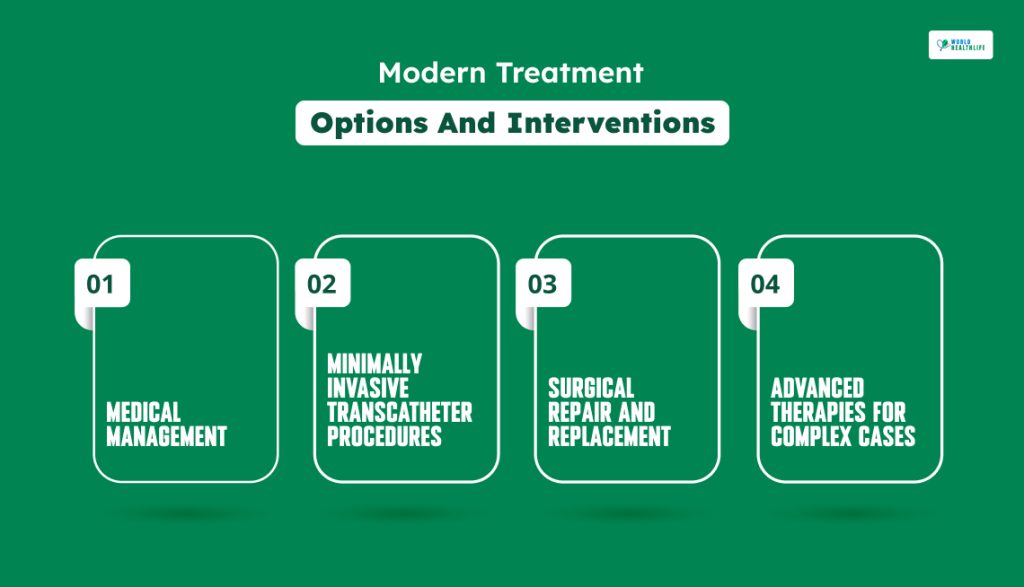
Managing valvular heart diseases requires a highly customized strategy. Furthermore, treatment puts a focus on easing active symptoms first.
Also, it protects your heart muscle from permanent damage, where doctors aim to repair or replace valves before heart failure sets in.
Medical Management
Medications cannot physically un-narrow a stiff valve. Furthermore, they also cannot fix a torn flap. However, they are excellent at managing daily symptoms.
Doctors routinely prescribe diuretics to flush out excess fluid. This clears the accumulation from your lungs and legs. They also use beta-blockers to slow down a racing heart rate.
Blood thinners are common to minimize the risk of dangerous clots.
Minimally Invasive Transcatheter Procedures
Interventional cardiology has completely changed the game. It offers options for high-risk patients who cannot undergo open-heart surgery.
TAVR / TAVI
This stands for Transcatheter Aortic Valve Replacement. A new biological valve is folded up inside a catheter. It is guided through an artery in the groin. Then, it expands directly inside the old, diseased aortic valve.
TEER
This means Transcatheter Edge-to-Edge Repair. It uses tiny clips delivered through a vein. These clips pinch leaking mitral or tricuspid valves. This instantly stops the backward leakage of blood.
Surgical Repair And Replacement
Whenever possible, surgeons prefer repairing your native tissue. They use specialized rings to preserve your heart’s natural shape. If the valve is completely destroyed, replacement is necessary.
They will use a long-lasting mechanical valve. This option requires lifelong blood thinners. Alternatively, they may choose a bioprosthetic valve made from animal tissue.
Advanced Therapies For Complex Cases
Sometimes valvular heart disease goes untreated for too long. The heart muscle can become structurally exhausted. This leads directly to end-stage heart failure. Standard valve fixes are no longer enough in these scenarios.
Advanced cardiac teams must step in with highly specialized therapies.
- Left Ventricular Assist Devices (LVAD): This is a mechanical, battery-powered pump. It is surgically implanted to help your weakened heart. It pumps blood to the rest of your organs.
- Heart Transplantation: Some individuals suffer end-stage muscle damage from valve failure. A total heart transplant offers the final, life-saving option for them.
Protecting Your System: Proactive Lifestyle Management
Slowing down the progression of valvular heart disease requires consistent daily habits. You must combine these habits with your medical treatments.
Simple lifestyle adjustments can take massive physical pressure off your heart valves.
- Strictly Manage Salt: Cutting down on sodium is crucial. It stops fluid from accumulating in your chest and lower limbs.
- Control Blood Pressure: Keeping your numbers low prevents excessive stress. It reduces tearing forces on your heart’s exit doors.
- Dental Antibiotics: This applies if you have an artificial valve. Taking prescription antibiotics before specific dental cleanings shields you. It prevents dangerous blood infections like endocarditis.
The Road Ahead: Long-Term Management and Outlook
Living with valvular heart disease requires a proactive mindset. You must maintain a consistent medical partnership. Valve damage often progresses silently. Therefore, keeping up with scheduled imaging studies is vital.
Regular cardiologist appointments help catch structural changes early. This prevents the condition from turning into an immediate crisis. Modern medicine has shifted the landscape entirely.
A diagnosis is no longer something to fear. Additionally, it is simply a condition to actively manage.
You can avoid the worst complications of heart failure. To do this, combine early diagnostic tools with tailored medications.
Utilize cutting-edge, minimally invasive procedures when necessary. Treating your cardiovascular system with care protects your longevity.
Ultimately, staying informed is your best defense. Listening to your body’s signals ensures an excellent quality of life. You can maintain this wellness for many years to come.
Read Also: