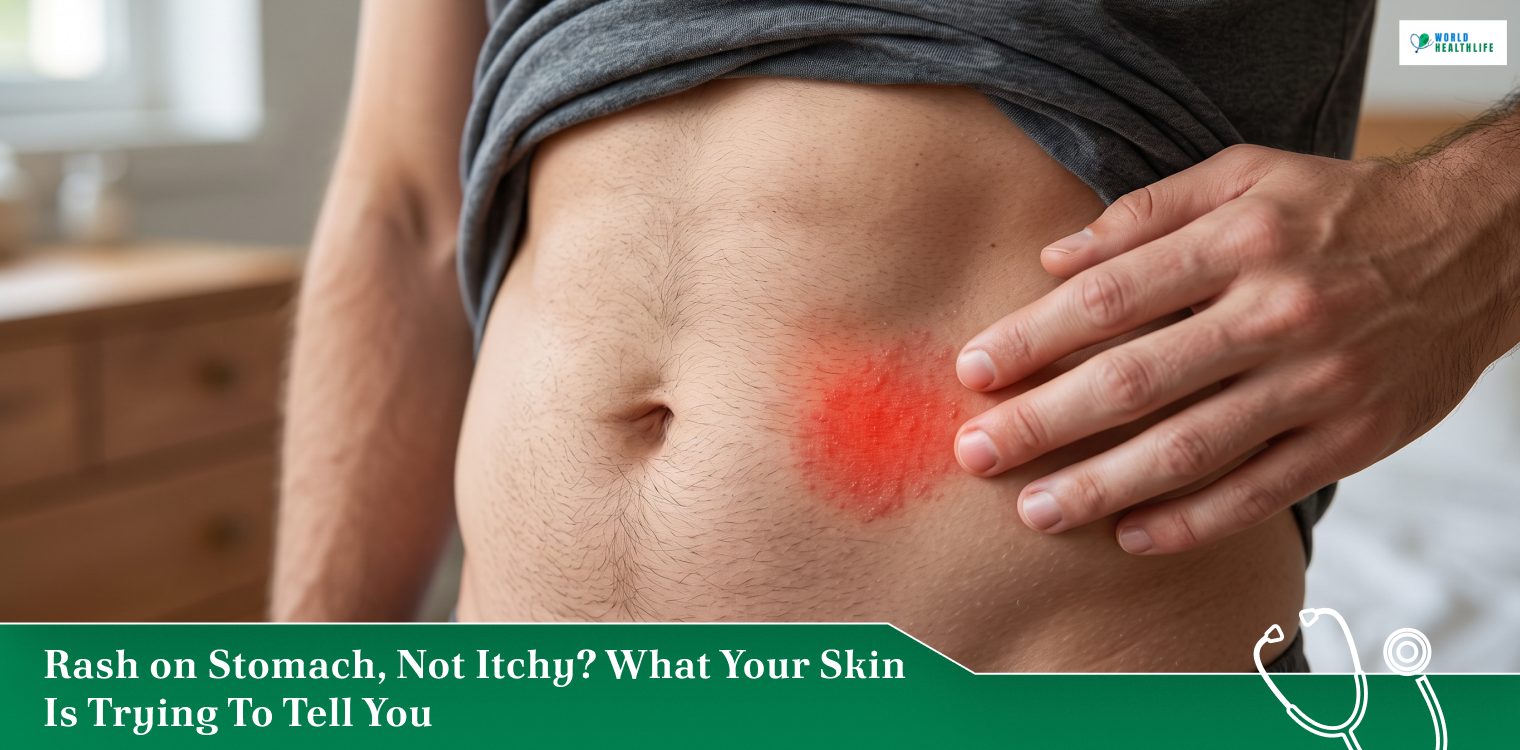
Itch is the symptom that gets all the attention.
So, a rash that doesn’t bother you can remain on your skin for days without you realizing it and looking it up.
A rash on stomach not itchy is not as common as people think and in most cases, it is not a serious condition.
However, the lack of itch does not give much information about what is happening below.
A few of the mildest rashes don’t itch, and so do a few that require immediate treatment.
So, the guide below will take you through the following:
- why itch matters
- the most likely causes
- the signs that differentiate a nuisance from a problem
- what to do while you wait it out
Why A Rash Without Itch Still Deserves Attention

There are several ways that skin responds to problems, and itching is just one of them.
If it’s not there, you get a missing clue, but you also get some others:
- how the rash looks
- how fast it spreads
- what else is happening in your body
Doctors do not rely on any one symptom, but rather read all these details together.
Knowing the reasons for some rashes being itchy and others not is helpful when trying to describe your rash in an accurate way.
Why Some Rashes Itch And Others Don’t
The release of histamine and other chemicals by the irritated immune cells in the skin is the main cause of itching.
Also, allergic reactions, eczema, and insect bites do this strongly, and it itches.
Rashes from trapped sweat, some viruses, pigment changes, or changes in the blood vessels rarely produce a lot of histamine.
This is why a patch of flat, red or spotted skin may occur without the need to scratch.
What Doctors Look At First
A clinician first examines the appearance of the rash, its shape and color.
That is, whether it is flat or raised, or blanches (turns pale) when pressed.
Also, they ask the following questions:
- when it started
- whether it is spreading
- if you’ve been sick, had a fever, or taken a new medicine
Taking a picture of the scene every day on your phone can be very helpful. This is because the rash can rapidly change and may appear differently when you arrive at the clinic.
Common Causes Of A Rash On Stomach Not Itchy
The majority of stomach rashes that do not itch can be classified into a few common types.
Some conditions are more favorable for the belly because it is a warm, covered surface that allows skin to rub against clothing and hold moisture.
Before examining each cause in detail, see the table below for a quick overview.
| Cause | What it looks like | Other clues | Usually goes away? |
| Heat rash | Tiny red or clear bumps | Hot weather, tight clothing, sweating | Yes, within days |
| Pityriasis rosea | Oval pink patches with a “herald” patch | Often follows a cold | Yes, in 6 to 8 weeks |
| Tinea versicolor | Pale, pink, or brown scaly patches | Worse in warm, humid weather | Treatable, often returns |
| Folliculitis | Small red bumps around hair follicles, some with pus | After shaving, sweating, or hot tubs | Often yes, within a week or two |
| Viral rash | Widespread pink spots on the trunk | Fever, sore throat, or recent illness | Yes, within days |
| Drug rash | Red spots or patches, often symmetrical | Started a new medicine in the past 2 weeks | Usually after stopping the drug |
| Shingles (early) | Band of red patches or blisters on one side | Burning or shooting pain | Needs treatment |
Heat Rash
Heat rash, also called miliaria, happens when sweat ducts get blocked, and sweat is trapped under the skin.
You’ll notice small red bumps or clear fluid-filled dots, usually in areas where the waistband, bra, or tight shirt rubs.
In addition, it can sting or prickle a little, but many people feel nothing.
Generally, cooling the skin and wearing loose cotton is sufficient.
Pityriasis Rosea
This is a common rash that typically starts with a single larger oval patch on the abdomen, chest, or back, known as the herald patch.
Smaller oval patches develop within a few days to weeks, following the lines of the skin, often in a “Christmas tree” pattern on the back.
About half of people do not have itching, and the rash resolves spontaneously in 6-8 weeks.
The cause is not completely understood, but it is believed that a virus is responsible.
Tinea Versicolor
This is not actually ringworm, but a yeast overgrowth on the skin.
It produces flat areas which are lighter or darker than the rest of the skin, and when gently scratched, it produces fine scaling.
Also, it is often found on the trunk and is more common in warm, humid climates or in individuals who sweat profusely.
Antifungal shampoos or creams can get rid of it, but it can come back again, and the color changes may last for weeks after the yeast has been eliminated.
Folliculitis
Folliculitis is an inflammation of the hair follicles, and it may present as tiny red bumps around the hair on the lower abdomen.
Common causes include shaving, rubbing against clothing, or being in an under-maintained hot tub. It may be tender, not itchy.
Gentle washing is the usual treatment for most mild cases. However, deeper or recurring ones may need a topical or oral antibiotic.
Viral Rashes
A viral infection can cause a pink, spotted rash on the chest and belly, which is a result of the immune system’s reaction to the virus.
This can be caused by roseola, measles, rubella, and many mild “summer viruses,” and the rash may start to develop as the fever subsides.
Furthermore, these rashes typically don’t itch.
In adults, a rash caused by a virus typically lasts only a few days, and the fever and other symptoms surrounding the rash are more important than the rash itself.
Medication Reactions
Common causes include antibiotics, anti-seizure medications,s and some anti-inflammatory pain medications.
A drug rash typically occurs within 1-2 weeks of beginning a new medication and tends to be symmetrical on the trunk.
If you think this may be the case, do not discontinue a prescribed medicine without consulting your doctor.
Contact your doctor or pharmacist the same day, as they will have to determine if they should change it.
Less Common But Important Causes
There are a few other conditions that can lead to a non-itchy belly rash.
Secondary syphilis may cause a coarse, reddish-brown rash on the trunk, which may involve the palms and soles.
Lyme disease may result in a growing red patch that is warm, but not itchy.
Scattered spots can also be caused by guttate psoriasis, a type of psoriasis that follows an infection of the throat, and early lupus.
None of these is likely to be the sole cause, but each one is a good reason to examine a rash that persists, not guess.
When A Rash On Stomach Not Itchy Comes With Fever Or Other Symptoms

Rashes are not an emergency.
The picture changes if it is accompanied by other symptoms, as this indicates that the rash is a symptom of something that is going on throughout the body.
A rash in someone who feels totally well is treated differently from the combination of a rash and a feeling of discomfort.
Here are some ideas on the most popular combinations.
Rash With Fever
A fever with a spreading rash is more likely to be a viral infection and will typically resolve on its own with rest and fluids.
It can also be a symptom of a bacterial infection, a tick-borne disease, or a drug reaction.
If the fever is severe, persists for more than 3 days, or you are very unwell, seek advice.
Rash With Pain Or Burning
A rash of red patches on one side of the body that is accompanied by pain is a typical early symptom of shingles.
The most effective antiviral treatment is when it is initiated within 72 hours.
So, this is a call for the same day. The pain may be more intense than the rash appears.
Rash With Joint Pain, Fatigue, Or Mouth Sores
This mix can indicate an autoimmune disorder like lupus.
A single episode doesn’t mean you have one.
Joint aches, extreme tiredness, or mouth ulcers with a rash, however, should be noted to a doctor and appropriate blood tests ordered.
Warning Signs You Should Not Ignore
The majority of rashes can be seen at a regular office visit.
A smaller group requires quicker attention, and it is helpful to know the difference.
| Sign | What it may mean | What to do |
| Rash that doesn’t fade when pressed (purple or red pinpoint dots) | Bleeding under the skin | Seek urgent care |
| Rash with high fever, stiff neck, or confusion | Serious infection | Go to the emergency room |
| Swelling of the lips or face, or trouble breathing | Severe allergic reaction | Call emergency services |
| Blisters, skin peeling, or sores in the mouth | Severe drug reaction | Go to the emergency room |
| Painful band of blisters on one side | Shingles | Call your doctor the same day |
| Expanding red patch after a tick bite | Lyme disease | See a doctor within a day or two |
| Rash lasting more than 2 weeks | Needs diagnosis | Book an appointment |
How Doctors Diagnose A Non-Itchy Stomach Rash

Many rashes can be diagnosed from a history and examination alone, and the initial consultation is brief.
If the cause is not apparent, then a few simple tests help to narrow it down. You don’t have to use them all.
The Exam And Your History
Be prepared to answer questions on the following:
- New medicines
- Recent illnesses
- Travel
- Exposure to insects or ticks
- Sexual health
- New products that come in contact with your skin, including detergents, belts, or skin care.
Your doctor will also examine other parts of your body, such as your palms, soles, scalp and mouth, as the pattern throughout the body is important in helping to identify the condition.
Tests That May Be Used
A skin scraping examined under a microscope can confirm a fungal cause, such as tinea versicolor.
A swab can detect bacteria or a virus. Blood tests may be performed to look for syphilis, Lyme disease, markers for autoimmune disorders, or markers of infection.
If the diagnosis is still not clear, a small skin biopsy under local anesthetic will provide a definite diagnosis by examining the tissue directly.
What You Can Do At Home While You Wait
If the rash is mild and does not have any warning signs, simple care will keep the skin safe and prevent it from worsening.
These steps will not treat an infection or an allergy. They do, however, eliminate common irritants.
| What Helps | What To Avoid |
| Keep the area cool and dry. Moisture and friction feed heat rash, folliculitis, and fungal growth. | Scrubbing or picking. This can break the skin and lead to infection, even if you don’t feel itchy. |
| Wear loose cotton clothing. Tight waistbands and synthetic fabrics trap sweat against the belly. | Steroid creams without a diagnosis. Hydrocortisone can make fungal rashes worse and hide the signs doctors look for. |
| Wash gently once or twice a day. Use lukewarm water and a fragrance-free cleanser, then pat dry. | Heavily scented lotions and soaps. They add irritants to skin that is already reactive. |
| Take photos daily. Note the size, color, and spread so you can show your doctor how it is changing. | Hot showers and long soaks. Heat can aggravate many rashes and dry the skin further. |
| Keep a short log. Write down new foods, medicines, or products from the past two weeks. | Do not stop a prescribed medicine on your own. Call your doctor first if you think a drug is the cause. |
How Long Does A Rash On Stomach Not Itchy Last?

Duration is one of the most useful clues, as the length of time depends entirely on the cause.
Heat rash will disappear in a few days after the skin is cooled. Although harmless, viral rashes typically clear up in one week, and pityriasis rosea may last up to two months.
Fungal rashes clear up in 2-4 weeks, and pigment changes may last longer.
A drug rash usually resolves within a few days to weeks after the drug is discontinued.
A rash that does not begin to get better after 1-2 weeks, continues to spread, or returns should be examined properly.
Itch is not a reliable warning, and a careful physician will listen to it even if the rash seems mild.
When To See A Doctor
If the rash persists for longer than two weeks, spreads rapidly, recurs frequently, or causes any concern, please make an appointment.
Get same-day care for a painful blistering band, rash after beginning a new medicine, or rash with fever and feeling unwell.
Also, go to the emergency room for rapidly spreading, purple spots that don’t fade, breathing trouble, facial swelling, or skin that blisters and peels.
If a rash does not itch, it’s usually a minor, temporary occurrence in your skin’s life.
The aim is not to fret about all the spots. Rather, it is to observe its behavior, monitor it for a few days, and seek assistance when it doesn’t follow the pattern.
Finally, your skin will often give you early warning, and a quiet rash is a rash nonetheless.
Disclaimer: The information provided in this article is for general informational purposes only. It does not, and is not intended to, constitute medical or health advice. Please consult a qualified healthcare professional for medical guidance or expert health assistance.
References
- McLean, A. (2025). Does a pityriasis rosea stomach rash cause itchiness? Healthline.
- Newman, T. (2025). What is causing my rash? 71 possible causes. Medical News Today.
- Witt, J. (2026). Stomach rash: Causes, symptoms, and treatments. MamaHealth.
- Institute for Quality and Efficiency in Health Care (IQWiG). (2022). In brief: What are anticoagulants? InformedHealth.org – NCBI Bookshelf.
- Shaikh, J., MD. (2022, March 8). Common causes of red spots on the skin: 20 skin disorders. MedicineNet.