

When a doctor diagnoses a patient with high cholesterol or elevated blood fats, medical billers translate that diagnosis into a standardized alphanumeric sequence.
In the United States, healthcare providers use the International Classification of Diseases, Tenth Revision, Clinical Modification (ICD-10-CM) to track illnesses and process insurance claims.
The primary ICD 10 code for hyperlipidemia is E78.5, which stands for unspecified hyperlipidemia. Hyperlipidemia itself refers to having excess lipids, or fats, circulating in your bloodstream.
Since patients can have different types of elevated blood fats, several distinct diagnosis codes exist within the medical system.
So, the following guide will break down how these medical codes work, explain the exact description of E78.5, and help you distinguish it from related lipid disorder codes.
Key Health Facts:
• E78.5 is the standard, billable ICD-10-CM code for unspecified hyperlipidemia.
• Confirmed subtypes require narrower codes such as E78.2 for mixed hyperlipidemia or E78.00 for pure hypercholesterolemia.
• Unspecified dyslipidemia also maps directly to E78.5 in the ICD-10-CM index.
• Abnormal lab results alone cannot be coded, so a physician must formally document the diagnosis first.
• Hyperlipidemia is usually a long-term condition managed through ongoing monitoring, lifestyle, and medication.
• Coders can list hyperlipidemia alongside co-existing conditions such as diabetes or high blood pressure when properly documented.
So, What Is The ICD 10 Code For Hyperlipidemia?
If you take a look at a medical bill or an electronic health record for high blood fats, you will see the code E78.5 very frequently. So, what exactly is this?
Well, this is the official clinical description, which is “Hyperlipidemia, unspecified.” Actually, in the world of medical coding, the word “unspecified” serves a very practical purpose.
It tells insurance companies and health researchers that the patient definitely has elevated blood lipids. However, the physician’s notes do not identify the exact biological subtype of the condition.
Healthcare providers often use E78.5 during initial evaluations or when routine blood work shows general elevation without a narrower clinical label. However, E78.5 is not a universal catch-all code for every patient with high cholesterol.
In addition, medical codes must always match the code to the physician’s exact written words. In case a doctor documents a specific lipid abnormality, using a general code leads to inaccurate health records as well as potential insurance claim delays.
| Coding Detail | Information |
| ICD-10-CM Code | E78.5 |
| Official Description | Hyperlipidemia, unspecified |
| Category | E78 (Disorders of lipoprotein metabolism and other lipidemias) |
| Classification | Endocrine, nutritional and metabolic diseases |
| Coding System | ICD-10-CM |
What Is Hyperlipidemia: A Breakdown
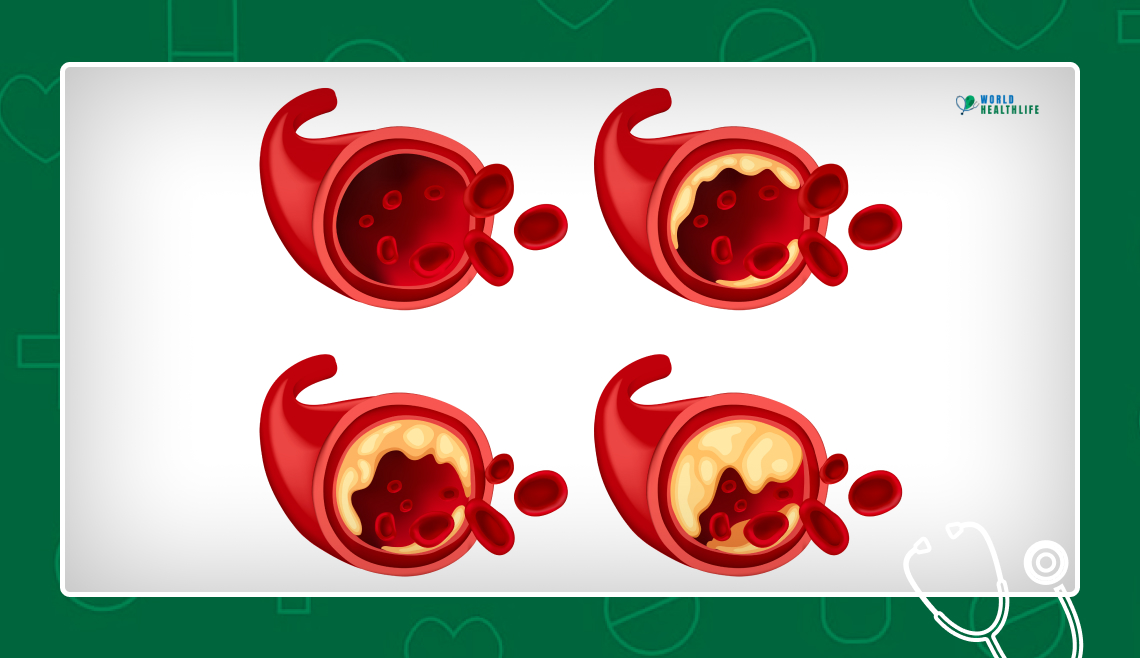
So, before we dive deeper into complex medical billing numbers, it would first help you to understand what happens inside the body when hyperlipidemia occurs.
First, let us see the term. Hyperlipidemia can be broken down into three parts:
- Hyper means excessive, above normal, or too high
- Lipid refers to fats and fat-like substances in the body
- Emia is a blood condition or substance present in the bloodstream
This condition literally means having too much fat in your blood. In everyday clinical practice, doctors often use it as a broad umbrella term for high cholesterol and high triglycerides.
In medical terms, hyperlipidemia is an abnormally high concentration of fats in your blood. Your body actually needs a baseline amount of these fats to build healthy cells, produce vital hormones, and store energy.
Problems arise only when these lipid levels climb too high and begin to accumulate along the walls of your arteries.
Understanding Cholesterol And Triglycerides
In order to understand lipid disorders, you have to look at two main types of blood fats.
These are cholesterol and triglycerides.
Cholesterol is a waxy, fat-like substance that is produced naturally by your liver and absorbed from certain animal-based foods. Doctors divide cholesterol into two primary carriers.
Low-density lipoprotein (HDL) acts as “good” cholesterol, sweeping excess fats out of the arteries and carrying them back to the liver for disposal.
Triglycerides operate differently from cholesterol. When you eat, your body converts any calories it does not need to use right away into triglycerides and stores them inside fat cells.
Moreover, hormones later release these triglycerides for energy between meals. When a person consistently consumes more calories than they burn, or experiences metabolic disruptions, both cholesterol and triglyceride levels can surge.
Hyperlipidemia is actually the umbrella medical term, which is used when one or both of these fat levels cross into unhealthy territory.
Common Types Of Hyperlipidemia
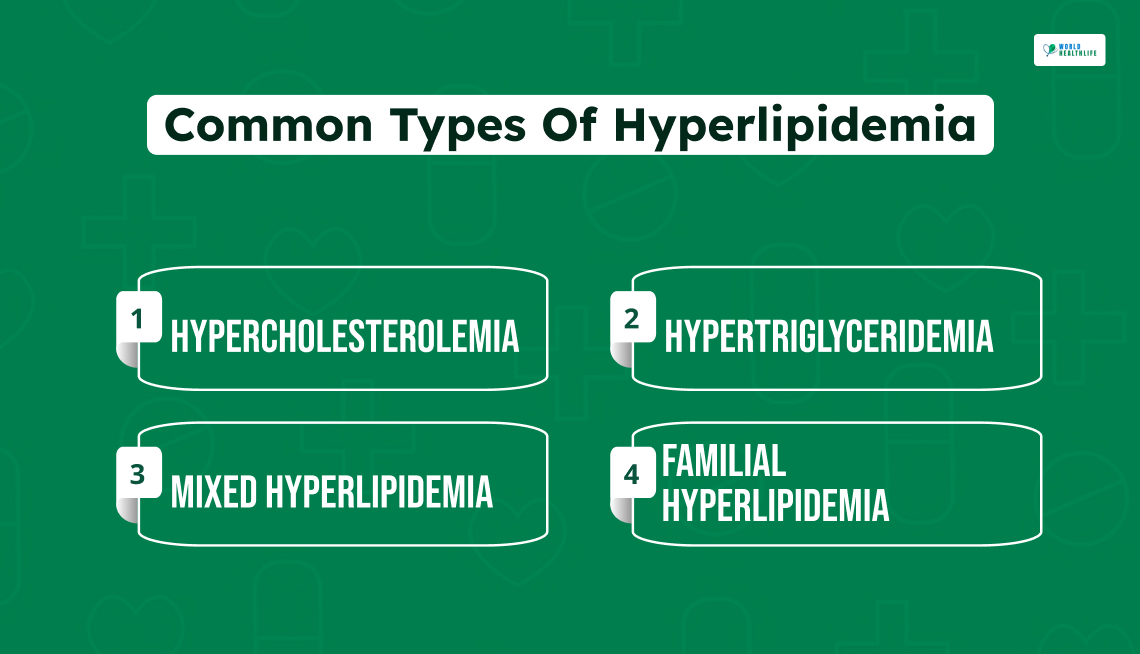
Physicians categorize hyperlipidemia into distinct clinical subtypes based on two things:
- Which specific blood fat is elevated
- Whether the root cause is genetic or lifestyle-related.
So, knowing these categories makes the medical coding system much easier to navigate.
| Type of Hyperlipidemia | Primary Lipid Affected | Key Clinical Characteristic |
| Hypercholesterolemia | LDL Cholesterol | Elevated cholesterol levels while triglycerides remain normal |
| Hypertriglyceridemia | Triglycerides | High levels of stored energy fats without elevated cholesterol |
| Mixed Hyperlipidemia | Cholesterol and Triglycerides | Simultaneous elevation of both major types of blood lipids |
| Familial Hyperlipidemia | LDL or Triglycerides | An inherited genetic mutation causing dangerously high lipid levels from birth |
List Of ICD-10 Codes For Hyperlipidemia
In the ICD-10-CM manual, all lipid disorders live under the parent category E78, which covers disorders of lipoprotein metabolism and other lipidemias.
Instead of lumping every patient under a single label, the coding system branches out into highly detailed subcategories.
When you want to select the right code, it would require reading the medical chart closely. This will allow you to see if the doctor identified a pure cholesterol issue, a triglyceride spike, or a hereditary disorder.
| ICD-10-CM Code | Official Clinical Description |
| E78.00 | Pure hypercholesterolemia, unspecified |
| E78.010 | Homozygous familial hypercholesterolemia |
| E78.011 | Heterozygous familial hypercholesterolemia |
| E78.019 | Familial hypercholesterolemia, unspecified |
| E78.1 | Pure hyperglyceridemia |
| E78.2 | Mixed hyperlipidemia |
| E78.3 | Hyperchylomicronemia |
| E78.41 | Elevated lipoprotein(a) |
| E78.49 | Other hyperlipidemia |
| E78.5 | Hyperlipidemia, unspecified |
| E78.6 | Lipoprotein deficiency |
As you can see above, the most frequently used codes in clinical practice have been highlighted. However, it is not an exhaustive list of the entire E78 section.
So, notice how E78.5 sits right alongside much narrower diagnoses.
Coders must never confuse E78.00 with E78.5. While E78.5 applies when the general lipid disorder lacks detail, E78.00 applies specifically when the doctor confirms that only cholesterol is elevated.
Always verify code descriptions against the current official fiscal-year ICD-10-CM code set before submitting medical claims.
Understanding The Differences Between E78.5 And Other Hyperlipidemia Codes
So why does one chart receive E78.5 while another receives a neighboring code? Actually, medical coders and curious patients often wonder this.
In fact, each code answers a different diagnostic question on the basis of laboratory findings as well as physician interpretation.
E78.5: Hyperlipidemia, Unspecified
So, the code E78.5 officially translates to “Hyperlipidemia, unspecified,” serving as the standard selection when a physician writes “hyperlipidemia” or “high lipids” in the assessment without breaking down the lipid profile.
If the medical record lacks detail about whether cholesterol or triglycerides are driving the condition, E78.5 is completely valid.
However, coders must never use E78.5 as a lazy shortcut to replace a more detailed diagnosis already documented in the doctor’s notes.
E78.2: Mixed Hyperlipidemia
Code E78.2 applies to “mixed hyperlipidemia,” also known in clinical settings as combined hyperlipidemia. Moreover, a doctor uses this diagnosis when a patient displays elevated total or LDL cholesterol alongside high triglyceride levels.
Unlike E78.5, E78.2 confirms that both major lipid pathways are disrupted simultaneously.
E78.00: Pure Hypercholesterolemia
In this code, E78.00 designates “Pure hypercholesterolemia, unspecified.” This diagnosis means the patient’s primary issue is elevated cholesterol, with normal triglyceride levels.
Moreover, it differs sharply from mixed hyperlipidemia because triglycerides are not part of the clinical problem.
Actually, the word “unspecified” in E78.00 simply means the doctor has not identified a genetic familial cause, which would shift the code into the E78.01 range.
E78.1: Pure Hyperglyceridemia
In code E78.1, pure hyperglyceridemia is covered, which represents isolated high triglycerides. In these cases, the patient’s cholesterol readings remain within healthy limits. On the other hand, their triglyceride numbers climb too high.
Distinguishing E78.1 from other lipid disorders is vital because severe hypertriglyceridemia carries unique medical risks, such as acute inflammation of the pancreas, requiring targeted clinical tracking.
Is ICD-10 Code E78.5 Billable And Specific?
So, to answer that question, it would be yes. E78.5 is a fully billable ICD-10-CM code in the current fiscal-year code set.
In medical billing, a billable code is one that has been expanded to its maximum required number of characters. Also, you cannot submit a claim using only the three-character parent category E78.
Parent categories act merely as chapter headings to organize related diseases in the coding manual. Because E78.5 includes its fourth character, insurance payers recognize it as a complete, valid diagnosis code for reimbursement.
So, even though E78.5 is legally billable, healthcare providers must still maintain thorough chart documentation to prove medical necessity during insurance audits.
When Should You Use ICD-10 Code E78.5?
When you want to apply E78.5 in a correct way, it fully depends on the language inside the patient’s medical chart. Moreover, a coder should assign E78.5 when a physician explicitly documents “hyperlipidemia” or “dyslipidemia” without naming a specific lipid subtype.
In this case, it is also appropriate when a patient’s ongoing problem list carries forward a historical diagnosis of unspecified hyperlipidemia. In fact, the current visit does not introduce new diagnostic details.
Conversely, if the physician writes “mixed hyperlipidemia” or “familial hypercholesterolemia,” the coder must bypass E78.5 and select the exact matching code.
However, there is one critical rule that governs all medical coding: a coder can never assign E78.5 simply by looking at an abnormal lab printout.
An elevated cholesterol or triglyceride lab value alone does not constitute a formal diagnosis.
Thus, on a final note, the treating physician must interpret those laboratory numbers and explicitly document the medical condition in the clinical record before any ICD-10 code can be billed.
Disclaimer:
The information provided in this article is for general informational purposes only. It does not, and is not intended to, constitute medical or health advice. Please consult a qualified healthcare professional for medical guidance or expert health assistance.
References
- ICD10data.com. (2026). 2027 ICD-10-CM Diagnosis Code E78.5: Hyperlipidemia, unspecified. ICD10data.Com.
- Hill, M. F., & Bordoni, B. (2023, August 8). Hyperlipidemia (Archived). Ncbibooks; StatPearls Publishing.
- American Heart Association, Inc. (2026, March 16). Prevention and Treatment of High Cholesterol (Hyperlipidemia). American Heart Association, Inc.
- Harsha Karanchi, Vijayadershan Muppidi, & Wyne, K. (2023, August 14). Hypertriglyceridemia. Ncbibooks; StatPearls Publishing.
- Sweeney, M. E. T. M. (2025). Hypertriglyceridemia: Background, Etiology, Pathophysiology. Medscape.Com; Medscape.
- Packard, C. J., Boren, J., & Taskinen, M. R. (2020). Causes and Consequences of Hypertriglyceridemia. Frontiers in Endocrinology, 11, 532994. Frontiers.
- AAPC. (n.d.). ICD-10 Code for Pure hyperglyceridemia (E78.1). Codify by AAPC.


