

When you see a string of letters and numbers such as “J96.01” on a medical chart, hospital bill, or insurance claim, it can feel like trying to read a foreign language.
You may be someone who is new to medical coding. Or you can be someone who is simply trying to make sense of a scary diagnosis for yourself or a loved one. If that is the case, then you are in the right place.
Behind every medical code is a real human experience. When someone is struggling to breathe, the medical team moves fast. Also, the paperwork that follows needs to accurately tell the story of what happened.
In the world of medical billing, that system of codes is known as ICD-10-CM. This helps hospitals and insurance companies speak the same language.
For a sudden and severe drop in oxygen, which is known as acute hypoxic respiratory failure, the specific ICD-10-CM code is J96.01.
So, in this guide, we will walk through what this diagnosis actually means in plain English and how it differs from similar breathing conditions. In addition, we will also explain the exact rules coders follow to get it right.
Key Health Facts:
• J96.01 is the ICD-10-CM code for acute respiratory failure with hypoxia or low oxygen.
• Provider documentation is mandatory, as coders cannot assign J96.01 from low oxygen numbers alone.
• Use J96.02 for high carbon dioxide or hypercapnia and J96.00 if neither is specified.
• Use J96.21 instead if the patient already has chronic respiratory failure.
• Underlying causes such as pneumonia or sepsis must be documented separately to be coded together.
• Exclude ARDS (J80), post-surgery failure (J95.82-), respiratory arrest (R09.2), and newborns (P28.5).
What Is The ICD-10 Code For Acute Hypoxic Respiratory Failure?
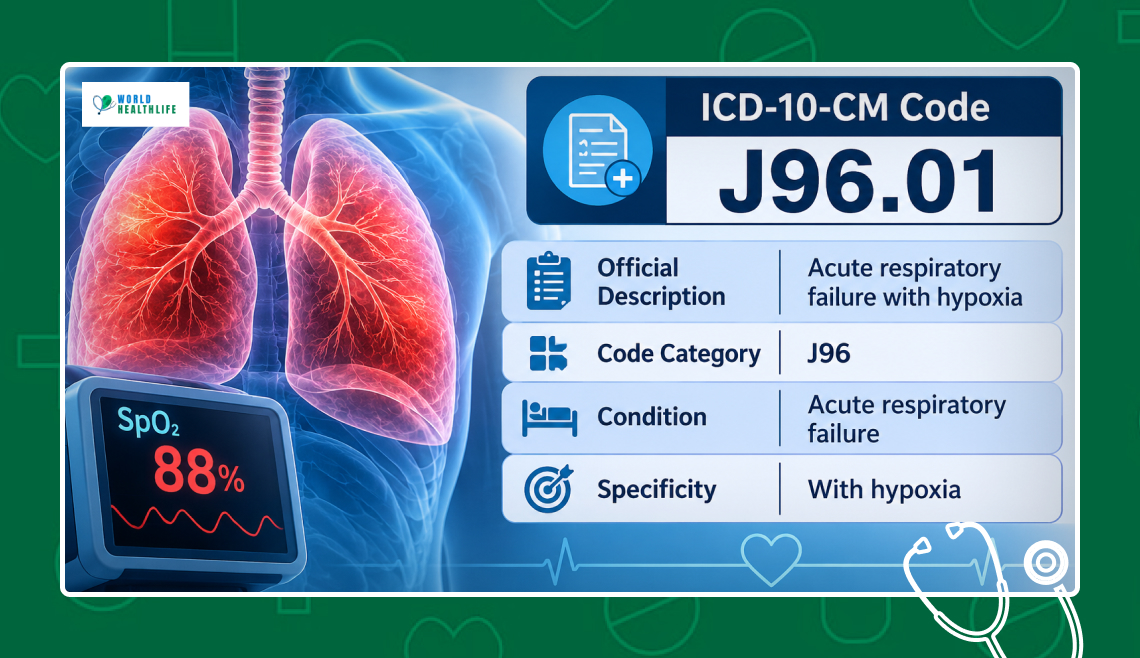
If you are looking for the exact code used on medical records and insurance claims, the ICD-10-CM code for acute respiratory failure with hypoxia is J96.01.
In the official medical coding manual, this code falls under the broader category J96, which covers Respiratory failure, not elsewhere classified.
So, let us break down what those medical terms even mean in the first place in simple language.
- Acute means the problems came on suddenly, often over just a few minutes, hours, or days, requiring urgent medical attention
- Hypoxic means the body’s tissues and organs are not getting enough oxygen to function properly
One of the most important things to understand about J96.01 is that it cannot be assigned just because a finger monitor shows a low oxygen number.
In addition, a doctor or qualified healthcare provider must officially evaluate the patient and write the diagnosis in their medical chart before a coder can use this code.
| Coding detail | Information |
| ICD-10-CM code | J96.01 |
| Official description | Acute respiratory failure with hypoxia |
| Code category | J96 |
| Condition | Acute respiratory failure |
| Specificity | With hypoxia |
What Does Acute Hypoxic Respiratory Failure Mean?
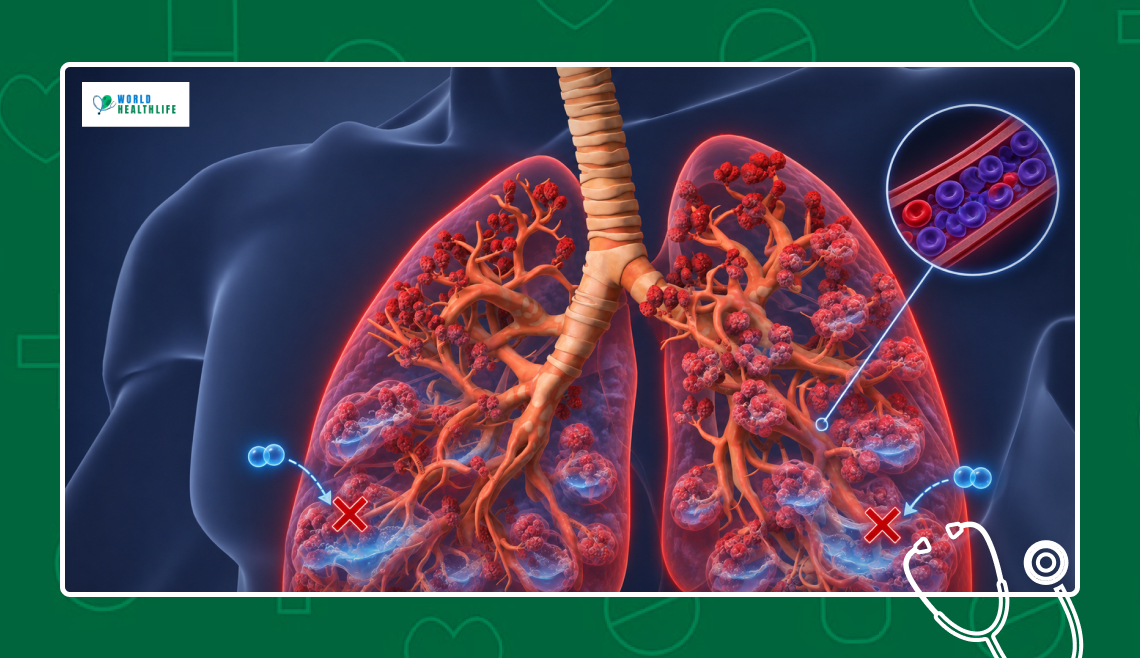
Hearing the words “respiratory failure” is understandably frightening. Thus, before we dive deeper into coding rules, let us take a step back and look at what is actually happening inside the body.
What Is Acute Respiratory Failure
Every time you take a breath, your lungs do two vital jobs:
- Pulling fresh oxygen into your bloodstream
- Pushing out waste gas called carbon dioxide
Acute respiratory failure happens when your lungs suddenly start to struggle to keep up with one or both of those jobs.
Since it happens quickly, the body does not have time to adjust on its own. As a result, this makes it a serious medical emergency.
What Does Hypoxia Mean?
Hypoxia simply means that your body’s tissues, like your brain, heart, and muscles, are running low on oxygen.
Doctors often use a similar word, hypoxemia. This means low oxygen specifically in your blood. Here, you can think of it like a delivery truck.
Say, hypoxia means there are not enough oxygen packages on the truck, which is your blood. On the other hand, hypoxia means the house on the route, or your body’s tissues, are not getting their deliveries.
Since tissue oxygen starvation is so critical, code J96.01 specifically highlights hypoxia.
Difference Between Hypoxic And Hypercapnic Respiratory Failure
Not all respiratory failure works the same way. Generally, doctors divide it into two main types on the basis of which job the lungs are struggling to do.
- Hypoxic respiratory failure, which is the main problem of getting enough oxygen into the body
- Hypercapnic respiratory failure, which is the main problem of clearing carbon dioxide out of the body, causing that waste gas to build up in the blood
Related ICD-10 Codes For Respiratory Failure
Medical coders have to be very careful when picking a code from the J96 family. In addition, the exact code changes on the basis of whether the breathing issue is sudden (acute), long-term (chronic), or both.
Besides, it also depends on whether the main issue is low oxygen or high carbon dioxide.
| ICD-10-CM code | Description |
| J96.00 | Acute respiratory failure, unspecified whether with hypoxia or hypercapnia |
| J96.01 | Acute respiratory failure with hypoxia |
| J96.02 | Acute respiratory failure with hypercapnia |
| J96.10 | Chronic respiratory failure, unspecified whether with hypoxia or hypercapnia |
| J96.11 | Chronic respiratory failure with hypoxia |
| J96.12 | Chronic respiratory failure with hypercapnia |
| J96.20 | Acute and chronic respiratory failure, unspecified whether with hypoxia or hypercapnia |
| J96.21 | Acute and chronic respiratory failure with hypoxia |
| J96.22 | Acute and chronic respiratory failure with hypercapnia |
| J96.91 | Respiratory failure, unspecified with hypoxia |
J96.01 Vs. J96.00
Try to think of J96.01 as the detailed version and J96.00 as the “blank check” version. When the doctor clearly writes that the patient has hypoxia, coders use J96.01.
On the other hand, if a doctor writes “acute respiratory failure” in the chart but forgets to mention whether oxygen or carbon dioxide is the problem, then the coder has to use J96.00. Oftentimes, this leads to insurance companies asking follow-up questions.
J96.01 vs. J96.02
While comparing these two, it all comes down to oxygen versus carbon dioxide. J96.01 is used when low oxygen is the issue.
Conversely, J96.02 is used when excess carbon dioxide or hypercapnia is the documented problem.
J96.01 vs. J96.21
So, J96.01 is actually for someone whose lungs were generally healthy before a sudden illness hit them. On the contrary, J96.21 is used by coders when someone already lives with a long-term lung condition or chronic respiratory failure.
Suddenly, they experience a severe, low-oxygen flare-up on top of it.
Causes Of Acute Hypoxic Respiratory Failure
Acute hypoxic respiratory failure rarely happens out of the blue. Instead it is usually triggered by another serious illness or injury that blocks oxygen from moving smoothly from the lungs into the bloodstream.
Common Underlying Causes
Although conditions such as pneumonia or sepsis usually cause respiratory failure, they are not the same thing in medical coding. A coder cannot assume a patient has respiratory failure just because they have severe pneumonia.
Instead, the doctor has to document both conditions separately.
- Severe pneumonia
- Acute respiratory distress syndrome (ARDS)
- Fluid buildup in the lungs (pulmonary edema)
- Severe asthma attacks
- A blood clot in the lung (pulmonary embolism)
- Severe body-wide infection (sepsis)
- Major lung infections
- Lung injury from accidentally inhaling food, liquid, or stomach acid (aspiration)
Symptoms And Clinical Signs Of Acute Hypoxic Respiratory Failure
When someone is not getting enough oxygen, their body sends out clear distress signals.
Some common signs include:
- Severe shortness of breath
- Feeling like you cannot catch your breath
- Fast, shallow, or heavy breathing
- Low oxygen readings on a pulse oximeter
- A bluish tint around the lips, fingernails, or skin (cyanosis)
- Sudden confusion, extreme restlessness, or trouble staying awake
- A racing heart rate
- Struggling to say more than a few words at a time without pausing for air
Now understand one thing. While these symptoms are alarming, they are clues instead of a final diagnosis.
So, remember that only a trained medical provider can evaluate these signs and officially diagnose acute hypoxic respiratory failure.
How Is Acute Hypoxic Respiratory Failure Diagnosed?
Here is the thing. Breathing emergencies move fast. So, doctors use a mix of quick bedside checks, blood tests, and scans in order to figure out what is happening and why.
Arterial Blood Gas (ABG) Test
In this specialized blood test, blood is generally taken from an artery in the wrist. In turn, this gives doctors an exact measurement of how much oxygen and carbon dioxide are in the blood.
Not only that, but it also gives an accurate measurement of the blood’s acid-base or pH balance.
Pulse Oximetry
In this technique, a painless little clip is placed on a fingertip or earlobe. This uses light to quickly estimate how saturated your red blood cells are with oxygen, helping nurses and doctors to spot sudden drops right away.
Chest X-ray And Other Imaging
With the help of a chest X-ray or CT scan, doctors are able to look directly inside the chest. Moreover, these images help spot the underlying culprit, such as pockets of pneumonia, fluid overload, or a blocked blood vessel.
Additional Diagnostic Tests
Depending on what the doctor suspects, they may also run standard blood counts and check for bloodstream infections, or test lung function once the patient is stable.
For medical coders, it is important to remember that there is no single “magic number” on an ABG or pulse oximeter that automatically triggers code J96.01.
In addition, the doctor must always confirm the diagnosis in writing.
ICD-10-CM Coding Guidelines For Acute Hypoxic Respiratory
If you work in medical billing or coding, following the official FY 2026 CMG guidelines and the ICD-10-CM Tabular List is the best way to prevent claim denials and keep records audit-ready.
Physician Documentation Requirements
For a coder to assign J96.01, the treating provider must clearly state “acute respiratory failure with hypoxia,” or closely matching clinical terms, in the chart.
In addition, supporting details such as the following help immensely in backing up the diagnosis:
- Low oxygen readings
- ABG results
- Heavy breathing
- Need for oxygen therapy
Actually, coders are never allowed to play doctor and diagnose respiratory failure on the basis of lab numbers alone.
Imagine this scenario, however. The lab results look severe, but the doctor didn’t write the diagnosis down. In that case, the coder must send a polite, compliant query asking the doctor to clarify.
Acute Respiratory Failure As A Primary Or Secondary Diagnosis
Where J96.01 goes on an insurance claim depends on what brought the patient through the hospital doors.
| Diagnosis Position | When It Applies | How J96.01 Is Sequenced |
| Primary (Principal) Diagnosis | Tests show acute hypoxic respiratory failure was the main reason the patient had to be admitted to the hospital. | J96.01 is listed first. |
| Secondary Diagnosis | The patient was admitted for another condition (like a heart attack or sepsis) and developed respiratory failure later, or official rules require the underlying illness first. | J96.01 is listed after the principal diagnosis. |
Putting J96.01 Into Practice
Navigating medical codes does not have to feel overwhelming.
At its core, J96.01 simply tells the story of a patient experiencing a sudden and serious drop in oxygen that requires urgent care.
Accuracy always starts with clear and thoughtful documentation from the medical team. It may be that you are a coder double-checking sequencing rules or someone trying to understand a hospital chart. Along with that, you also need a careful look at the official ICD-10-CM guidelines.
Disclaimer:
The information provided in this article is for general informational purposes only. It does not, and is not intended to, constitute medical or health advice. Please consult a qualified healthcare professional for medical guidance or expert health assistance.
References
- ICD10data.com. (2026). 2027 ICD-10-CM Diagnosis Code J96.01: Acute respiratory failure with hypoxia. ICD10data.Com.
- Respiratory Failure: Causes, Symptoms & Treatment. (2023, March 21). Cleveland Clinic.
- Lagina, M., & Valley, T. S. (2024). Diagnosis and Management of Acute Respiratory Failure. Critical Care Clinics, 40(2), 235–253. PubMed Central.
- Bay, P., & de Prost, N. (2025). Diagnostic approach in acute hypoxemic respiratory failure. Journal of Intensive Medicine, 5(2), 119–126. ScienceDirect.
- Biggers, A. (2019, February 22). What to know about acute respiratory failure. Medicalnewstoday.Com; Medical News Today.
- Ceriana, P., & Nava, S. (2006). Hypoxic and hypercapnic respiratory failure. Respiratory Emergencies. European Respiratory Society.


