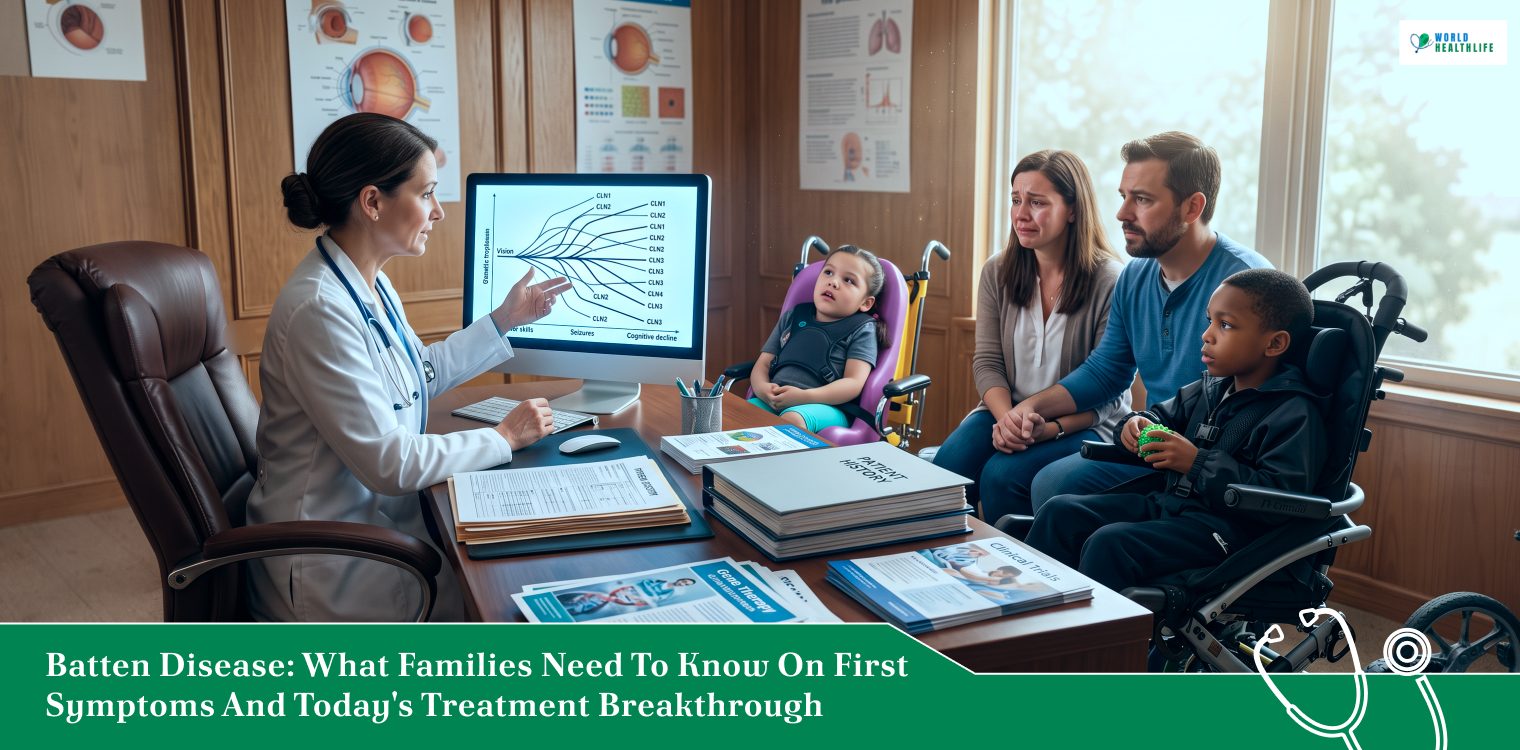
It usually starts with a small, easily dismissed stumble. A toddler who was steady on their feet suddenly trips over a flat rug, or a school-aged child begins squinting at the board, prompting a routine trip to the eye doctor.
Naturally, parents assume these are just typical childhood clumsy phases or minor hurdles.
But the clumsiness doesn’t go away, and the vision loss only gets worse. After a grueling gauntlet of doctor appointments and specialist referrals, a physician utters a name that changes everything: Batten disease.
This diagnosis isn’t just a medical term; it is a profound, life-altering reality for the entire family. Confronting it requires immense courage, complete honesty, and a clear understanding of the road ahead.
Why “Batten Disease” Isn’t Just One Diagnosis

When you first hear the term, it sounds like a single, distinct medical condition. However, the disorienting truth is that Batten disease is an umbrella term for a cluster of 13 separate genetic disorders.
Clinically known as neuronal ceroid lipofuscinoses (NCLs), these conditions share similar cellular characteristics but progress in vastly different ways.
Because each form stems from a different genetic mutation, a diagnosis of Batten disease is only the beginning of the conversation.
Knowing the broad name isn’t enough to understand what your child faces. Your medical team needs to pinpoint the exact molecular variation to tell you what to expect.
To help clear up this complex landscape, the table below breaks down how these forms are categorized by genetic classification and typical age of onset.
| Genetic Subtype | Historic Medical Name | Typical Age of Symptom Onset |
| CLN1 | Infantile NCL / Santavuori-Haltia disease | 6 months to 2 years |
| CLN2 | Late Infantile NCL / Jansky-Bielschowsky | 2 to 4 years |
| CLN3 | Juvenile NCL / Spielmeyer-Vogt-Sjögren | 4 to 10 years |
| CLN4 | Adult NCL / Kufs disease | 30 years and older |
| CLN5 to CLN14 | Variant Late Infantile / Other Rare Forms | Variable childhood years |
The Gene Behind Your Child’s Specific Form
Consequently, during your initial consultations, your pediatric neurologist will not just say your child has Batten disease. Instead, they will assign a very specific subtype numbered from CLN1 through CLN14.
This specific number refers to the exact gene that contains a mutation. For instance, if your doctor diagnoses CLN3, it means the body cannot produce a specific cellular protein properly. Accordingly, this alters the timeline of the disease.
Thus, understanding this specific number is vital, as it dictates the timeline, symptoms, and potential treatment options available to your family.
The Question Every Parent Asks First: “Did We Cause This?”
In the wake of a terminal diagnosis, a heavy and suffocating wave of guilt frequently overwhelms parents. Naturally, you look back while having an agonizing analysis on each fever, fall, or choice that was made during pregnancy.
You ask yourself if you somehow caused this devastating illness to take root.
However, you must hear this clearly and unequivocally. Neither did you cause this nor could you have prevented it. Also, there is absolutely no lifestyle choice, environmental exposure, or parental action that could trigger Batten disease.
The condition is entirely rooted in microscopic biological instructions that were set in motion long before your child was even conceived.
The Answer Is Actually No: Here’s The Biology
Firstly, before explaining why it is not your fault, we need to examine the underlying biology of inheritance. Batten disease is an autosomal recessive disorder, which means it occurs purely through the random lottery of genetics.
Each individual carries two copies of each CLN gene. One is inherited from their biological mother and one from their biological father.
For a child to develop Batten disease, they must inherit two mutated copies of the same gene. That also, one must come from each parent.
The probability of how this genetic trait is passed down from carrier parents to their children can be seen highlighted below.
| Genetic Inheritance Outcome | Statistical Probability | Clinical Meaning for the Child |
| Unaffected (Non-Carrier) | 25% chance | Inherits two normal gene copies. Will not develop the disease and cannot pass it to future generations. |
| Asymptomatic Carrier | 50% chance | Inherits one normal copy and one mutated copy. Will remain entirely healthy but carries the trait. |
| Affected Status | 25% chance | Inherits two mutated copies of the gene. The child will develop clinical symptoms of Batten disease. |
As healthy carriers, both parents possess one normal gene copy and one mutated copy. Because the normal copy compensates completely, carriers display absolutely no symptoms and have no way of knowing they carry the trait.
When two carriers conceive, there is a completely random 25% chance with each pregnancy that the child will inherit both mutated genes, resulting in the condition.
What It Means For Future Children
Since this inheritance is a matter of mathematical probability, the genetic reality has significant implications for the expansion of your family.
For every future pregnancy conceived with the same partner, the statistical risk remains exactly the same:
- A 25% chance of an affected child
- A 50% chance of the child becoming an asymptomatic carrier
- A 25% chance of being completely unaffected
Consequently, pursuing comprehensive genetic carrier testing for immediate relatives becomes highly recommended. Consulting a certified genetic counselor can provide you with clear and accurate data on risks.
Furthermore, this opens doors to reproductive options such as pre-implantation genetic diagnosis (PGD) if you wish to pursue them.
How Batten Disease Actually Unfolds
Batten disease does not strike all at once. Instead, it unfolds as a progressive and relentless neurological decline. The underlying cause is a breakdown in the cellular recycling system.
Because of the genetic mutation, the lysosomes within the cells lack the vital enzymes needed to clear away cellular waste products, particularly proteins called lipofuscin.
As a direct result, this waste accumulates continuously inside the cells. While this buildup occurs throughout the body, it is exceptionally toxic to the central nervous system.
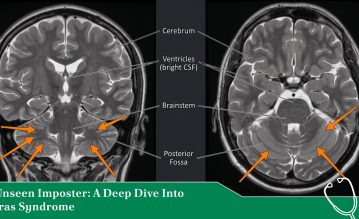
This leads to brain tissue atrophy, further causing a steady loss of bodily functions.
The Cellular Breakdown At A Glance
The mechanical process of this cellular decline follows a strict step-by-step biological path:
| Stage of Cellular Breakdown | Biological Mechanism | Impact on the Central Nervous System |
| 1. Genetic Mutation | A defect occurs within a specific CLN gene. | The body receives faulty instructions for producing cellular proteins. |
| 2. Enzyme Deficiency | Lysosomes lack vital recycling enzymes. | Cells completely lose the ability to break down internal waste products. |
| 3. Waste Accumulation | Lipofuscin proteins pile up inside cells. | The accumulating debris becomes highly toxic, suffocating healthy neurons. |
| 4. Tissue Atrophy | Widespread brain cell death occurs. | The physical brain tissue shrinks, causing a severe loss of bodily functions. |
The First Sign Is Often Invisible: Vision
In the juvenile-onset form (CLN3), the very first sign of trouble is typically invisible to the naked eye. Beginning first in the retinas, this is where specialized cells are highly sensitive to waste accumulation.
A child might begin to struggle to see the board at school, leading parents to arrange a standard eye examination.
During this appointment, an optometrist or ophthalmologist may notice a distinct pale coloring or degeneration of the macula.
Since this vision loss precedes any obvious neurological symptoms, it is frequently misdiagnosed as routine myopia or juvenile macular degeneration. It is before the broader reality of Batten disease becomes apparent.
What Comes Next
Following the initial vision loss, the deeper neurological impact of the disease begins to manifest in a predictable and heartbreaking sequence.
Within a few years of the eye changes, the accumulated damage in the brain triggers recurrent and unprovoked seizures that can range from brief staring spells to severe convulsions.
Simultaneously, physical motor skills erode. As a result, a clumsy gait, tremors, and a loss of independent mobility cause an eventual necessity of a wheelchair.
Alongside these physical changes, cognitive decline emerges permanently. The child may struggle with short-term memory, finding it difficult to learn new concepts while gradually losing their vocabulary.
This leads to a complete loss of speech.
When It Starts In Infancy Instead
In sharp contrast to the juvenile form, the infantile form of the disease, primarily CLN1, presents a much more aggressive and rapid trajectory from the very first day.
These infants appear to develop entirely normally for the first few months of their life. However, by their first birthday, the progression accelerates dramatically.
Instead of starting with isolation vision loss, infantile Batten disease manifests as a sudden halt in development followed by a rapid loss of milestones.
These include:
- Sitting
- Crawling
- Babbling
The brain tissue atrophies at an alarming rate, leading to severe muscular twitching, early blindness, and intractable seizures, which alter the childhood experience entirely within a matter of months.
Targeted Therapeutics: The Impact of Cerliponase Alfa
For generations of physicians and families, a diagnosis of Batten disease meant absolute clinical helplessness.
Neurologists could only offer palliative comfort measures, as no approved treatments existed to alter the progressive course of neurodegeneration.
However, that bleak landscape fundamentally shifted with a major scientific milestone engineered specifically for the CLN2 subtype.
What Cerliponase Alfa Actually Does
This breakthrough arrived via an intervention known as cerliponase alfa, marketed under the brand name Brineura.
To be completely transparent, this medication is not a cure; it cannot repair destroyed brain tissue or correct the underlying genetic mutation.
Instead, it functions as a highly targeted enzyme replacement therapy designed to slow function loss.
The specific pathway of this clinical intervention follows a structured protocol:
| Step in Therapy | Clinical Procedure | Intended Medical Result |
| 1. Surgical Access | An Ommaya reservoir port is placed under the scalp. | Creates a direct pathway into the fluid-filled ventricles of the brain. |
| 2. Bi-Weekly Infusion | A specialized, hours-long medical infusion is delivered. | Supplies the missing, synthetic TPP1 enzyme directly where it is needed. |
| 3. Cellular Impact | The synthetic enzyme begins breaking down lipofuscin. | Slows down the ongoing destruction and loss of healthy brain cells. |
For early-stage patients who retain mobility, this regular enzyme replacement is clinically proven to significantly slow down the decline of walking and talking skills.
Why Only One Subtype Has This: For Now
Naturally, families dealing with other variants ask why this therapeutic option is restricted. In actuality, the reason is deep-rooted entirely in biological specificity.
Cerliponase alfa replaces only the TPP1 enzyme. Since a variant like CLN3 involves an entirely different missing protein, this drug offers zero clinical benefit to those patients.
This emphasizes why definitive genetic subtype confirmation is mandatory before any targeted therapy can begin.
Getting A Diagnosis And What The Process Looks Like
Navigating the path to a confirmed diagnosis of Batten disease is an exhausting journey.
Early symptoms frequently mimic common developmental delays. Therefore, physicians rely on a structured sequence of advanced clinical evaluations to reach a definitive conclusion.
From “Something’s Wrong” to a Confirmed Subtype
The diagnostic path transitions from preliminary screening to definitive molecular identification:
| Assessment Stage | Clinical Modality | Diagnostic Purpose |
| Preliminary Screening | Brain MRI & Electroencephalogram (EEG) | Detects characteristic patterns of tissue atrophy and abnormal seizure spikes. |
| Definitive Confirmation | Enzyme Assays & Genetic Panels | Sequences known CLN genes to identify the exact mutation and subtype. |
What The Road Ahead Looks Like

Before moving forward, we need to understand the trajectory of Batten disease. This requires a clear and unvarnished look at the future, grounded entirely in current clinical realities rather than false promises.
Life Expectancy Depends Entirely on Subtype and Onset
Prognosis varies drastically by variant. Infantile forms progress aggressively, sharply shortening life expectancy to late childhood or early adolescence.
Conversely, juvenile variants unfold more gradually, with survival extending into the twenties or thirties.
Adult-onset forms remain a rare outlier, progressing slowest of all and rarely impacting lifespan to the same severe degree.
Gene Therapy Trials Underway
Today, multiple clinical trials explore experimental avenues like gene therapy. The core objective is delivering functional gene copies directly into cells using modified viral vectors. However, these therapies remain in early experimental testing phases, carry real medical risks, and require years of rigorous data validation.
You’re Not Doing This Alone
The emotional weight of managing this condition can feel entirely isolating. Nevertheless, dedicated clinical and peer resources are ready to stand alongside your family.
When you look back at the moment the entire journey had begun, the world feels completely predictable. You feel that from the day your child first tripped over the rug or struggled to read a book could have just been normal things.
However, the diagnosis of Batten disease permanently shatters that old sense of predictability. It is further replaced with a future that feels profoundly daunting and uncertain.
There is no rewriting this reality and no minimizing the grief that you are accompanied by.
Yet, even in the absence of a total medical cure, there is still meaningful space for love, comfort and purpose.
You can hold tightly to the dedicated care teams working to protect your child’s comfort, while leaning on specialized communities ready to lift your family up.
Ultimately, nothing matters more than holding onto the deep value of the moments you share together each day.
References:
- Rare research: Uncovering the mystery of Batten disease. 2023. Canadian Institutes of Health Research.
- Bose, A., & Tripathy, K. (2024). Batten disease (Juvenile neuronal ceroid lipofuscinosis). StatPearls – NCBI Bookshelf.
- Johnson TB, Cain JT, White KA, Ramirez-Montealegre D, Pearce DA, Weimer JM. Therapeutic landscape for Batten disease: current treatments and future prospects. Nat Rev Neurol. 2019 Mar;15(3):161-178.
- Neuronal ceroid lipofuscinoses (NCL): MedlinePlus Medical Encyclopedia. (2025).