Have you ever stopped to wonder what it really feels like to live with body integrity identity disorder?
Imagine this situation. You have to wake up every single morning with the absolute certainty that a part of your own body simply should not be there. This is not just about being unhappy with how you look or dealing with a passing body image phase.
People who suffer from this face a permanent, deeply distressing disconnect between how their brain maps their body and what they see in the mirror.
Because most people heavily misunderstand body integrity identity disorder and society attaches such massive stigma to it, most people who have the condition end up suffering completely alone.
Furthermore, the world they must navigate lacks even a basic understanding of the disease, let alone the empathy to make sense of their actual experiences.
This comprehensive article explores the deep realities of the condition along with what the latest neurological science says.
What Is Body Integrity Identity Disorder?

To have a full grasp of how complex the condition is, it will help in understanding how doctors define it and where it fits in the medical world.
It is also worth noting that the way we diagnose BIID has changed drastically over the last two decades.
History And Evolution Of The Term
The medical history of this condition is relatively recent but rapidly evolving.
Initially coined by psychiatrist Dr. Michael First in 2004, body integrity identity disorder describes individuals with an experience of persistent and intense desire to acquire a physical disability.
Over the years, the clinical framing has shifted significantly. World Health Organization’s Eleventh Revision of the International Classification of Diseases (ICD-11) officially codified it as Body Integrity Dysphoria.
The whole transition represents a major milestone.
The diagnosis has moved out of purely niche psychiatric theories and into a structured, universally recognized medical framework.
The Official Diagnostic Criteria Under ICD-11
The inclusion of this condition in the World Health Organization’s Eleventh Revision of the International Classification of Diseases (ICD-11) under the name Body Integrity Dysphoria provided clinicians with a standardized diagnostic blueprint.
To meet the official medical criteria for a diagnosis, an individual must exhibit a persistent and intense desire to acquire a significant physical disability.
This desire must be present for a prolonged duration, which is usually at least several months.
The diagnostic framework specifies that the discomfort must focus specifically on the configuration or functional status of the body. It does not focus on its aesthetic appearance.
Crucially, clinicians must rule out other potential causes.
Additionally, the distress cannot be better explained by the following:
- Another medical condition
- A distinct mental disorder such as schizophrenia or a delusional disorder
- Simulated behavior for external gain.
The mismatch between the internal spatial map and the physical body must cause clinically significant distress. It may also be severe impairment in personal, family, social, educational, or occupational functioning.
Core Medical Manifestations
The condition is far more diverse. Despite this, the most widely publicized manifestation of body integrity identity disorder involves the overwhelming urge for the amputation of a specific healthy limb.
For certain individuals, the internal target is a single leg or arm. Moreover, it is usually a highly specific demarcation line where they feel the limb should naturally end.
On the contrary, other individuals have this condition manifested as a profound desire to achieve paraplegia, quadriplegia, blindness, or deafness.
Despite the specific manifestation, the core motivation remains remarkably consistent across diagnoses. Usually, individuals describe it as a desperate need to feel complete and corrected. They also want to match their true identity instead of a desire to become disabled.
Common Symptoms And Behavioral Patterns
Living with an unmapped limb manifests in distinct and measurable behaviors along with severe psychological strain. These symptoms often develop very early in one’s life.
The Act Of Pretending
The community and clinical literature commonly call one of the most frequent behavioral symptoms of body integrity identity disorder “pretending.”
There is no safe or legal way for these individuals to match their physical bodies to their internal mental maps. As a result, many spend a lot of time in private acting out their desired physical state.
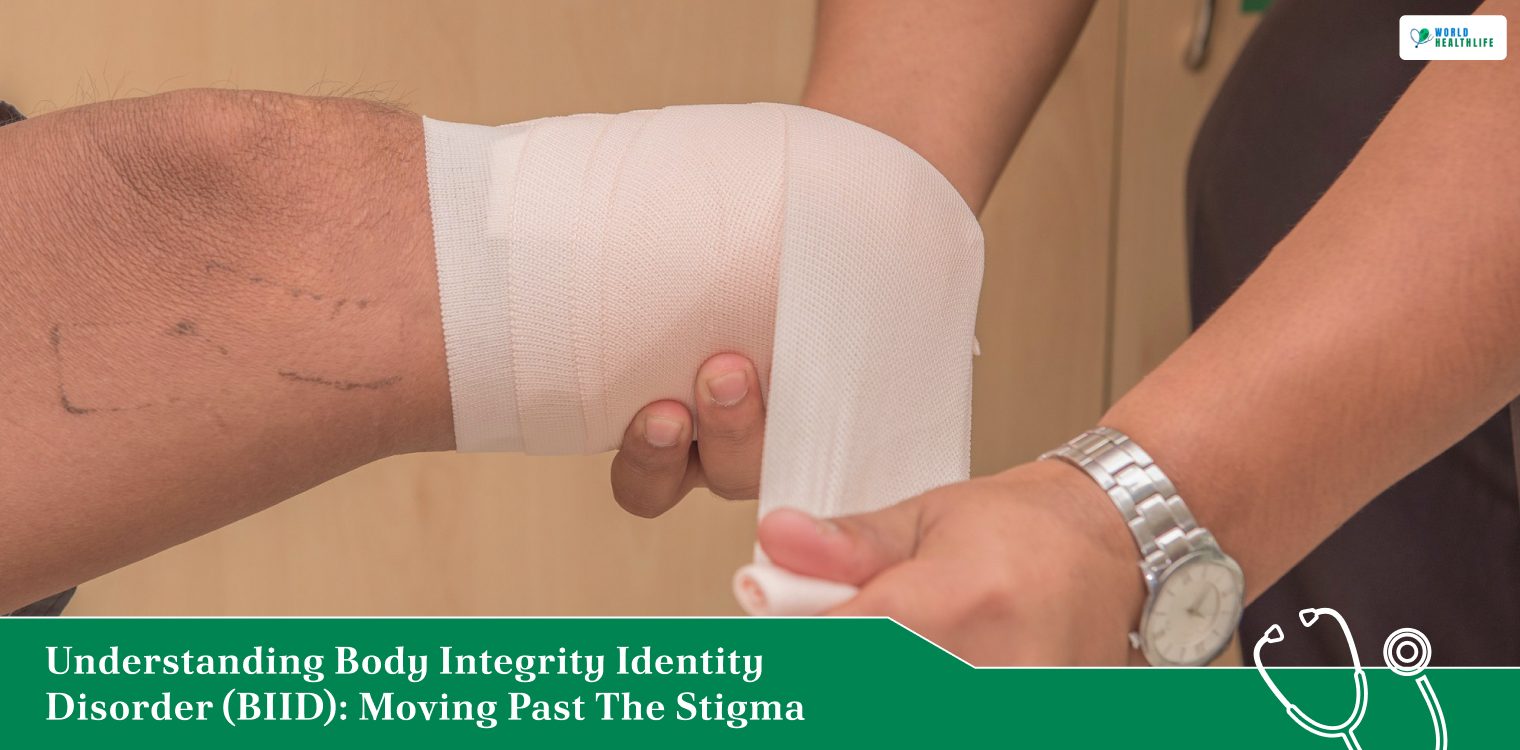
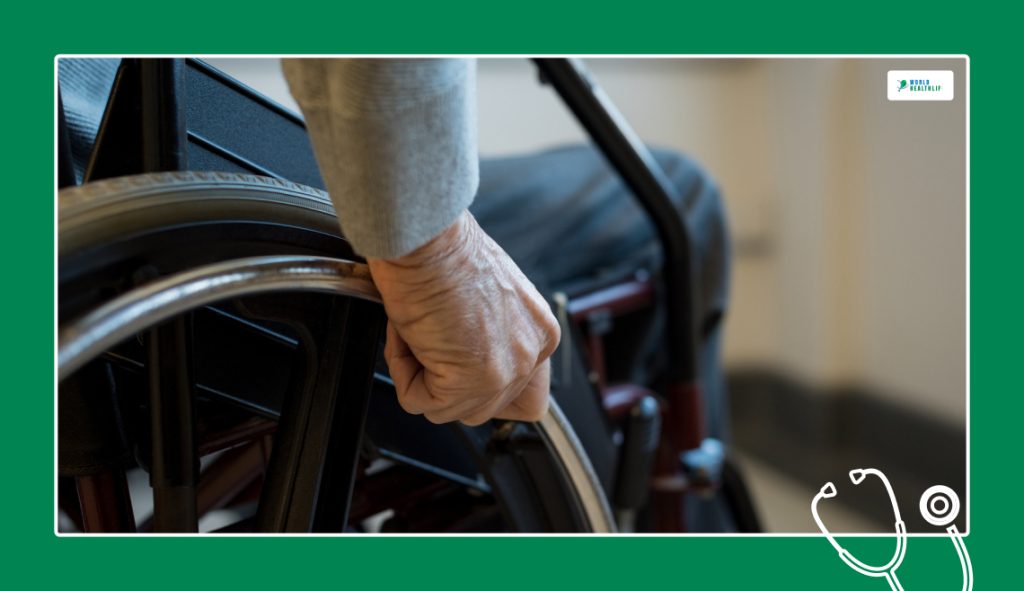
This usually means the use of a wheelchair, getting around the house on crutches, or tightly binding a limb so it is completely hidden from sight.
While this can only be considered a temporary fix, this pretense can only act as a crucial psychological release valve. In addition, it gives them a brief moment of relief along with a fleeting taste of what it feels like to finally feel whole.
As a result, it confirms how their body ought to function.
Severe Emotional And Cognitive Distress
Living with an unwanted limb or functional status creates a constant state of severe emotional and cognitive distress.
To have a limb that just doesn’t belong to you can mean that your brain is constantly receiving signals of not knowing how to handle it. This constant mental friction triggers chronic anxiety along with a crushing sense of isolation.
A majority of people suffering from body integrity identity disorder burn through an immense amount of mental energy just trying to hide their reality from their loved ones and professional life.
Furthermore, they are terrified that if they open up, people will immediately reject them, lock them away in a psychiatric ward, or laugh at them.
Dangerous Coping Mechanisms
When the mental anguish becomes completely unbearable and professional medical help is out of reach, some people may feel driven to dangerous and life-threatening extremes.
Out of pure desperation, individuals may have a history of cutting their own limbs, using dangerous power tools, or intentionally subjecting a limb to severe trauma and freezing temperatures just for a doctor to perform an emergency amputation.
These extreme measures highlight the severity of the condition. Moreover, it is not a passing whim. Instead, it is a critical state of suffering where individuals are willing to risk their lives to achieve anatomical alignment.
If you or someone you know is experiencing thoughts of self-harm, please reach out to a crisis resource.
- Call or text a national crisis line that is available 24/7, free and confidential: 988.
- Text HOME to 741741 to connect with a crisis counselor, available 24/7.
Is It Psychological Or Neurological
For years, doctors have had debates over whether this condition was entirely in the patient’s mind or if it had a physical cause.
Recent breakthroughs in brain scanning technologies have provided clearer answers.
The Brain Map Theory
Early medical perspectives misclassified the disorder entirely as a psychiatric quirk, a manifestation of severe trauma or an unusual paraphilia for decades.
However, modern neuroimaging studies have fundamentally challenged these older assumptions. They further pointed towards a clear biological and structural basis in the brain.
Neuroscientists believe a structural malfunction within the right parietal lobe causes the condition. This specific region of the human brain is responsible for the creation and maintenance of our body schema.
Structural Brain Anomalies
Advanced neuroimaging, such as structural and functional MRI scans, has revealed unique anomalies in individuals with this condition.
Researchers have specifically observed reduced cortical thickness and altered functional connectivity in the premotor cortex and the superior parietal lobule.
When the virtual hardwired map of the brain fails to include a specific limb, the actual physical presence of that limb. Furthermore, this leads to the creation of a constant jarring cognitive dissonance.
Every time the limb moves or receives tactile feedback, it sends signals to a brain area that fails to recognize its existence. As a result, there is a persistent feeling of violation from within one’s own body.
Body Integrity Identity Disorder: Psychological Impact And Daily Life

The daily reality of managing this condition shapes the way individuals interact with the world around them. Furthermore, it affects everything, be it privacy or professional success.
Chronic Isolation And Secrecy
The societal stigma surrounding body integrity identity disorder forces most people with it into a state of lifelong isolation.
Unlike mental health conditions with a greater understanding level, there is almost no public empathy or structured support for someone who feels they need to remove a healthy limb.
Sufferers of the condition have to live in a constant fear of being judged, causing them to hide what they are going through even from their closest loved ones.
Furthermore, the complete secrecy keeps them from seeking early psychological help. As a result, this leads to their internal distress becoming even worse while leaving them completely alone with a deeply intense condition.
Body Integrity Identity Disorder Impact On Relationships And Careers
The mental energy that is required to manage body integrity identity disorder inevitably takes a heavy toll on personal relationships and professional careers.
Furthermore, maintaining a romantic relationship can be extraordinarily difficult when an individual feels deep discomfort with physical intimacy or feels compelled to hide their pretending behaviors.
Professionally, the chronic anxiety paired with depressive episodes associated with the condition can impair concentration and limit career progression. This traps individuals in a cycle of unfulfilled potential and sustained emotional exhaustion.
The Treatment Dilemma And Ethical Controversies

Treating a condition that bridges neurology, psychiatry, and physical surgery causes the creation of unprecedented challenges. Furthermore, medical professionals remain deeply divided on the best path forward.
Furthermore, medical professionals remain deeply divided on the best path forward.
Traditional Psychiatric Approaches
Currently, there is no universally successful pharmaceutical or psychotherapeutic cure that fully eradicates the underlying desire characteristic of body integrity identity disorder.
Traditionally, the approaches have placed a heavy focus on symptom management and harm reduction.
Cognitive Behavioral Therapy is used widely to assist patients in the development of healthier coping mechanisms.
Moreover, it challenges obsessive thoughts and manages the secondary anxiety and depression caused by the disorder.
On the contrary, antidepressant medications such as Selective Serotonin Reuptake Inhibitors are also frequently prescribed to stabilize mood. However, they do not bring any changes to the underlying body schema mismatch.
Emerging Technologies And Virtual Reality
In recent years, researchers have started to explore the use of emerging technologies. This helps to offer non-invasive relief to individuals with Body Integrity Identity Disorder.
Moreover, Virtual Reality (VR) and Augmented Reality (AR) setups are being tested to simulate the desired physical state.
For instance, a patient can put on a VR headset that visually removes the alienated limb from their virtual avatar.
Moreover, early clinical trials indicate that these immersive simulations can temporarily lower distress levels.
On the other hand, they offer a safe and innovative outlet for individuals to experience structural alignment without undergoing irreversible physical changes.
The Surgical Controversy And Medical Ethics In Body Integrity Identity Disorder
The most controversial aspect of body integrity identity disorder centers on surgical intervention.
The accumulation of clinical data and patient surveys suggests that surgical amputation or targeted nerve severing is usually the only intervention that can bring permanent resolution to this distress.
It further eliminates the obsession while drastically improving long-term quality of life.
However, this presents a massive ethical dilemma for the global medical community. Performing an elective surgery to disable a physically healthy body part is in direct contradiction to traditional medical ethics.
Specifically, having a contradiction towards the foundational principle of non-maleficence, which is to do no harm.
Surgeons also face immense legal, professional, and moral hurdles, leaving patients stranded between a protective medical establishment and their own desperate internal needs.
The Importance Of Validating Patient Experiences In Body Integrity Identity Disorder
In order to make meaningful progress in the management of body integrity identity disorder, the conversation must shift away from sensationalism and towards genuine clinical empathy.
When patients are approached by clinicians with validation instead of shock or skepticism, it breaks down the barriers of shame. This allows for open and honest conversations, preventing dangerous behaviors of self-harm.
The Difference Between BIID And Body Dysmorphic Disorder (BDD)
To have a full understanding of this condition, it is vital to distinguish it from body dysmorphic disorder (BDD), which is a much more widely known psychological condition.
The condition is frequently confused with body integrity identity disorder (BIID). While both disorders involve profound distress regarding the physical self, their underlying mechanisms, motivations, and neural pathways are fundamentally different.
| Feature | Body Dysmorphic Disorder (BDD) | Body Integrity Dysphoria (BIID) |
| Core Nature | Obsessive-compulsive psychiatric disorder | Hardwired neurological mismatch |
| Primary Focus | Perceived flaws in physical appearance | Structural presence or function of a limb |
| Underlying Motivation | Aesthetic perfection and social perception | Identity alignment and structural completion |
BDD is generally characterized by an obsessive preoccupation with a perceived flaw or defect in physical appearance that is not noticed by others. However, BIID has nothing to do with aesthetics, beauty, or a desire for physical perfection.
A person does not look at their limb and view it as “ugly” or “flawed.”
Instead, the distress is entirely structural and functional. The patient experiences the limb as an intrusive, alien object that structurally should not exist on their body.
While BDD is categorized as an obsessive-compulsive related psychiatric disorder, BIID is increasingly understood as a hardwired neurological mismatch of the brain’s internal body schema.
Future Horizons In Research And Support In Body Integrity Identity Disorder
The future of managing body integrity identity disorder has a heavy reliance on the expansion of international research and building specialized support networks.
Continued funding for neuroimaging studies is essential to map the precise pathways involved. This may eventually open doors to targeted, non-surgical neurological treatments such as Transcranial Magnetic Stimulation.
Concurrently, the creation of safe and stigma-free psychological support groups will enable individuals to share their experiences safely while reducing isolation.
Furthermore, by fostering a collaborative environment where medical professionals and patients work together, we can build safe and effective long-term solutions.
| Disclaimer: This article is for informational and educational purposes only and does not substitute for professional medical advice. Reading this content does not create a doctor-patient relationship. Always consult a qualified healthcare provider for medical concerns and never delay seeking professional advice based on what you read here. |