Your skin is known to keep a long record of every summer that you have spent outside. Sometimes, this record shows up at once.
So, when you find brown spots suddenly appearing on skin, it can feel like they came from nowhere. However, they almost always have a history.
Most are genuinely harmless pigment changes that are caused by a myriad of factors such as sun, hormones, or inflammation.
But a small number are usually early signs of skin cancer or a health condition that requires attention.
This guide will explain why spots seem to appear overnight, how you can tell the common types apart, which features raise concern, and what a doctor will do.
Why Brown Spots Seem To Appear Overnight
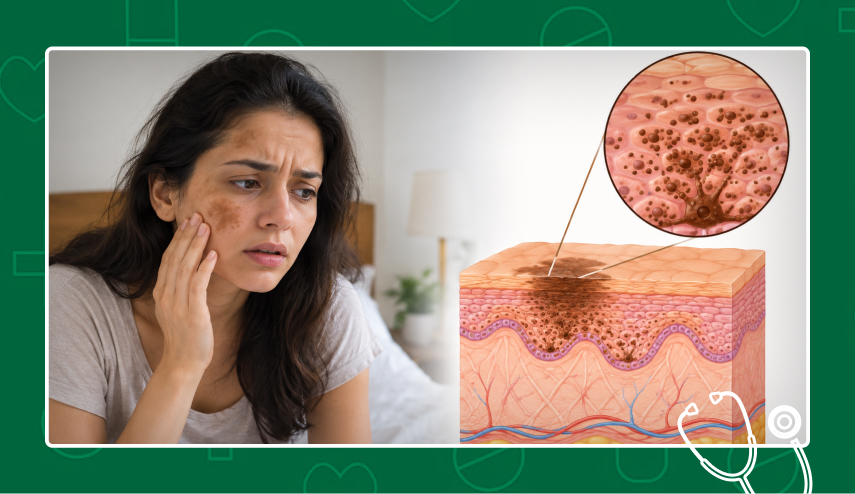
Skin pigment does not switch on in a day. Generally, melanocytes, the cells responsible for making melanin, react to triggers over weeks, months, or even years.
What changes suddenly is your awareness, usually after a new light, a vacation photo, or a close look in the mirror.
Still, some spots do develop quickly. Moreover, when you know the difference between slow buildup and true rapid changes, you have already taken the first step.
How Melanin Builds Up Under The Surface
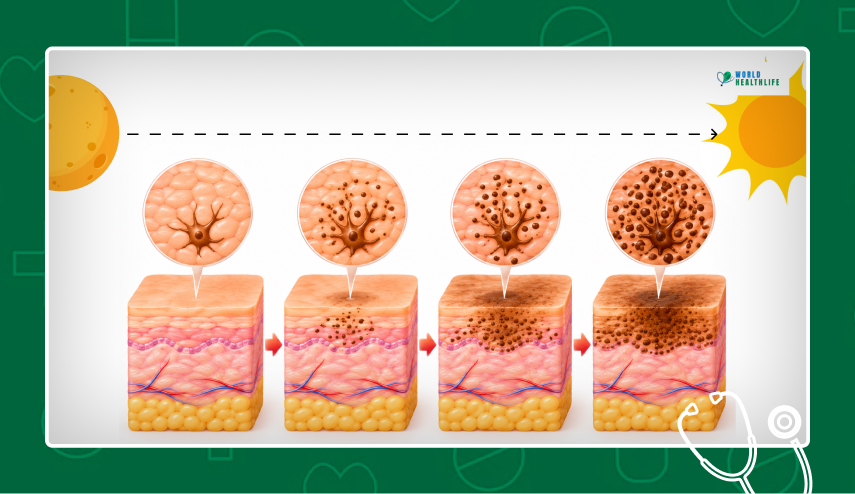
In simple terms, UV light, hormones, and inflammation all signal melanocytes to make more pigment.
This pigment can sit deep in the skin for a long time before it starts to become visible.
Therefore, sun damage from a decade ago can surface as spots in your forties. This delay is why many people feel their skin changed suddenly when the cause was set in motion long ago.
When A Spot Really Is New
A spot that is truly new, growing quickly, or changing within weeks deserves more attention than a long-standing one.
Rapid change is one of the main features that dermatologists look for.
So, as a rule, a new dark spot after age 30 should be watched more closely than a mole you have had since childhood.
Common And Harmless Causes Of Brown Spots
The majority of brown spots fall into a few benign groups.
| Type | What It Looks Like | Typical Location | Main Trigger |
| Sun Spots (Solar Lentigines) | Flat, tan to dark brown, well-defined | Face, hands, shoulders, chest | Years of UV exposure |
| Freckles (Ephelides) | Small, light brown, fade in winter | Face, arms | Sun and genetics |
| Melasma | Larger, blotchy, symmetrical patches | Cheeks, forehead, upper lip | Hormones plus sun |
| Post-Inflammatory Hyperpigmentation | Flat brown marks where skin was injured | Anywhere | Acne, eczema, cuts, burns |
| Seborrheic Keratosis | Raised, waxy, “stuck-on” look | Back, chest, face | Age, genetics |
| Café-Au-Lait Macules | Uniform light brown patches | Anywhere | Often present from birth |
Sun Spots And Freckles
Also called age spots or liver spots, sun spots have nothing to do with the liver. They are flat patches of pigment that form where skin has had the most UV exposure.
Usually painless and evenly colored, they have clear edges.
Also, freckles look similar. However, they are smaller and deepen in summer, while fading in winter. On the other hand, sun spots stay put.
Melasma
Melasma causes symmetrical brown or gray-brown patches. These are mostly on the face.
Hormonal shifts from pregnancy, birth control pills, or hormone therapy are common triggers.
But here is the thing. When you get exposed to the sun, this makes it even worse.
Even a little daylight can darken the patches, where it is harmless but stubborn. Oftentimes, it returns without strict sun protection.
Post-Inflammatory Hyperpigmentation
After a pimple, rash, insect bite, or burn heals, the skin can leave behind a brown mark.
This is even more visible, lasting longer in medium to dark skin tones.
If you pick at the area, this mark can deepen. Moreover, these spots fade over months. However, sunscreen speeds that along.
Seborrheic Keratoses
These growths look waxy and slightly raised. That is, as if they had been stuck onto the skin with glue. Ranging from light tan to nearly black, they can appear in clusters.
Additionally, they are benign and a very common occurrence after you cross the age of 40.
Yet one rare exception is a sudden eruption of many at once. This is known as the Leser-Trélat sign, which has occasionally been linked to an internal cancer.
Thus, you need to get it checked.
Brown Spots Suddenly Appearing On Skin: Health Conditions And Medicines Behind Them
Understand one thing first. That is, pigment can also change due to what is happening inside your body.
So, when the following happens, doctors tend to look beyond sun damage.
- Spots are widespread
- Appear in unusual places
- Arrive along with other symptoms
This is an area people usually overlook. However, it explains so many unexpected changes.
Medication-Related Darkening
There are several drugs that can cause brown or gray-brown patches.
For example, the list includes:
- Minocycline and doxycycline (antibiotics)
- Amiodarone (a heart rhythm drug)
- Some chemotherapy drugs
- Phenytoin
- Hormonal treatments.
Furthermore, other medicines make skin more sensitive to sunlight. As a result, patches also start to develop faster outdoors.
If the timing fits a new prescription, tell your doctor. But do not stop the medicine without advice.
Hormonal And Metabolic Conditions
Dark, velvety patches in the neck, armpits, or groin are known as acanthosis nigricans. Moreover, they are often a sign of insulin resistance or type 2 diabetes.
Hormone disorders such as Addison’s disease can darken skin broadly, especially in creases and scars, along with fatigue and weight loss.
In case of pregnancy as well, it can darken the nipples, the midline of the abdomen, and the face.
Fungal And Other Skin Conditions
Due to tinea versicolor, a yeast overgrowth, tan or brown patches on the chest and back that are slightly scaly can occur.
In addition, eczema, psoriasis, and lichen planus can leave brown marks after they flare.
Usually, these are treatable once identified, which is why a diagnosis matters more than guessing.
Brown Spots That Need A Closer Look
The majority of the brown spots are not cancer.
Instead, they are melanoma, which is one that matters most to catch early. It can look like a new dark spot or a change in an existing mole.
But do not feel afraid. That is because it is highly treatable when found early. Dermatologists use a simple checklist to judge risk.
| Letter | What To Check | Concerning Sign |
| A: Asymmetry | Compare the two halves | One half doesn’t match the other |
| B: Border | Look at the edge | Ragged, notched, or blurred |
| C: Color | Look at the shades | Several colors: brown, black, red, white, blue |
| D: Diameter | Measure the width | Larger than about 6 mm (a pencil eraser), though smaller melanomas exist |
| E: Evolving | Compare over weeks | Changes in size, shape, color, or new symptoms |
The “Ugly Duckling” Rule
Another useful trick is to compare each spot with the others on your body. Moles in one person tend to look alike.
Thus, the one that stands out as darker, larger, or different deserves attention.
A spot that itches, bleeds, crusts, or would not heal is also a warning, despite being a small one.
Other Spots Worth Checking
Actinic keratoses are rough, scaly, brownish or pink patches caused by sun damage, and they can turn into squamous cell carcinoma if left alone.
Moreover, lentigo maligna is a slowly growing brown patch on the face of older adults that can progress to melanoma.
Both can mimic a harmless sun spot. That is exactly why a patch that is changing or has uneven color should be looked at in person.
Where The Spot Appears Can Offer Clues
Location does not diagnose a spot on its own. However, it helps narrow the possibilities and shows how much sun exposure a site has had.
| Location | Common Explanations | Worth Noting |
| Face and cheeks | Melasma, sun spots, freckles | Check any patch with uneven color |
| Hands and forearms | Sun spots, actinic keratoses | Rough or scaly texture needs a check |
| Chest and back | Seborrheic keratoses, tinea versicolor, sun spots | Back is hard to see, so ask someone to look |
| Neck, armpits, groin | Acanthosis nigricans, skin tags | Consider a blood sugar test |
| Palms, soles, nails | Usually benign moles, but melanoma can occur here | Any new dark spot or nail streak should be checked |
How Doctors Diagnose Brown Spots
Most diagnoses begin with a visual exam. A dermatologist will look at the whole skin surface, ask when the spot appeared, and ask about sun history, family history, medicines, and other symptoms.
Usually, this takes only a few minutes. However, it reveals a great deal.
Dermoscopy And Photography
A dermatoscope is a handheld magnifier with polarized light that allows the doctor to see structures that are below the surface.
Moreover, it helps in separating benign spots from suspicious ones without cutting the skin.
For people with many moles, doctors may take baseline photographs. Thus, changes can be tracked over time.
Skin Biopsy
In case a spot looks suspicious, the doctor removes a small sample or the whole spot under local anesthetic. Then, it is sent to a lab.
A biopsy is the only way to confirm melanoma or a precancerous growth.
Not only is it a quick procedure, but the results also typically come back within one to two weeks.
Treatment And Prevention
When it comes to harmless spots, there is no treatment needed. However, many people choose to lighten them merely for cosmetic reasons.
The best option is fully dependent on the following:
- Type
- Depth of the pigment
- Your skin tone
So, treat it only after a doctor has given you confirmation that the spot is benign.
Treatment Options
Prescription creams, In-office options, or over-the-counter products can be used, especially those that comprise:
- Hydroquinone
- Tretinoin
- Azelaic acid
- Vitamin C
- Niacinamide
- Retinol
- Cryotherapy (freezing)
- Chemical peels
- Laser
- Intense pulsed light treatments
When you use the wrong laser on darker skin, it can cause new pigment. Thus, choose an experienced provider.
Try to skip DIY removal with acids, blades, or apple cider vinegar. That is because these can scar and hide a dangerous spot.
Protecting Your Skin From New Spots
Out of everything, sun protection is considered the most effective prevention.
So, use a broad-spectrum sunscreen of SPF 30 or higher every day. Also, reapply it every two hours when outdoors and wear a hat as well as sunglasses.
Try to seek shade at midday and avoid tanning beds completely.
In addition, check your skin monthly while noting any new or changing spots. That is because early detection is what protects you most.
When To See A Doctor
As we have learned so far, the very first thing you should aim to do is book an appointment if a spot is new and growing. Moreover, try doing so if you see bleeding, have itching, crusts, or it just is not healing.
Also, if many brown spots appear in a short time, it is advisable to consult a medical professional.
Dark velvety patches in the folds of your skin, or widespread darkening along with fatigue, dizziness, or weight loss, should also be checked.
Seek urgent care if you see either of these happening:
- A mole changes rapidly over days to weeks
- A dark streak appears under a nail without an injury
Anyone with a personal or family history of melanoma, many moles, or fair skin that burns easily should have a regular full-body skin exam.
Moreover, most brown spots turn out to be old sun damage finally showing itself.
Still, your skin is the one organ you can inspect directly, and noticing a change early is a real advantage.
Thus, look closely, take photos, and let a professional make the call when something doesn’t fit the pattern.
Disclaimer: The information provided in this article is for general informational purposes only. It does not, and is not intended to, constitute medical or health advice. Please consult a qualified healthcare professional for medical guidance or expert health assistance.
References
- Mayo Clinic. (2025). Age spots (liver spots) – Symptoms and causes. Mayo Clinic.
- Harvard Health. (2022). 5 skin spots you shouldn’t worry about. Harvard Health.
- Morales-Brown, P. (2025, May 9). What causes patches of discolored skin, and when should someone see a doctor? Medical News Today.