Having a persistent itch in your underarms can not only be an incredibly frustrating experience but also highly uncomfortable.
The underarm area is naturally sensitive, prone to moisture, and subjected to daily friction. So, it is highly vulnerable to various forms of irritation.
Thus, if you are constantly asking yourself, “why are my armpits itchy?”, you are not alone.
Having discomfort in your underarms is so common that it can stem from the following:
- Everyday lifestyle choices
- Environmental factors
- Underlying dermatological conditions.
Therefore, having an understanding of the primary causes of this irritation is the first step toward finding lasting relief.
Below, we dive deep into the most frequent triggers behind itchy armpits and look at the red flags that warrant a doctor’s visit.
Besides that, we will also outline actionable steps you can take immediately to soothe compromised skin.
The Primary Triggers Of Underarm Itching
Think about how thin the skin is inside your axillary vault. It folds tightly against itself all day.
Plus, it is packed densely with sweat glands. This specific biological layout makes the whole area uniquely vulnerable to severe irritation.
Disrupt this localized ecosystem even a little, and your body hits defense mode fast. A sharp inflammatory response flares up. That reaction is what registers as a persistent, maddening itch.
To make it stop, zero in on the exact factors attacking your skin barrier. It could be chemical, environmental, or biological.
At A Glance
| Primary Trigger | Common Cause | Key Symptoms |
| Chemical Contact Dermatitis | Deodorants, fragrances, baking soda | Localised redness, burning, irritation |
| Intertrigo & Fungal Growth | Trapped moisture, skin friction, yeast | Bright red, raw, scaly rash |
| Mechanical Damage | Shaving, dull razor blades, friction | Razor burn, small red bumps, pimples |
| Systemic Conditions | Eczema, psoriasis, immune issues | Chronic itching, deep lumps, dry patches |
Chemical Contact Dermatitis: Disruption By Deodorant
One of the most frequent reasons people experience underarm itching is contact dermatitis. This occurs when the skin reacts negatively to a foreign substance.
There are two main types here.
| Types | Description |
| Irritant Contact Dermatitis | A direct irritation caused by harsh ingredients that strip the skin’s protective barrier |
| Allergic Contact Dermatitis | A specific immune response to an allergen present in your personal care products |
Here, the daily deodorant that you use is the primary culprit.
Moreover, a variety of traditional products contain the following:
- Heavy synthetic fragrances
- Alcohol, preservatives, such as parabens
- Baking soda.
All of these can severely disrupt the delicate skin barrier. Laundry detergents and heavily scented body washes can leave behind residues on your clothes or skin.
This further triggers an aggressive and itchy response.
Intertrigo And Fungal Growth: The Warm-Zone Trap
If you had to describe the human armpit, it is a naturally warm, dark, and humid environment.
So, when skin rubs against skin, the result of this is friction and trapped sweat. This can lead to an inflammatory condition known as intertrigo.
A further byproduct of this is an inflammatory condition known as intertrigo. During exercise or in hot weather, this is especially inevitable.
But if it is ignored and left unmanaged, this moist microclimate becomes an ideal breeding ground for microscopic organisms.
The most common culprit is a yeast called Candida.
Typically, an armpit yeast infection causes a bright red, intensely itchy, sometimes scaly rash.
In some cases, it may also feature small, pimple-like bumps (satellite lesions) spreading from the main irritated area.
Mechanical Damage: Razor Burn And Folliculitis
Shaving is another highly invasive routine for the underarms area.
However, shaving with a dull blade is even worse. Dragging it across your skin or shaving it too closely ultimately leads to the creation of micro-tears in the skin barrier.
Therefore, this mechanical friction causes razor burn.
Generally, this presents as immediate stinging, redness, and a sharp itch as the skin attempts to heal.
Furthermore, these micro-tears allow surface bacteria to enter the hair follicles. This can result in folliculitis.
This is actually an infection or inflammation of the hair follicles that looks like small red bumps or white-headed pimples centered around underarm hairs.
Folliculitis can be deeply itchy, tender, and prone to further irritation if it is shaved again.
Systemic And Immune-Mediated Skin Conditions
Sometimes, the root cause is not external. Instead, chronic skin conditions frequently target body folds like the underarms.
| Condition | Core Mechanism | Key Symptoms |
| Atopic Dermatitis (Eczema) | Genetic variation that weakens the skin’s protective barrier | Intense itching, severe dryness, and weeping patches |
| Inverse Psoriasis | Inflammatory condition thriving specifically in body folds | Smooth, red, raw-looking patches that itch and burn |
| Hidradenitis Suppurativa | Chronic blockage of the underarm hair follicles | Painful, deep pea-sized lumps that can rupture |
Red Flags: When The Itch Signals Something Serious
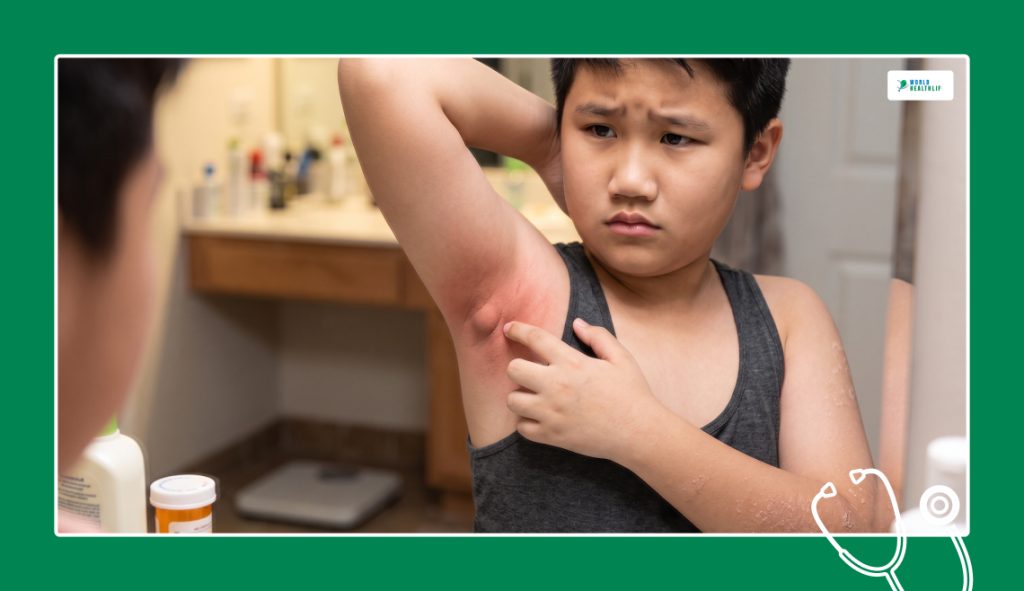
Most cases of underarm discomfort stem from superficial skin irritation. However, persistent or unusual symptoms sometimes warrant closer investigation.
Chronic, unexplained underarm itching can occasionally serve as an early indicator of internal metabolic issues such as diabetes.
This occurs due to blood sugar imbalances, triggering localized nerve irritation and systemic dry skin.
Moreover, this often manifests as a stubborn, deep-seated itch in body folds.
On rare occasions, chronic axillary irritation can signal oncological conditions.
Though this connection is highly unusual, specific systemic signs require a prompt medical evaluation if they accompany a persistent underarm itch.
These critical warning indicators include hard, painless, swollen lymph nodes in the armpit, drenching night sweats, or rapid unexplained weight loss.
Thus, try seeking professional medical guidance for these symptoms. That is because it is essential to rule out rare but serious underlying conditions.
Warning Signs: In A Nutshell
| Warning Sign | Potential Internal Cause | Key Medical Signal |
| Chronic Axillary Itching | Diabetes / Metabolic Issues | Localized nerve irritation and systemic dry skin |
| Hard, Swollen Lymph Nodes | Hodgkin Lymphoma | Oncological trigger affecting the lymphatic system |
| Drenching Night Sweats | Systemic Illness | Internal regulatory dysfunction requiring prompt screening |
| Unexplained Weight Loss | Advanced Systemic Disease | Rapid metabolic changes not linked to diet or exercise |
| Skin Thickening or Dimpling | Inflammatory Breast Cancer | Rare oncological link causing localized tissue changes |
What To Do Immediately If Your Armpits Won’t Stop Itching?
When underarm irritation gets this bad, you have to treat the skin like an open wound.
That means completely freezing your daily grooming routine.
Putting harsh chemicals on your skin or running a razor over raw, damaged areas drives the inflammation deeper and risks a nasty secondary infection.
Your absolute first step is to cut out every single potential trigger.
Stop using all deodorants, antiperspirants, and body washes immediately. This is especially if they contain heavy perfumes or baking soda.
Next, throw on some loose, breathable cotton clothes. This keeps the area dry and stops your skin from constantly rubbing against itself.
To take the edge off that non-stop, agonizing urge to scratch, press a cold compress against the area for 10 minutes at a time.
You can also put on a thin layer of over-the-counter hydrocortisone cream or calamine lotion to help calm down the local nerves while your skin barrier tries to heal.
Skip the home remedies entirely and get a doctor to look at it if the itching comes with any of these:
- Oozing sores
- A foul smell
- Extreme swelling
- A fiery red rash that’s actively spreading down your torso
You also need to see a doctor. This means you experience an intense itch alongside deep, painful lumps under the skin, a sudden fever, or night sweats.
Those are clear signs that you’re dealing with something much deeper than a simple surface irritation.
Disclaimer: The information provided in this article is for general informational purposes only. It does not, and is not intended to, constitute medical or health advice. Please consult a qualified healthcare professional for medical guidance or expert health assistance.