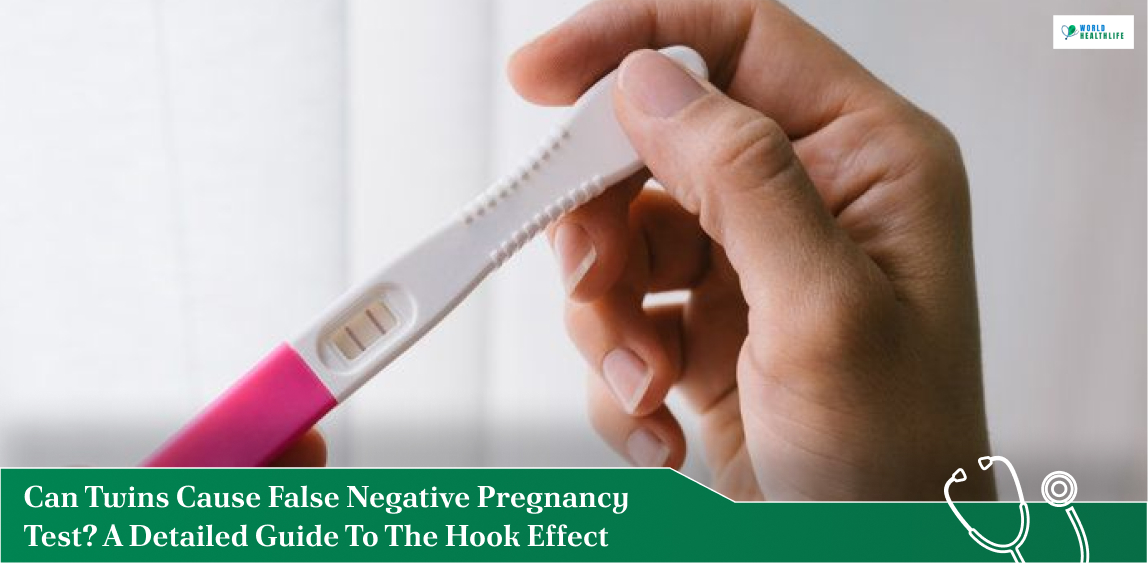
It can be quite a deeply confusing feeling when your body sends clear signals of pregnancy. Despite that, the plastic stick in your hand displays a stubborn negative result.
Though at-home pregnancy tests boast a 99% accuracy rate, they are not completely foolproof.
So, you might be asking this: can twins cause false negative pregnancy test?
Surprisingly, being pregnant with twins or multiples can cause a false negative pregnancy test due to a rare biological phenomenon known as the “hook effect”.
Normally, when you carry twins, that means your body is producing higher and more rapidly doubling levels of human chorionic gonadotropin (hCG).
The fundamental hormone that at-home kits measure to confirm conception.
However, when multiple placentas secrete an immense surge of this hormone early in the first trimester, it can completely backfire on standard testing kits.
Instead of generating a bold positive line, an overwhelming concentration of hCG can essentially blind the test’s chemistry.
As a result, this triggers a false negative.
So, understanding how this breakdown happens, what the hook effect means for your body, and how to get an accurate answer is essential.
That way, you are able to navigate early prenatal care with clarity.
How Do At-Home Pregnancy Tests Actually Work?
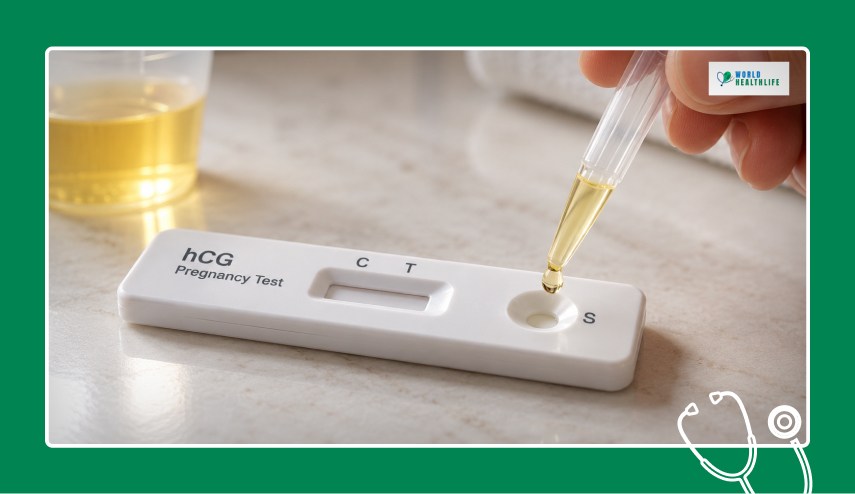
In order to understand why an abundance of hormones causes a test to fail, it would first help to look at the underlying science.
Over-the-counter urine test kits are engineered as “sandwich” style immunoassays.
They contain two specific sets of antibodies designed to detect the beta subunit of the hCG hormone.
Most modern home tests require a baseline threshold of 20 mlU/ml to 25 mIU/mL of hCG to register a positive result. This is a milestone typically crossed around the fourth week of a standard pregnancy.
Mobile Capture Antibodies
These are located at the tip of the test strip, where these dyed antibodies grab onto the molecules as your urine moves up the wick.
Fixed Indicator Antibodies
These are permanently attached to the test line window.
Moreover, these antibodies lock down the moving “hCG-antibody” complex, holding it in place to create a visible, coloured positive line.
What Is The Hook Effect: The Prozone Phenomenon
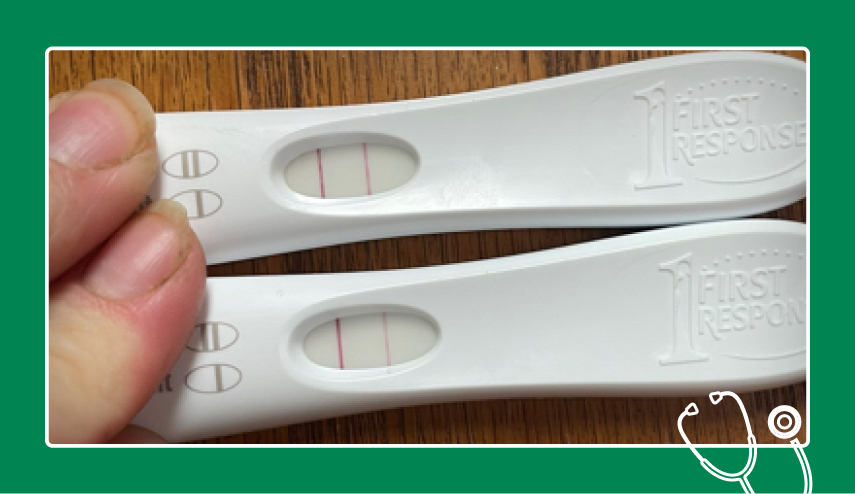
Medically referred to as the prozone phenomenon, the hook effect occurs when the concentration of a target substance is so profoundly high that it breaks the testing mechanism.
When hCG levels are normal, the hormone forms a clean “sandwich” between the mobile and fixed antibodies.
As a result, a positive line is created.
However, if your urine is heavily saturated with an extreme overload of hCG, the individual hormone molecules will independently crowd out.
Simultaneously, it will flood both sets of antibodies.
Actually, every single binding site on the fixed test line is blocked by “free” hCG before the dye-linked mobile antibodies can travel up and lock in.
So, a sandwich cannot form.
Moreover, the dyed antibodies simply wash past the test window without sticking.
This leaves the screen completely blank and produces a false negative result.
Can a Twin Pregnancy Trigger the Hook Effect?

To answer that in short, well it would be yes.
However, it is an uncommon clinical occurrence affecting roughly 0.2% to 2% of pregnancy tests.
A singleton pregnancy typically peaks well below the threshold of failure.
Nonetheless, twin and multiple gestations frequently yield 30% to 50% higher baseline hCG levels. This is because there are multiple placentas actively producing the hormone.
If you are carrying multiples, your hCG levels can skyrocket past 500,000 mIU/mL by weeks 7 to 10.
For example, this is particularly when you underwent fertility treatments like In Vitro Fertilisation (IVF), which can jumpstart rapid early hormone output.
At this extreme volume (often 2,500 times the lowest amount the test strip was designed to look for), the hook effect becomes a very real possibility.
Comparing False Negative Causes
If you receive a negative result but still feel firmly that you are pregnant, the hook effect is a possible culprit.
However, it is wise to rule out more common testing variables.
Use this table to troubleshoot your results.
| Testing Scenario | hCG Hormone Levels | Timing in Pregnancy | How to Fix It |
| Testing Too Early | Too Low (< 20 mIU/mL) | Weeks 3 to 4 (Before missed period) | Wait 48–72 hours and test again with first morning urine. |
| The Hook Effect (Twins) | Too High (> 500,000 mIU/mL) | Weeks 7 to 10 (Period is weeks late) | Dilute the urine sample with water, or get a quantitative lab blood test. |
| Diluted Sample | Temporarily Lowered | Any stage of early pregnancy | Restrict fluid intake for 4 hours prior to collecting a urine sample. |
Other Reasons For An Unexpected Negative Test
Beyond the hook effect and simple timing, there are a few other reasons why your test might show an unexpected negative:
User Error Or Expired Kits
When you misinterpret the reaction window time frames or use a test strip that has degraded past its expiration shelf life, this is possible.
Molar Pregnancies
In the case of molar pregnancies, a rare gestational trophoblastic disease occurs.
Here, abnormal placental tissue grows rapidly, generating massive, out-of-control surges of hCG that easily trigger the hook effect.
Actionable Steps: How To Find Out The Truth
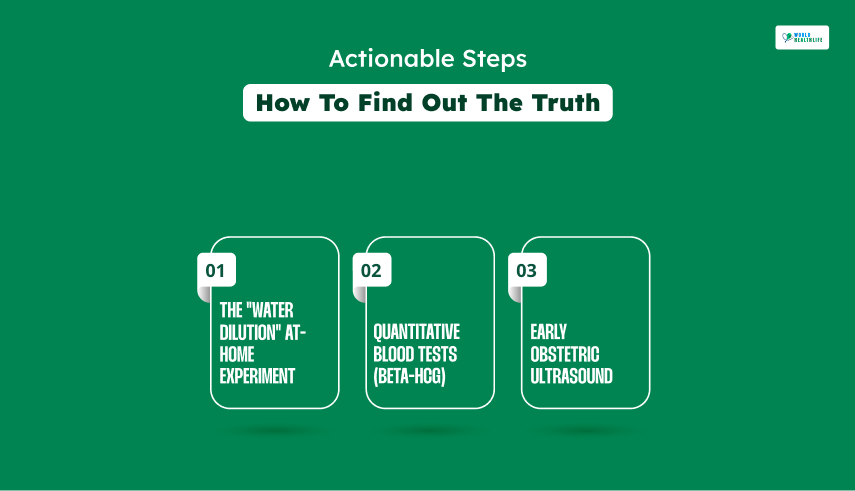
If you suspect your home tests are failing due to a high hormone concentration from a twin pregnancy, do not rely on standard testing repetitions.
Instead, utilize the following clinical and at-home strategies.
The “Water Dilution” At-Home Experiment
If you suspect the hook effect, you can try diluting a fresh urine sample.
First, mix equal parts urine and tap water in a clean cup, then dip a new test strip into the diluted mixture.
By reducing the crushing concentration of hCG, you allow the antibodies room to bind properly, which can paradoxically cause a stark positive line to appear.
Quantitative Blood Tests (Beta-hCG)
Urine tests only look for the presence of the hormone.
A quantitative blood draw performed by a medical professional measures the exact numerical volume of hCG in your bloodstream.
Lab technicians can easily bypass the hook effect by performing serial dilutions on your blood sample. As a result, this gives you a precise hormone count.
Early Obstetric Ultrasound
An ultrasound is the only definitive way to confirm a twin pregnancy.
If your period is more than a few weeks late, a transvaginal ultrasound can easily bypass hormone tracking entirely.
As a result, this lets a doctor visually confirm the gestational sacs and fetal heartbeats within the uterine lining.
When Should You See A Doctor
It can be seen that at-home tests are great screening tools.
However, at the end of the day, they have physical limits.
For example, your period is significantly late. Home tests remain negative. Yet, if you are experiencing intense morning sickness, fatigue, or breast tenderness, it is time to skip the drugstore aisle.
Reach out to your healthcare provider for a blood test.
In addition, you may opt for an early ultrasound to get a definitive, clear answer about your pregnancy status.
Disclaimer: The information provided in this article is for general informational purposes only. It does not, and is not intended to, constitute medical or health advice. Please consult a qualified healthcare professional for medical guidance or expert health assistance.
References
- Priyadarshini, S., Manas, F., & Prabhu, S. (2022). False Negative Urine Pregnancy Test: Hook Effect Revealed. Cureus, 14(3), e22779. PubMed Central.
- Gonçalves, R. F., S Vaz, M. A., Rollin, G., & Isolan, G. R. (2023). The Hook Effect: A Case Study of a Giant Invasive Prolactinoma With Falsely Low Serum Prolactin. Cureus, 15(9), e46194. PubMed Central.
- Winder, A. D., Mora, A. S., Berry, E., & Lurain, J. R. (2017). The “hook effect” causing a negative pregnancy test in a patient with an advanced molar pregnancy. Gynecologic Oncology Reports, 21, 34–36. PubMed.
- Napoli, G., Leggeri, S., Lombardi, C., Mazzuccato, G., Urbani, A., & Baroni, S. (2025). Hook effect although rare, still exists. Clinical Biochemistry, 138, 110947. PubMed.