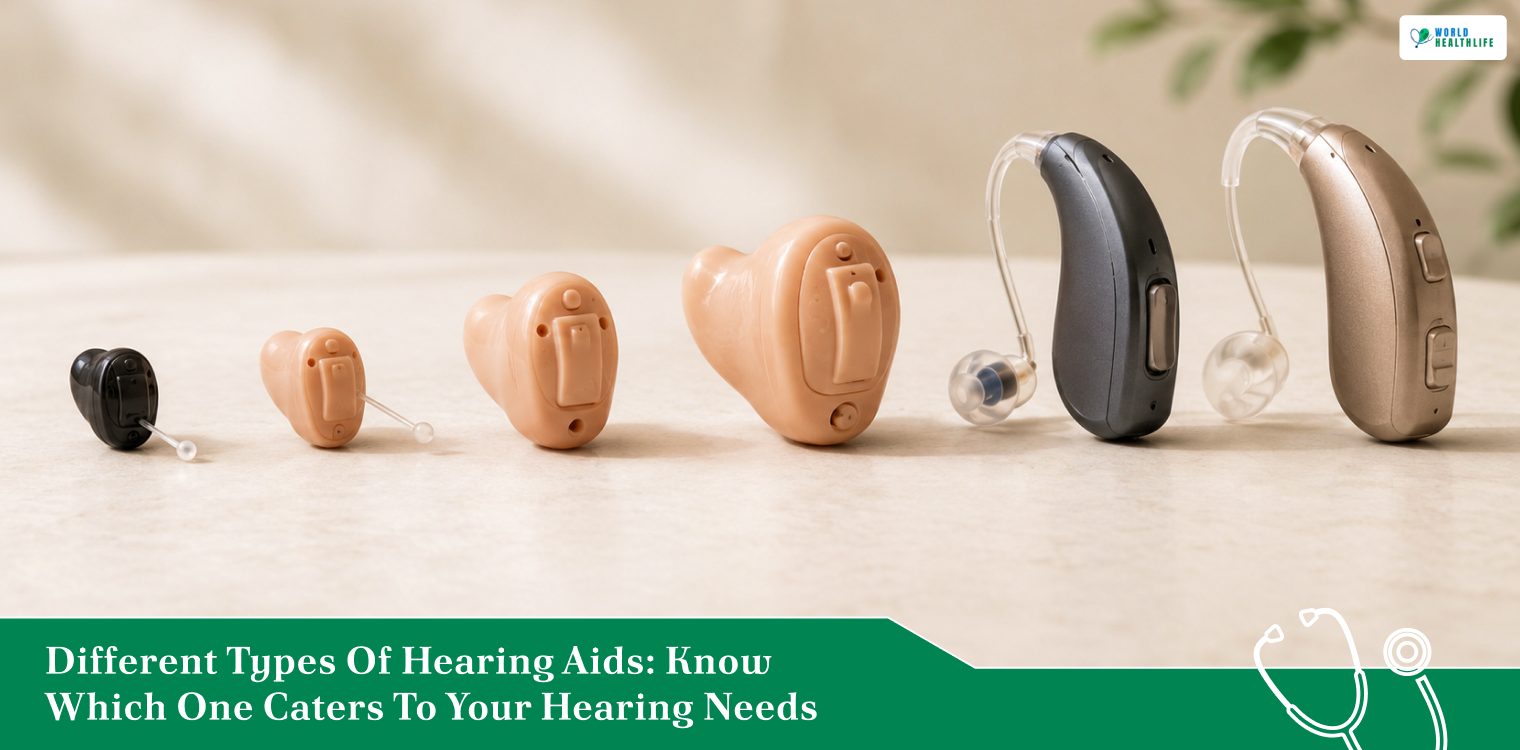
Hearing aids are essential devices that can greatly improve the quality of life for individuals with hearing loss.
With the different types of hearing aids that are available across the market today, it is crucial for you to understand the differences as well as the technical features of each.
This allows in the determination of the best option for your specific hearing needs.
The following is a comprehensive guide that will discuss the primary categories of assistive listening technology.
Furthermore, it will specifically break down behind-the-ear (BTE), in-the-ear (ITE), in-the-canal (ITC) and completely-in-the-canal (CIC) devices, along with the modern over-the-counter alternatives.
The Benefits Of Hearing Aids
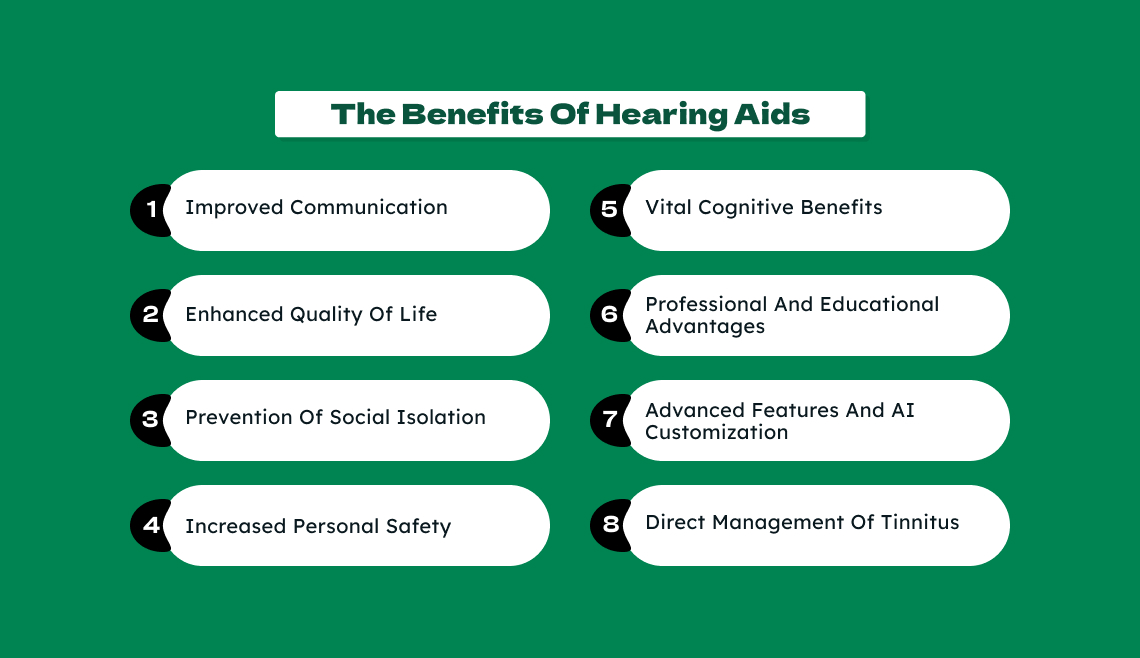
Hearing aids can be an excellent management option for individuals with hearing loss. Before knowing about the different types of hearing aids, you must first know about the benefits in general.
If you are facing struggles with auditory clarity, the following are several key reasons why choosing a modern hearing aid is beneficial to your overall health.
Improved Communication
Hearing aids selectively amplify speech as well as ambient sounds. This makes it significantly easier for individuals with hearing loss to engage in casual conversations as well as understand complex speech patterns.
With this, daily communication is enhanced while confidence is built, streamlining social interactions in noisy environments.
Enhanced Quality Of Life
With the direct addressing of auditory decline, hearing aids contribute to a greatly improved quality of life.
Allowing individuals to participate more fully in family gatherings and enjoy social events freely, hearing aids maintain strong personal connections without feeling left behind.
Prevention Of Social Isolation
Hearing loss can lead to social isolation if left untreated. Individuals are also left withdrawn from conversations of frustration or embarrassment, leading to quick social isolation.
On the other hand, hearing aids help individuals stay connected with friends, family, and the community, lowering the long-term risk of loneliness.
Increased Personal Safety
Being able to clearly hear daily environmental sounds, such as vehicle horns, sirens, emergency alarms and approaching footsteps, is something essential for physical safety.
When you wear a hearing aid, you are provided with immediate spatial awareness of these vital sounds, which helps you to navigate public spaces safely.
Vital Cognitive Benefits
Addressing hearing loss with hearing aids has been associated with potential cognitive benefits.
Addressing hearing loss with assistive devices helps in the reduction of immense cognitive load that is needed to decipher muffled speech.
This allows the brain to allocate its processing power in a more efficient manner.
Professional And Educational Advantages
For individuals who navigate competitive corporate offices or academic lecture halls, hearing aids facilitate better real-time communication during meetings, group presentations, or lectures.
This boosts daily productivity while enhancing learning retention and protecting career growth.
Advanced Features And AI Customization
When it comes to modern hearing aids, highly sophisticated digital features are equipped. This includes directional microphone arrays, wind noise reduction and automatic environment adaptation.
Many current models leverage advanced onboard microprocessors to filter background din from human voices in an instant.
Direct Management Of Tinnitus
Some hearing aids are equipped with features designed to manage tinnitus (ringing in the ears), providing relief for individuals experiencing both hearing loss and tinnitus.
An Important Thing To Note
Although the technology inside these devices has had rapid advancements, hearing aids have been historically most effective when they have been selected and adjusted by a licensed and qualified audiologist.
Factors such as the exact severity of your hearing loss, daily lifestyle demands, cosmetic desires and personal budget matter.
In case you suspect a drop in your hearing capability, you should schedule a comprehensive hearing test with an audiologist. You may further get which one is good for you among all the different types of hearing aids
Behind-the-Ear Hearing Aid (BTE)
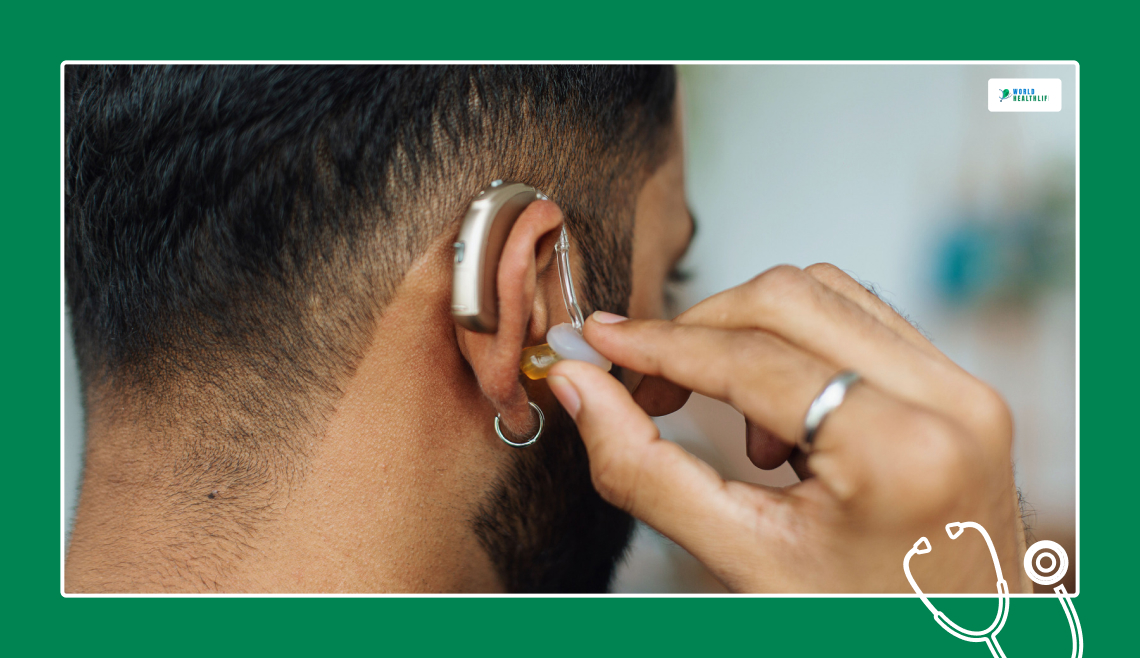
BTE hearing aid or device is one of the most common and versatile types of hearing aid. One good example of this is Horizon hearing aids by Hear.com. They consist of a plastic casing that sits behind the ear, housing the electronic components, and a clear plastic tube that connects to an earmold or dome inside the ear canal. BTE hearing aid devices are suitable for individuals with mild to profound hearing loss and come in various sizes and styles.
Pros:
- Suitable for a wide range of hearing loss levels
- Can accommodate various earmold types and sizes for optimal fit and comfort
- Easily adjustable and accessible controls
- Larger battery size, which may result in longer battery life
Cons:
- More visible compared to other hearing aid styles
- May be prone to wind noise due to microphone placement
- May not be suitable for individuals with glasses or who frequently wear hats
ITE (In-The-Ear) Hearing Aids
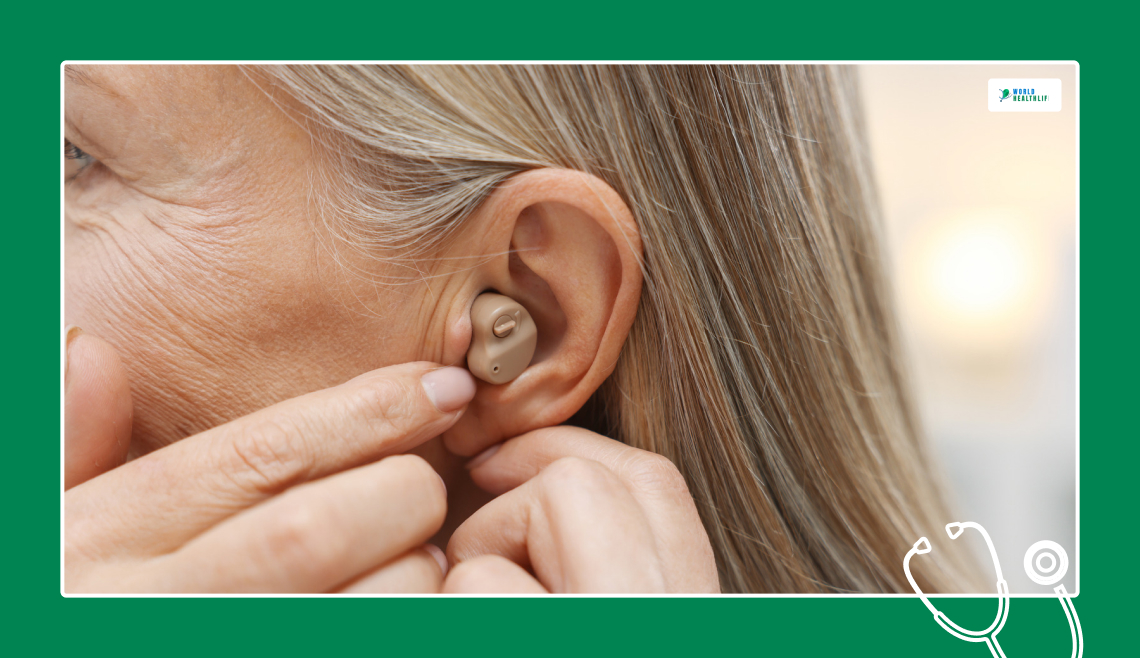
ITE hearing devices are custom-made devices that fit directly into the outer portion of your ear canal, making these much less visible than the BTE models. These hearing devices or aids are suitable for individuals with mild to severe hearing loss and come in two main styles: full-shell, which fills the entire bowl of the ear, and half-shell, which occupies only the lower part of the ear bowl.
Pros:
- Less visible than BTE hearing aids
- Custom-fit for increased comfort
- Easier to insert and remove compared to smaller in-the-canal models
- Can accommodate additional features and specifications, like directional microphones and volume controls
Cons:
- May be prone to earwax and moisture buildup, requiring more frequent cleaning and maintenance
- Smaller battery size, which may result in shorter battery life
- Not suitable for individuals with profound hearing loss
In-the-Canal Hearing Aids (ITC)
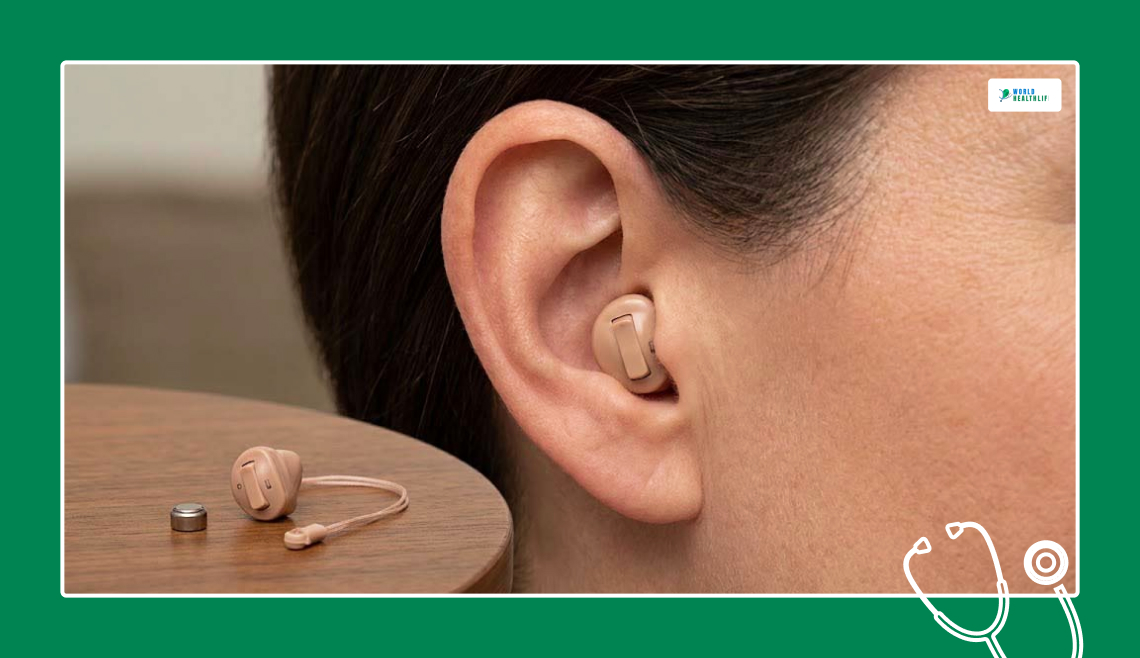
ITC hearing aids are smaller than ITE models and fit partially in the canal of the ear, making them even more discreet. They are customized to fit the individual’s ear and are suitable for those with mild to medium hearing loss.
Pros:
- More discreet than BTE and ITE hearing devices or aids
- Custom-fit for increased comfort
- Less susceptible to wind noise due to microphone placement
Cons:
- May be difficult to handle and adjust for individuals with dexterity issues
- Smaller battery size, resulting in shorter battery life
- Limited space for additional features, such as directional microphones and volume controls
- May require more frequent cleaning and maintenance due to earwax and moisture buildup
Related: How To Get Water Out Of Your Ear? – 8 Easy Tips
CIC (Completely-in-the-Canal) Hearing Aids
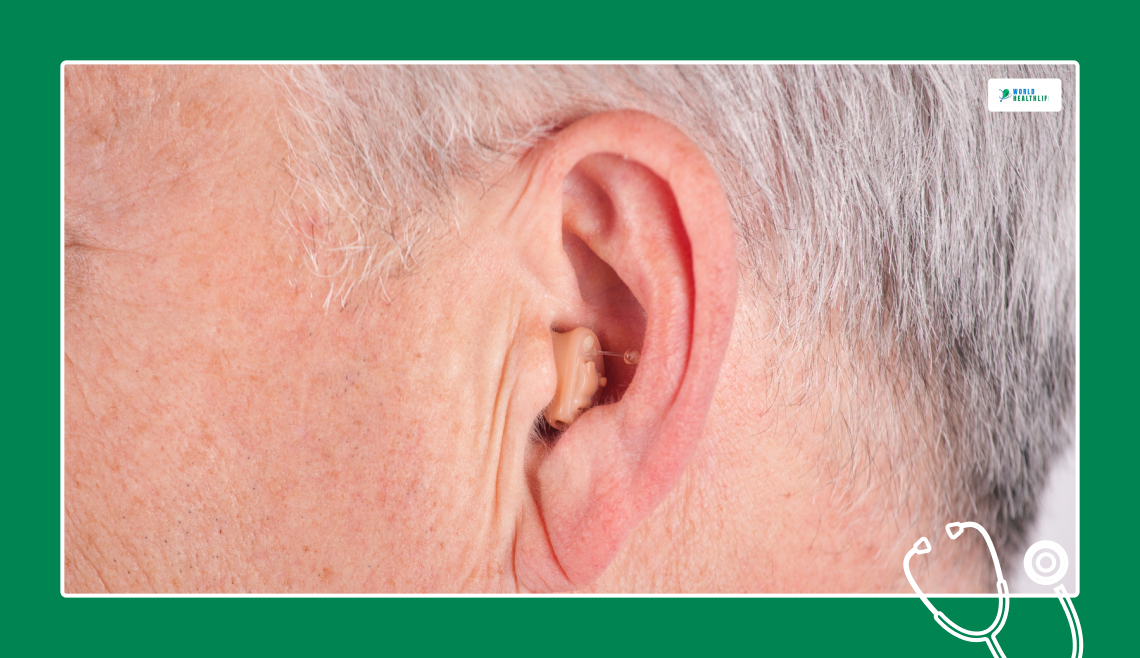
CIC hearing aids are the smallest and the most discreet type of hearing aid, as they fit perfectly in the canal of the ear and are almost invisible. They are custom-made and suitable for individuals with mild to moderate hearing loss.
Pros:
- Most discreet hearing aid style
- Custom-fit for increased comfort
- Least susceptible to wind noise due to microphone placement
Cons:
- May be difficult to handle and adjust for individuals with dexterity issues
- Smallest battery size, resulting in the shortest battery life
- Limited space for additional features, such as directional microphones and volume controls
- May require more frequent cleaning and maintenance due to earwax and moisture buildup
- Not suitable for individuals with severe to profound hearing loss
Modern 2026 Hearing Aid Trends: What’s New?
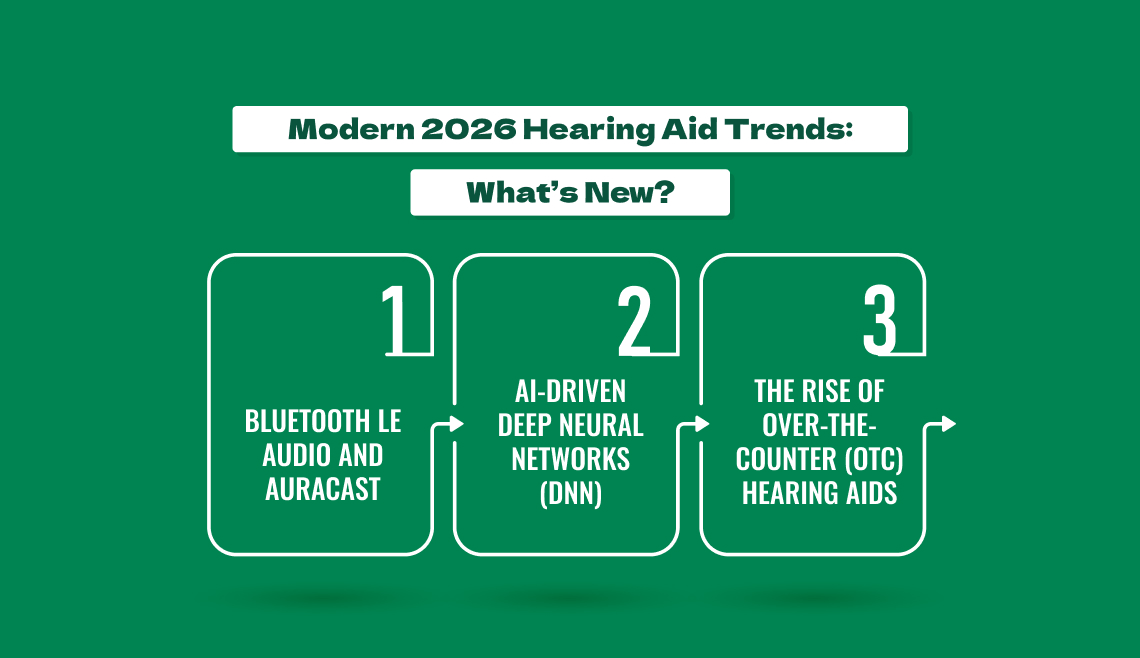
If you are planning to look into hearing tech today, the landscape has faced dramatic evolution. This is beyond basic sound and amplification.
Bluetooth LE Audio And Auracast
Legacy hearing aids used to drain batteries quickly when streaming music or phone calls.
Now, modern devices utilize Bluetooth Low Energy (LE) Audio offer high-fidelity along with bidirectional streaming. It also consumes minimal power.
On the other hand, the rollout of Auracast broadcast audio allows modern hearing aids to link directly to the public address systems in airports, gym televisions and houses of worship.
AI-Driven Deep Neural Networks (DNN)
The latest generation of premium hearing aids features integrated AI processors trained on millions of real-world soundscapes.
Instead of turning up the volume on everything equally, these chips instantly differentiate between background chaos and human speech.
Furthermore, noise is suppressed while dialogue is sharpened in just a fraction of a second.
The Rise of Over-the-Counter (OTC) Hearing Aids
A major shift in accessibility is the growth of the OTC hearing aid market. Adults with self-perceived mild-to-moderate hearing loss can now buy hearing devices at retail counters.
Moreover, these are regulated hearing devices that are available online or over retail counters without needing a medical exam, prescription or audiologist visit.
As a result, this has lowered entry prices significantly.
Know How To Choose The Right Hearing Aid For You
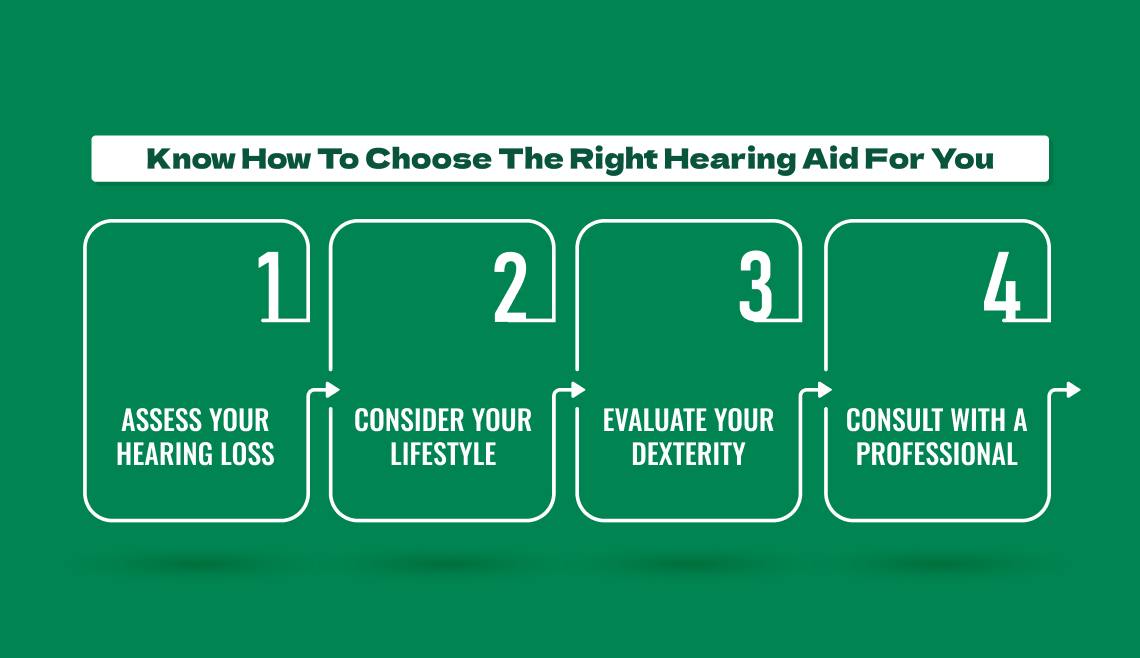
Selecting the perfect hearing device requires balancing clinical data with personal comfort. When determining which style fits your daily routine, keep the following core factors in mind.
General Guidelines To Choose The Perfect Hearing Aid
In order to choose the perfect hearing aid, you must be aware of certain guidelines that can help you with the overall process among all the different types of hearing aids.
Assess Your Hearing Loss
The overall depth of your auditory deficit dictates your physical options.
For instance, a discreet CIC device cannot physically pump enough acoustic volume in order to assist someone with profound nerve damage.
Contrarily, a BTE device handles severe losses with ease.
Consider Your Lifestyle
Active individuals spending hours outdoors or exercises heavily often benefit from hearing aids that are moisture-resistant and wind-shielded custom canal devices (ITC/CIC)
On the contrary, individuals who spend their days in complex corporate environments or busy restaurants may have a greater preference towards BTE or ITE devices.
These house advanced directional microphone arrays along with robust AI processors.
Evaluate Your Dexterity
Safely handling, cleaning, and charging micro-devices requires fine motor skills.
If you experience finger numbness, tremors, or arthritis, utilizing a larger BTE or full-shell ITE device with magnetic charging cradles will be vastly easier than struggling to replace the tiny button batteries of a CIC model.
Consult With A Professional
Although self-fitting OTC options are convenient for mild cases, scheduling an evaluation with a licensed audiologist will ensure that your ear canal is both healthy and free of deep wax blockages.
Select The Best For Your Hearing Needs
Understanding the differences between behind-the-ear (BTE), in-the-ear (ITE), in-the-canal (ITC), and completely-in-the-canal, or CIC, hearing aids can help you make an informed decision when selecting the best device for your needs.
Each type of hearing aid offers unique benefits and drawbacks, and the most suitable option depends on your degree of hearing loss, comfort, visibility, lifestyle, and personal preferences.
By considering these factors and consulting with a hearing healthcare professional, you can find the ideal hearing aid to enhance your hearing and improve your overall quality of life.
Read Also: