
Did you notice a blood blot on your tissue paper and feel worried? Or maybe you saw that in your underwear! Most people search online once they come across something like that.
That’s normal. In most cases, the search engine gives the right info. However, the best thing to do is to go see a doctor the next day!
For starters, you now know what does implantation bleeding looks like. You also know it is an early pregnancy sign. But that may not be the only reason. That’s why we will explore the most likely reasons for implantation bleeding in this article!
After all, our work will be easier when we can notice a pattern to study what does implantation bleeding look like! So keep exploring!
What Does Implantation Bleeding Look Like?

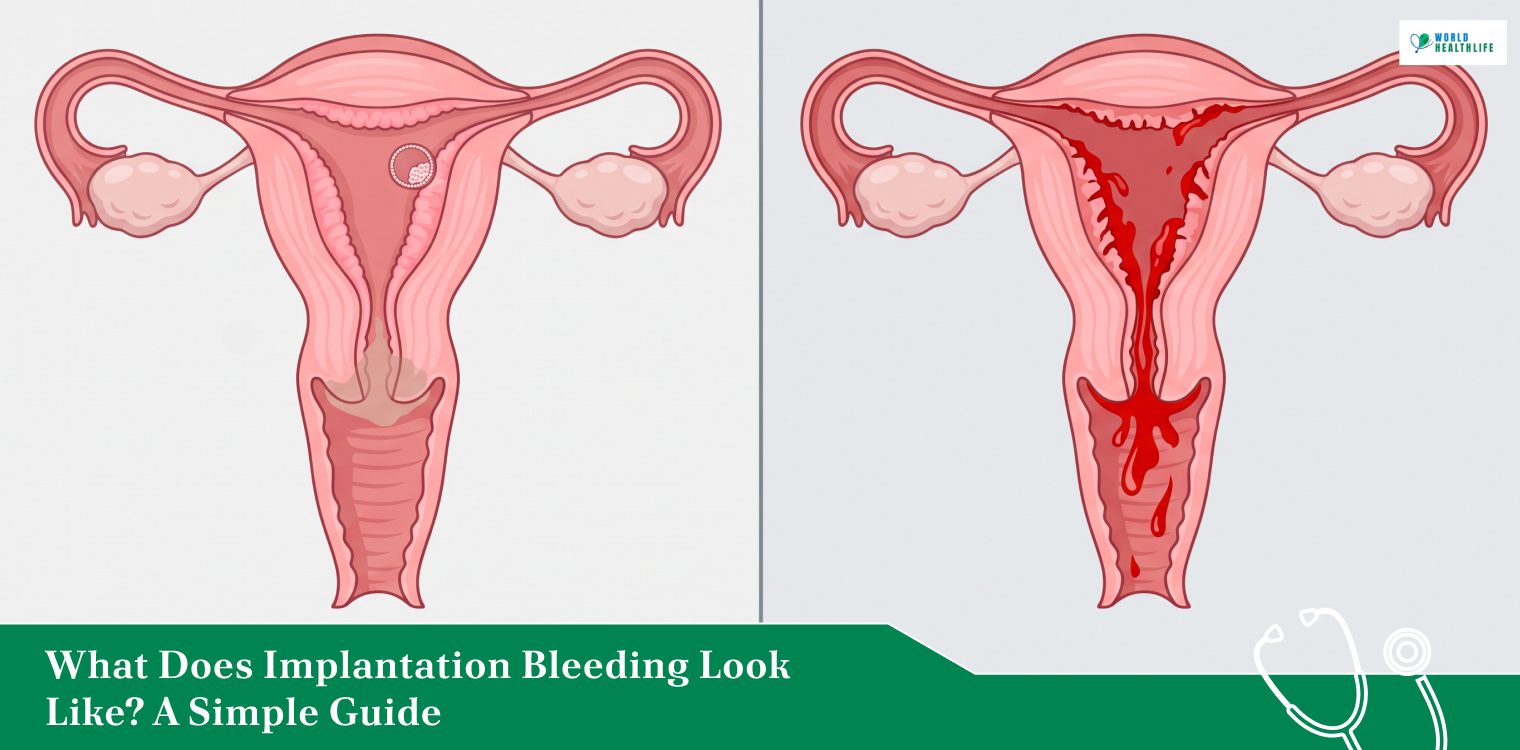
Let’s dig into what does implantation bleeding look like. It happens when a fertilized egg pushes into the lining of your uterus, somewhere around 6 to 12 days after ovulation. That small disturbance can nick a few tiny blood vessels along the way. However, not much comes out! Usually just a trace.
A few things people tend to notice:
- Color leans pink or light brown. Bright red is rare and usually points elsewhere.
- It’s not a flow. A few drops, a smear, sometimes barely visible at all.
- No clots. If you’re seeing clots, that’s not this.
- It tends to stop on its own. Let’s say within a day or two for most people, sometimes just a few hours.
Doctors generally describe implantation bleeding as a small amount of light spotting that shows up about 10 to 14 days after conception.
And if what you’re seeing looks and feels a lot like your usual period, i.e., the same color and similar amount, it’s probably just your period. That’s the honest answer even though it’s not the one people want.
Why Does This Happen At All?
Now you know what does implantation bleeding look like. Now let’s understand why this happens and what does this indicate.
Here’s the part most articles skip. Around ovulation, your uterine lining builds up with blood vessels, essentially preparing a soft landing spot in case an embryo shows up. When implantation actually happens, the embryo burrows in and disturbs a handful of those vessels.
What you get is a small, brief bit of blood that is not damage, and certainly not a problem. In contrast, it is just a byproduct of the process.
To sum up, It’s closer to a bruise than a wound. Your body isn’t shedding a full lining the way it does during a period, so there’s no reason to expect a period-like flow. It’s localized. Minor. Over quickly.
What Does Implantation Bleeding Look Like In The Toilet?
This is honestly where most people spot it first. The reason is that a toilet bowl or a strip of toilet paper shows color better than fabric does.
What you might actually see:
- A faint pink or tan streak on the tissue, not a solid smear.
- A spot or two that doesn’t show up again on the next wipe.
- Barely any color in the bowl water itself, if any. The amount is just too small.
If the water turns noticeably red, or you spot clots, that leans toward a period (or something worth mentioning to a doctor) rather than implantation.
One useful trick: implantation spotting is usually so light you might catch it only once or twice in a day, not every time you use the bathroom.
Implantation Bleeding VS. Period: A Quick Side-By-Side
| Feature | Implantation Bleeding | Regular Period |
| Color | Light pink or brown | Bright to dark red |
| Flow | A few drops or light spotting | Steady, builds then tapers |
| Duration | Hours to about 2 days | 3–7 days |
| Clots | None | Sometimes |
| Products needed | Liner, maybe not even that | Pad or tampon |
| Cramping | Mild or none | Often noticeable |
Implantation bleeding itself isn’t a risk. It shows up light and generally doesn’t come with heavy cramping. If your cramps feel like actual period cramps, or the bleeding is building rather than fading, that’s pointing away from implantation.
When Does It Actually Happen?
Timing narrows things down more than almost anything else.
| Days Past Ovulation (DPO) | What’s Going On |
| 1–5 DPO | Egg is still traveling through the fallopian tube |
| 6–12 DPO | Implantation window — spotting may show up here |
| 9–10 DPO | Most common day, on average |
| 12–14 DPO | Around when your period would normally start |
The fertilized egg generally settles into the uterine lining somewhere in that 6-to-12-day range after conception, which lands right before your period is due. That overlap is exactly why the two get confused so often.
If I Have Implantation Bleeding, Will A Pregnancy Test Be Positive?
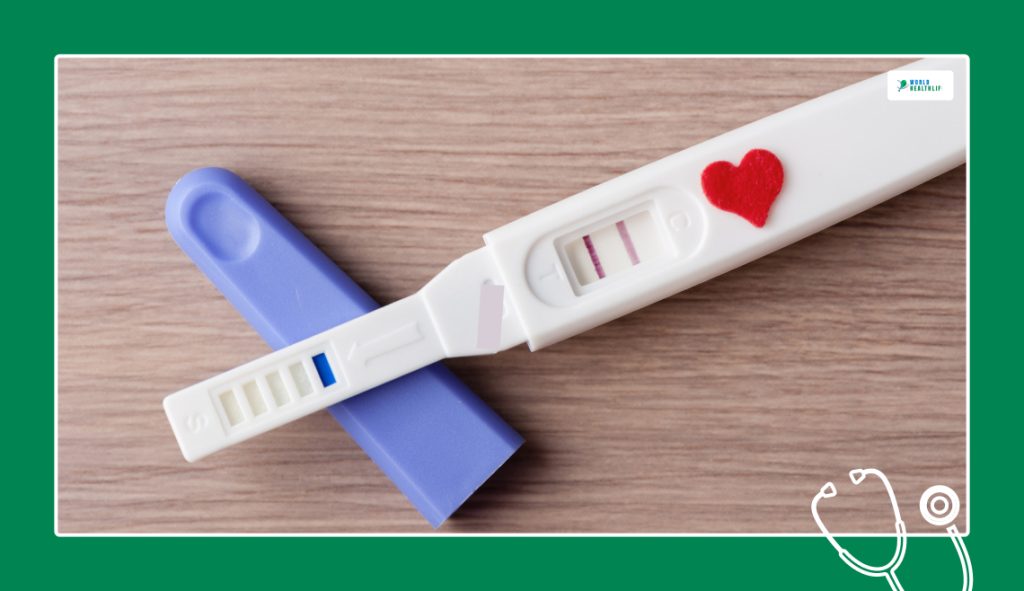
Short answer: not yet. A pregnancy test isn’t reacting to the bleeding. Instead, it reacts to hCG, a hormone your body only starts producing once implantation has actually happened. There’s a lag.
A few things worth knowing about that lag:
- Right when spotting shows up, hCG is usually still too low to register.
- Home tests need a few more days of rising hCG before results get reliable.
- They’re accurate when used properly, but testing too early is the classic way to get a false negative.
- The best odds are around the day of your missed period, or a day or two past it.
So if you test the same day as the spotting and it’s negative, don’t take that as final. Retest in three to five days. It tells you more than one early test ever will.
Worth a read too: what causes a false positive pregnancy test, since hormones (and a few medications) can occasionally throw a positive the other way.
Other Signs That Tend to Show Up Around the Same Time
Implantation bleeding rarely shows up completely on its own. Around the same stretch of days, keep an eye out for:
- Mild cramping, lighter than a normal period cramp
- Breast tenderness or soreness
- Fatigue that feels a bit off from your usual tired
- A basal body temperature that stays elevated instead of dropping
- Discharge changes. So it is worth comparing against this piece on early pregnancy discharge if you’re not sure what counts as normal
None of these confirm anything on their own. Put together with light spotting at roughly the right point in your cycle, though, the picture gets clearer. Especially when you are sure about what does implantation bleeding look like.
Can You Track It On A Calendar?
If you have a rough idea of when you ovulated, count forward 6 to 12 days. Simply put, that’s your window to watch.
Spotting well outside that range, either too early or well after your period was already due, is less likely to be implantation-related. It won’t replace an actual test, but it does help make sense of the timing while you wait.
When Spotting Needs a Doctor’s Visit
Most of this is harmless. A few patterns, though, are worth a call rather than a wait-and-see approach:
- Bleeding heavy enough to soak a pad, or lasting more than two to three days
- Clots, or blood that’s turned bright red and heavy
- Sharp pain on one side, or pain in your shoulder
- Dizziness, fainting, or a racing heart alongside the bleeding
Vaginal bleeding in the first trimester is common, and most of the time it’s nothing serious. But in some cases it can point to something like an ectopic pregnancy or a placental issue, which is why the red-flag list above exists.
If you’re already a few weeks along, this rundown on the double marker test walks through what those early screening numbers actually mean.
And once things are confirmed, a lot of people start wondering when the baby’s heartbeat will start. Again, that usually comes up around the same early appointments.
Best Tips Readers Should Take From This Article!
So what does implantation bleeding look like? Usually, this kind of bleeding looks like a whisper, not a shout. Simply put, it’s light pink or brown. Again, it is brief, and nothing like a real period.
On toilet paper, that usually means a faint streak, not a solid mark. It lands in a fairly predictable window, roughly 6 to 12 days after ovulation, right around when your period would be due anyway.
If you have implantation bleeding, a pregnancy test won’t turn positive until hCG has had a few days to build up. So testing too soon can lead to a false negative.
And if anything about what you’re seeing doesn’t match (for ex: it’s heavier, more painful, longer) it’s worth a quick call to your doctor rather than sitting with the question in your mind!


