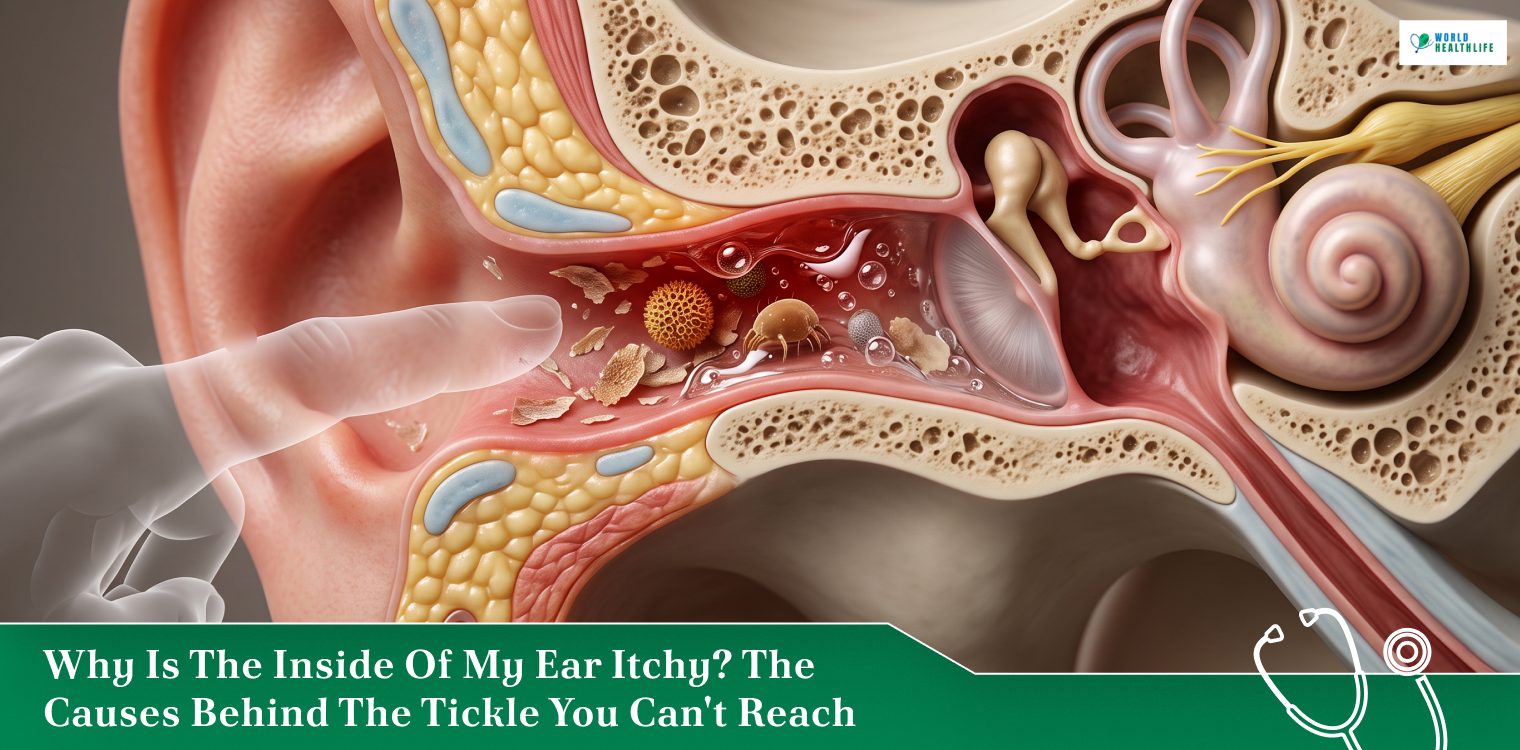
Few itches are as maddening as the one you physically cannot scratch. If you keep wondering “why is the inside of my ear itchy?” then you are dealing with one of the most common complaints in ear care.
Usually, this has a simple explanation. Moreover, the usual suspects are dry skin, trapped moisture, and an allergy.
Occasionally, though, the itch is an early sign of an infection or a skin condition that needs treatment.
So, the following guide will explain what is happening in the canal, the most likely causes, what to do at home, and when to see a doctor.
Why Is The Inside Of My Ear Itchy? How The Ear Canal Protects Itself
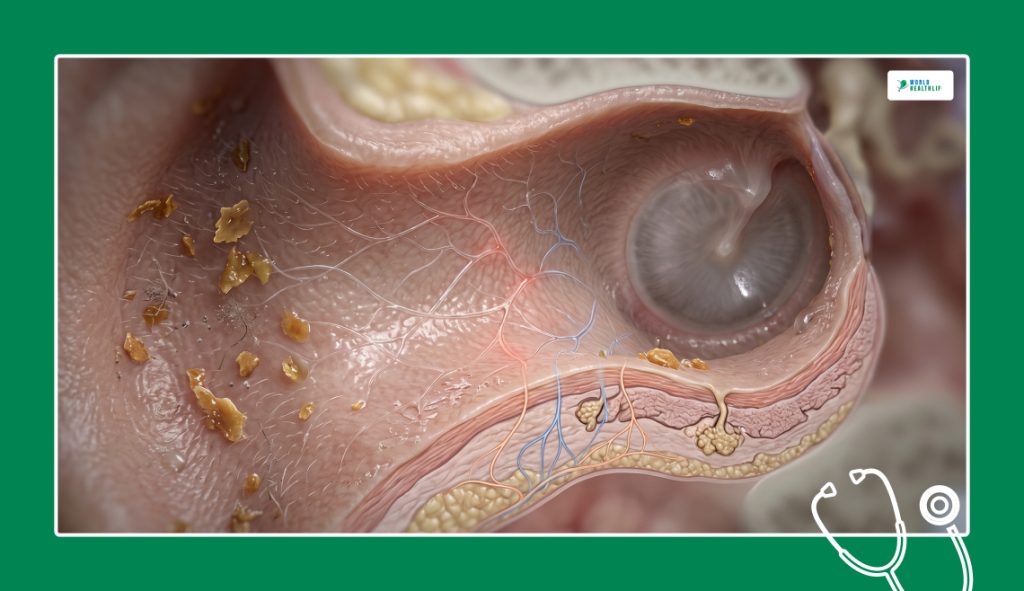
First, let us understand the overall biology of your ear canal.
The ear canal is a narrow tube lined with thin skin, which is packed with nerve endings. Moreover, it is responsible for producing earwax.
The primary function of earwax is to trap dust and keep the canal slightly acidic. In this way, bacteria and fungi struggle to grow.
When this system is thrown off, the nerves react with itching before any other symptom shows up.
That is why a small change in moisture or wax can feel so irritating.
Wax, Moisture, And The Skin Barrier
Earwax, medically termed cerumen, acts as a natural moisturizer and shield. If you remove too much of it, the skin starts to dry, flake and itch.
Conversely, too much moisture from sweat, showers, or swimming leads to the skin softening. As a result, this allows microbes to settle in.
So, the itch comes from either extreme.
Why Is The Inside Of My Ear Itchy But Not Painful?
Itch and pain travel along different nerve fibers.
Early irritation, allergy, and dryness trigger itch signals first, while pain usually appears once swelling or infection builds.
So, an itchy ear with no pain is often an early or mild problem. Still, it can become painful within a day or two if the cause is infectious.
Thus, watch the way it changes.
Common Causes Of An Itchy Ear Canal
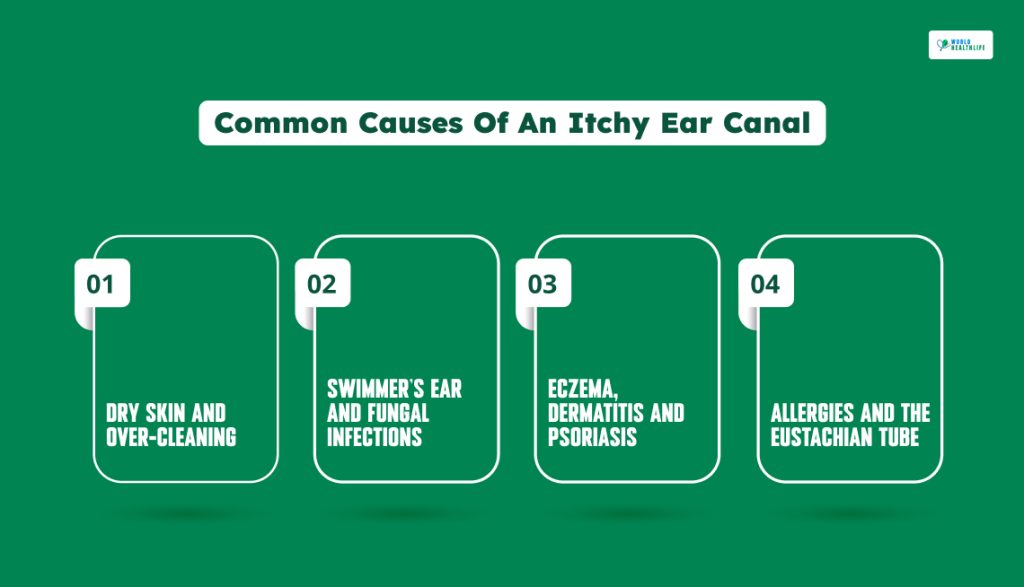
Most cases trace back to a handful of causes. The following breakdown evaluates on how you can tell them apart, along with the sections
| Cause | Typical Clues | Usually Goes Away? |
| Dry skin or too little earwax | Flaky skin, mild itch, no discharge | Yes, with gentle care |
| Swimmer’s ear (otitis externa) | Itch, then pain when you tug the ear, possible discharge | Yes, with prescription ear drops |
| Fungal infection (otomycosis) | Intense itch, fullness, white or black debris | Yes, with targeted antifungal treatment |
| Eczema or seborrheic dermatitis | Red, scaly skin, itch elsewhere on face or scalp | Controlled, but it frequently recurs |
| Allergies | Itchy ears with sneezing, runny nose, itchy eyes | Yes, once the primary trigger is treated |
| Hearing aids or earbuds | Itch occurs only when the device is in use | Yes, with a better fit or different material |
| Earwax buildup | Sensation of fullness, muffled hearing, itch | Yes, after safe and proper removal |
Dry Skin And Over-Cleaning
When you use cotton swabs, hairpins, and fingernails to clean your ears, it strips away the protective wax while scratching the delicate lining.
Following this, the skin becomes dry and itchy, and scratching makes it even worse
Many people get stuck in this loop because the itch drives them to clean more. However, leaving the canal alone usually solves the problem within a week or so.
Swimmer’s Ear And Fungal Infections
When you have trapped water in your ears, that is generally a classic trigger.
Bacteria cause swimmer’s ear, and it often starts as itching before turning painful. On the other hand, fungi cause otomycosis.
This is more common in humid climates and in people who use hearing aids or have used antibiotic drops for a long time.
A fungal infection tends to itch intensely and may leave fluffy white or dark specks in the canal.
However, remember one thing: neither of these responds to home remedies.
So, you need the right drops.
Eczema, Dermatitis And Psoriasis
Skin conditions can affect the ear canal just as they do the rest of the body.
For instance, seborrheic dermatitis shows up as greasy flakes, often along with dandruff.
Eczema can make the canal red and scaly. On the other hand, when you have contact dermatitis caused by shampoo, hair dye, or nickel in earrings and earbuds is also common.
If your ears itch alongside a rash on the scalp or behind the ears, a skin condition is likely.
Allergies And The Eustachian Tube
Hay fever and food allergies can cause itching deep in the ear, often described as an itch you can feel but not reach.
This happens because the eustachian tube, which connects the ear to the back of the throat, becomes inflamed.
Some people with pollen allergies also feel itchy ears after eating raw fruit or vegetables, a reaction known as oral allergy syndrome.
Antihistamines or allergy nasal sprays often calm it.
Itchy Ears With Other Symptoms
The symptoms that usually follow the itching tell you a lot. When you have an itch only, it is usually something minor.
However, additional symptoms help narrow the cause and show how urgent it is.
| Symptom with the Itch | What It May Suggest | What to Do |
| Sneezing, runny nose, itchy eyes | Allergy | Try an over-the-counter antihistamine and avoid known triggers. |
| Pain when pulling the earlobe | Swimmer’s ear (otitis externa) | See a doctor for prescription antibacterial ear drops. |
| Discharge or unusual odor | Outer or middle ear infection | Book a medical appointment for evaluation and proper treatment. |
| Muffled hearing or fullness | Earwax buildup or fluid behind the eardrum | Get the ear examined by a healthcare professional for safe removal. |
| Itchy, flaky scalp and face | Seborrheic dermatitis or eczema | Use targeted medicated shampoo and ask a doctor about ear-safe creams. |
| Dizziness or ringing (tinnitus) | Inner ear problem | See a doctor promptly for a comprehensive neurological and ear exam. |
What You Can Do At Home
For mild itch with no pain, discharge, or hearing change, gentle care is enough.
The goal is to protect the skin and keep the canal dry without digging into it. Moreover, a few habits make most of the difference.
| Target Area / Action | Safe Steps (Do This) | What to Avoid (Don’t Do) |
| Daily Cleaning | Clean only the outer ear with a damp cloth. Leave the ear canal completely alone. | Never insert cotton swabs, keys, or pen caps into the canal. They scratch skin and push wax deeper. |
| Moisture Management | Dry ears after swimming/showering by tilting your head and using a towel or a cool, arm’s-length hair dryer. | Do not scratch wet or itchy ears. Even a small fingernail scratch can introduce a painful infection. |
| Water Activities | Use earplugs or a swim cap if you are highly prone to developing swimmer’s ear. | Do not ignore trapped water or let moisture sit in the canal for extended periods. |
| Devices & Wearables | Clean hearing aids and earbuds regularly and give your ears frequent breaks from using them. | Do not leave dirty devices in your ears, as they trap moisture and introduce harmful bacteria. |
| Home Remedies | Treat underlying allergies. Controlling hay fever symptoms often settles the phantom ear itch automatically. | Avoid ear candles and unverified oils (like garlic or peroxide). They can burn skin or damage a perforated eardrum. |
How Doctors Treat An Itchy Ear
Your treatment is dependent on the cause. So, the doctor will first look into the canal with a small lighted scope.
That quick exam usually reveals wax, flaking skin, or signs of infection. From there, the options are straightforward.
Antibiotic or antifungal ear drops treat infections. Moreover, some contain a steroid to reduce swelling. Steroid drops or creams can further help seborrheic dermatitis.
However, if wax is the problem, a clinician can remove it with gentle suction or a small instrument.
Allergies are treated with antihistamines, nasal sprays, or allergy testing when symptoms keep returning.
When To See A Doctor
Most itchy ears settle within a few days once you stop irritating them.
Book an appointment if the itch lasts more than a week, keeps coming back, or you can’t stop scratching.
See a doctor sooner if you notice pain, discharge, swelling, a bad smell, or any drop in hearing.
Get prompt care if the itch comes with fever, swelling behind the ear, severe pain, dizziness, or weakness in the face.
These can signal a deeper infection.
People with diabetes or a weak immune system should be seen early, because ear infections can spread more easily in these cases.
An itchy ear is rarely dangerous, but it is rarely random either.
Keep the canal dry, resist the urge to dig, and pay attention to what comes with the itch. If it won’t go away, a quick look from a clinician is usually all it takes to end it.
Disclaimer: The information provided in this article is for general informational purposes only. It does not, and is not intended to, constitute medical or health advice. Please consult a qualified healthcare professional for medical guidance or expert health assistance.
References
- Cedars-Sinai. (2025). Is It Really Dangerous to Clean My Ears with Cotton Swabs? Cedars-Sinai.
- Centers for Disease Control and Prevention. (2026). Preventing swimmer’s ear. Healthy Swimming. Centers for Disease Control and Prevention.
- Lipschutz, J. (2024). What Is Earwax? Understanding Its Role and Importance. Berkeley Hearing Center.
- Eimers Hearing Clinic. (2026). The risks of Over-Cleaning your ears. Dr. Eimers Hearing Clinic.
- Mitchell, K., & Gatta, F. (2026, June 17). How to clean your ears. WebMD.