The gallbladder is one of the few organs that can be damaged for years without saying a word.
Then, one evening, you consume a heavy meal. This makes itself known with a pain you just cannot ignore.
These symptoms of gallbladder issues range from vague bloating and indigestion to severe pain, fever, and yellow skin.
Since the early signs overlap with everyday stomach trouble, many people spend months blaming reflux or “something I ate.”
Thus, this guide walks you through what the symptoms look like at each stage, which ones point to a complication, who tends to feel them differently, and how to decide when to get help.
Why Gallbladder Symptoms Are Easy To Miss
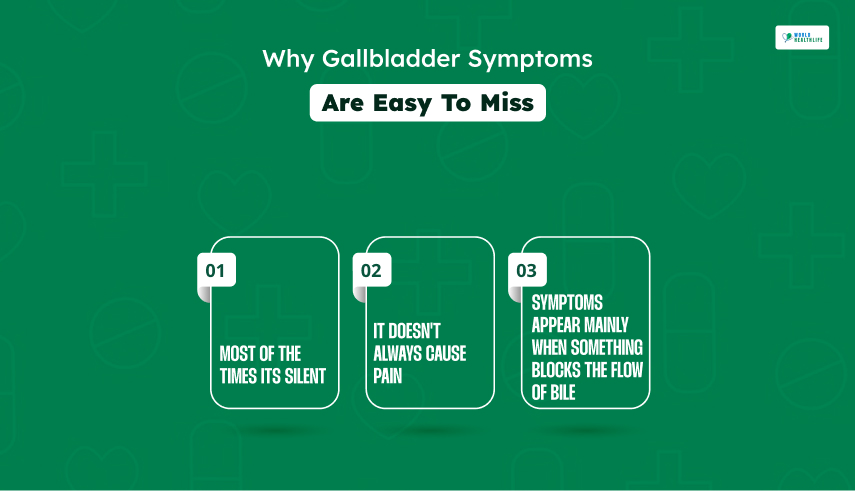
Your gallbladder sits under the liver and stores bile, which helps break down fat.
Most of the time, this works silently. This is even when it is diseased, as it does not always cause pain.
Moreover, symptoms appear mainly when something blocks the flow of bile or when the organ becomes inflamed.
Before that point, the signs are subtle, and they are easy to explain away.
Silent Gallstones
The majority of the people who have gallstones never actually know it. The stones sit in the gallbladder without any blockage whatsoever. Oftentimes, they are found by accident during a scan for another problem.
Doctors generally do not treat silent stones. That is because the chance of developing symptoms in any given year is actually pretty low.
However, once a stone causes an attack, further attacks become much more likely.
Why The Signs Mimic Indigestion
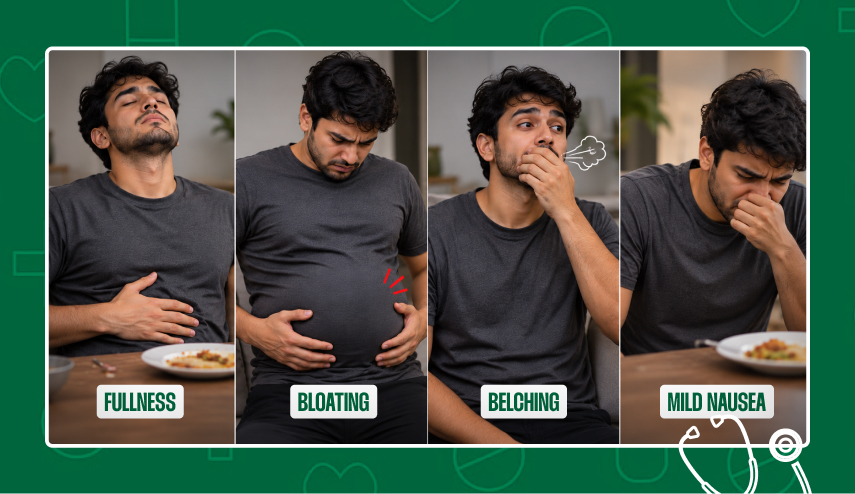
Early gallbladder trouble usually shows up as the following:
- Fullness
- Bloating
- Belching
- Mild nausea after eating
These are also classic signs of acid reflux, gastritis, and irritable bowel syndrome (IBS).
However, the difference lies in the pattern.
Gallbladder symptoms tend to follow rich or fatty meals.
Moreover, they cluster in the upper right abdomen, and they keep returning in similar ways. Antacids usually do not touch them.
Symptoms Of Gallbladder Issues By Severity
It helps to think of gallbladder symptoms as a ladder.
At the bottom are mild, easily dismissed signs, and at the top are warning signs that need care within hours.
The table below shows where common symptoms sit, and the sections after it explain what each stage feels like.
| Stage | Typical Symptoms | How Urgent? |
| Mild or early | Bloating, belching, fullness after fatty meals, mild nausea | Mention it to your doctor |
| Gallstone attack | Steady pain under the right ribs lasting 30 minutes to a few hours, nausea, vomiting | See a doctor soon, ER if severe |
| Inflammation | Pain lasting over 5 to 6 hours, tenderness, fever, loss of appetite | Same-day medical care |
| Duct blockage or infection | Jaundice, dark urine, pale stools, fever with chills | Emergency room |
Early And Mild Symptoms
These are the signs most people overlook. Also, you may feel overly full after a normal meal, burp often, or have a vague discomfort in the upper abdomen. These tend to just come and go.
Some people also notice that fried or creamy food leaves them queasy.
None of this proves a gallbladder problem. However, a repeating link between fatty food and discomfort is worth noting down.
The Gallstone Attack
The hallmark symptom is pain in the upper right abdomen or just below the breastbone, often spreading to the right shoulder blade.
It builds over several minutes into a constant, gripping ache, and then fades after a few hours.
Nausea and vomiting often come with it.
Importantly, changing position does not ease it. This separates it from a muscle strain. Attacks often strike at night, a few hours after dinner.
Signs Of Inflammation And Infection
When the blockage lasts, the gallbladder walls swell, and the pain becomes constant and more tender.
There are certain signs which are quite typical:
- Fever
- Loss of appetite
- Pain when you breathe in deeply under the ribs
If bile backs up into the liver, you may find your skin and eyes becoming yellow, urine darkening, and stool becoming pale.
In addition, fever with chills paired with these signs suggests an infection of the bile ducts, which can become quite dangerous in a rapid way.
Symptoms Of Gallbladder Issues By Condition
Different gallbladder problems produce slightly different symptoms.
When you know the contrasts, it can help you describe what you feel more accurately. This makes it easier for a doctor to reach the right diagnosis.
| Condition | Main Symptoms | Distinguishing Feature |
| Biliary Colic (Gallstone Attack) | Pain for 30 minutes to a few hours, nausea | Pain settles by itself |
| Acute Cholecystitis | Constant pain, fever, tenderness | Pain lasts more than 6 hours |
| Chronic Cholecystitis | Repeated bloating, indigestion, mild pain after meals | Long-term, lower-grade symptoms |
| Choledocholithiasis (Bile Duct Stone) | Severe pain, jaundice, dark urine | Yellow skin or eyes |
| Gallstone Pancreatitis | Severe upper abdominal pain through to the back, vomiting | Pain is intense and persistent |
| Biliary Dyskinesia | Attack-like pain, nausea, no stones on ultrasound | Poor gallbladder emptying on a HIDA scan |
| Gallbladder Cancer (Rare) | Weight loss, jaundice, appetite loss, a lump | Often found late, as symptoms are vague |
Chronic Inflammation: The Slow Version
Not every gallbladder problem arrives with a dramatic attack. Chronic cholecystitis develops after repeated bouts of mild inflammation, usually from stones.
It can cause months of intermittent bloating, gas, and an uncomfortable feeling after meals.
Because these symptoms are so ordinary, people often treat them with over-the-counter remedies for years before the true cause is found.
Symptoms Without Stones
A smaller group of people have all the symptoms of gallstones.
However, their scans tend to show none.
Usually, this means the gallbladder is not squeezing well. A condition happens here, which is known as biliary dyskinesia.
Doctors tend to rule out other causes first. These include ulcers or liver disease. They use a special scan to measure how well the organ empties.
When Symptoms of Gallbladder Issues Look Different
The textbook picture of gallbladder pain fits many people. But it’s not for everyone.
Factors such as age, sex, and other health conditions can change how symptoms may appear.
This matters because a missed or delayed diagnosis is more likely when the signs are unusual.
Women, Older Adults, And People With Diabetes
Women are more likely to get gallstones. Moreover, sometimes, they tend to describe feelings of nausea, bloating, and back or shoulder pain more than classic right-sided pain.
Older adults can have a serious gallbladder infection with little pain and no fever, and the first sign may be confusion, weakness, or a general decline.
People with diabetes may feel pain less sharply because of nerve damage. Therefore, inflammation can progress further before it is noticed.
In each group, a lower threshold for getting checked is sensible.
Symptoms During Pregnancy
Pregnancy slows gallbladder emptying and raises cholesterol in bile. Thus, stones are more likely to form.
Nausea and upper abdominal pain are common in pregnancy anyway. This makes gallbladder disease easy to overlook.
Pain that is severe, comes after meals, or comes with
Symptoms After Gallbladder Removal
When you have your gallbladder removed, it may remove the source of stone attacks.
However, it does not always end every digestive complaint. Without the organ, bile flows in a continuous manner into the intestine.
In addition, the digestive system needs time to adjust.
A major chunk of individuals feel better within weeks. But some tend to notice lingering changes.
Looser stools or diarrhea after fatty meals is the most common one. In addition, it usually fades over a few weeks to months.
Bloating and gas can persist for a while.
A smaller group has ongoing pain, sometimes called post-cholecystectomy syndrome. Moreover, this may come from a retained stone in the bile duct or a problem with the muscle that controls bile flow.
New jaundice, fever, or severe pain after surgery needs urgent assessment.
Conditions That Can Feel Like Gallbladder Symptoms
Not every pain under the right ribs belongs to the gallbladder. Some conditions look similar at first, and a few are urgent in their own right.
For that reason, don’t self-diagnose, especially when symptoms are new or severe.
| Alternative Condition | Typical Symptoms | How It Differs From Gallbladder Pain |
| Acid reflux and ulcers | Burning pain | Often directly related to meals or lying down |
| Liver inflammation | Dull ache | Accompanied by fatigue and dark urine |
| Kidney stones | Flank pain | Pain moves toward the groin, often with blood in the urine |
| Pneumonia or a pulled muscle | Localised pain | Pain changes specifically with breathing or physical movement |
| Heart attack | Pressure in the chest or upper abdomen | Accompanied by sweating and shortness of breath |
If pain comes with chest tightness, sweating, or breathlessness, treat it as a possible heart problem and call emergency services first.
Tracking Your Symptoms Before The Appointment
Doctors diagnose gallbladder disease largely from your story, so a short symptom diary can speed things up.
Over one or two weeks, jot down a few details each time an episode happens:
- When it started and how long it lasted
- What you ate in the previous few hours
- Where the pain was and whether it spread to your shoulder or back
- Other symptoms, such as nausea, vomiting, fever, or changes in urine and stool color
- What helped or didn’t, including medicines and position changes
A clear pattern, such as pain two hours after fatty meals, makes the diagnosis far more likely to be found quickly.
When To Consult A Doctor
Book an appointment if you have repeated episodes of upper abdominal pain, bloating, or nausea after meals.
This is especially true if they last longer than half an hour or wake you at night.
Mention it too if a scan has already shown gallstones, even if you feel fine.
Go to the emergency room if the pain lasts more than five or six hours.
Moreover, it may come with fever and chills, yellow skin or eyes, dark urine, pale stools, or repeated vomiting.
Call emergency services for severe pain along with chest pressure, trouble breathing, a racing heart, or confusion.
The symptoms of gallbladder issues are rarely mysterious once you see how they fit together:
- a link to food
- a favorite location under the right ribs
- a rhythm of building and fading
Pay attention to that pattern early, and you can often deal with the problem on your terms rather than in an emergency room at 2 a.m.
Disclaimer: The information provided in this article is for general informational purposes only. It does not, and is not intended to, constitute medical or health advice. Please consult a qualified healthcare professional for medical guidance or expert health assistance.
References
- Atlantic Health. (2025). Signs your gallbladder isn’t working properly | Atlantic Health.
- Mayo Clinic. (2025). Gallstones – Symptoms and causes. Mayo Clinic.
- University of Utah Health. (2026). Gallbladder pain. University of Utah Health.