A trouble in your gallbladder rarely starts with a dramatic emergency. More often, it starts with a bloated feeling after you eat a pizza. And it gets so bad, you end up blaming the pizza.
So what are the first signs of a bad gallbladder?
Usually, they are small, repetitive, and tied to food. This is a heavy feeling under the right ribs, nausea a couple of hours after eating, or belching that just never eases.
Each one is easy to get rid of on its own. Together, they form a pattern that doctors recognize quickly.
So, understanding all of this, the following guide aims to cover the following:
- What the early signs feel like
- How they differ from ordinary indigestion
- How they progress
- What to do once you spot them
What “A Bad Gallbladder” Actually Means
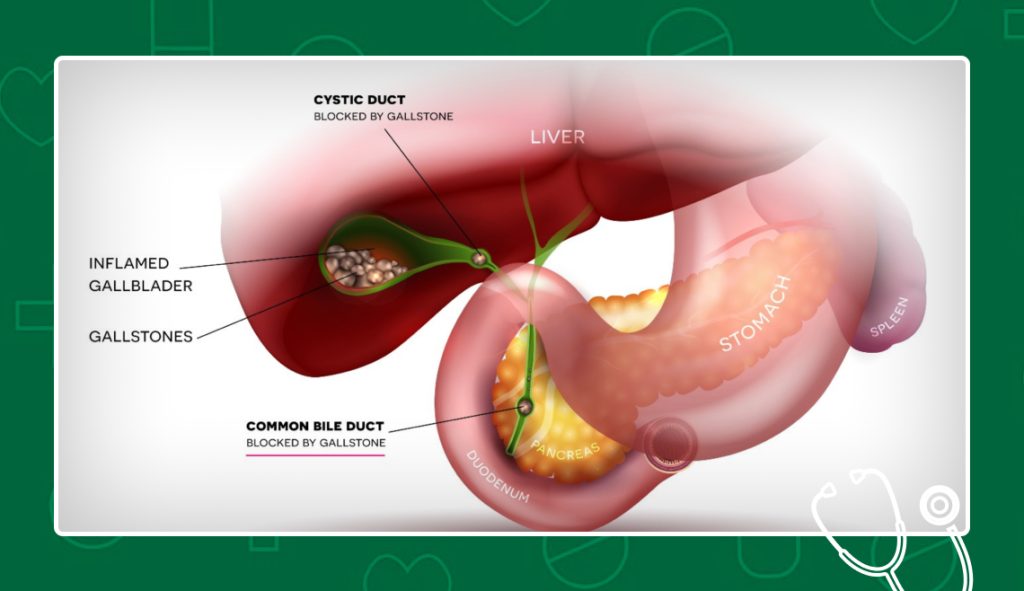
“Bad gallbladder” is a casual phrase, instead of a diagnosis. Usually, it describes a gallbladder that is not storing or releasing bile properly.
Most of the time, this is because of gallstones.
Here is the thing. Bile is the fluid your liver is responsible for making to break down fat. Moreover, the gallbladder squeezes it into the intestine after meals.
When that process is disrupted, digestion of fatty food is the first thing that suffers. This is why the earliest signs show up around eating.
The Common Problems Behind It
Gallstones are the leading cause. This is followed by thick bile or sludge, inflammation of the gallbladder wall, and poor emptying with no stones at all.
Less often, polyps or other growths have an involvement.
Many of these never cause symptoms, so having one of them doesn’t automatically mean you will feel unwell. Trouble begins when bile flow is partly or briefly blocked.
Why The Early Signs Stay Quiet
The gallbladder has few pain receptors until it is stretched or inflamed.
A small stone that moves in and out of the duct may cause a faint ache one week and nothing the next.
Since the discomfort fades by itself, people often learn to live with it. That habit is exactly why gallbladder disease is frequently found only after a first severe attack.
What Are The First Signs Of A Bad Gallbladder? The Early Clues
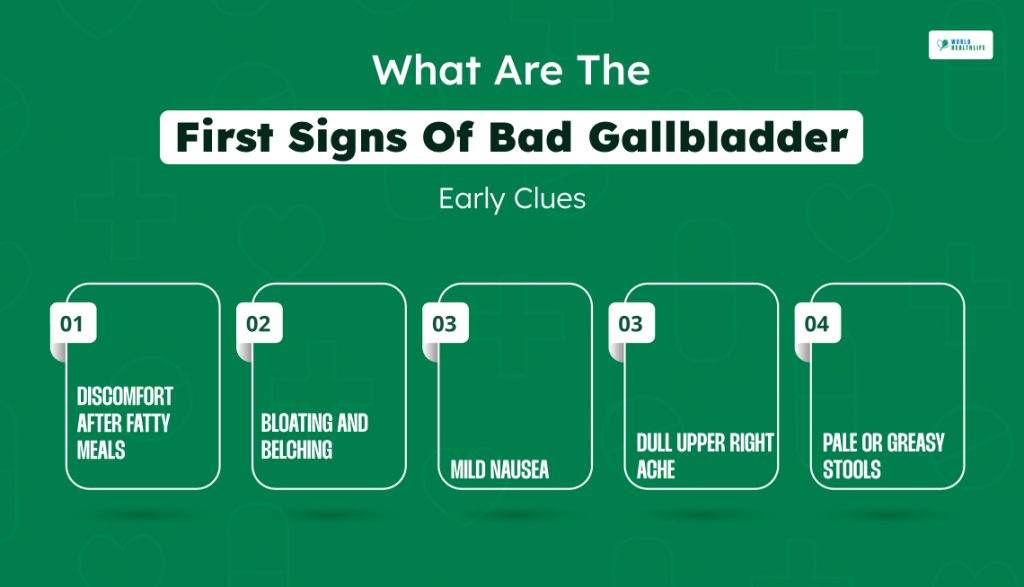
Early signs are mild and vague, and they tend to be digestive rather than painful.
None of them proves a gallbladder problem, but several together, repeating after similar meals, should raise suspicion.
Below, the table summarizes them before we look at each one more closely.
| Early Sign | What It Feels Like | How It Differs from Ordinary Indigestion |
| Discomfort after fatty meals | Fullness or pressure under the right ribs | Appears specifically after fried, creamy, or rich food |
| Bloating and belching | Tight, gassy feeling that doesn’t pass | Lingers for hours and isn’t relieved by antacids |
| Mild nausea | Queasiness one to three hours after eating | Comes later than reflux, which tends to appear sooner |
| Dull upper right ache | A faint, steady discomfort that may reach the shoulder blade | Doesn’t change with position or bowel movements |
| Pale or greasy stools | Loose, light, floating, or foul-smelling | Persistent, not just after one unusual meal |
Discomfort After Fatty Meals
This is the classic first clue.
After a meal rich in fat, the gallbladder contracts hard to release bile.
If a stone partly blocks the exit, that contraction causes pressure or an ache under the right ribs. So, do one thing promptly. Try to notice whether burgers, fried food, cheese, or cream sauces are the common thread.
A repeating link to fat is far more telling than the discomfort itself.
Bloating, Belching, And Gas
Poor bile flow means fat is digested less efficiently.
Moreover, the undigested fat ferments in the gut. As a result, you experience a bloated, gassy feeling that can last hours.
In addition to that, a majority of people reach for antacids and get little relief.
However, that lack of response is itself a useful hint, since reflux usually improves with them.
Nausea That Arrives Late
Gallbladder-related nausea usually shows up one to three hours after eating. Also, it does not happen immediately.
Sometimes it comes at night, when a heavy dinner finally reaches the stage where the gallbladder contracts.
Occasional vomiting may follow, and it often brings brief relief from the queasiness, though not always from the ache.
A Dull Ache In The Upper Right Abdomen
Early pain is often a low, steady ache rather than a sharp stab.
It sits under the right rib cage or in the center of the upper abdomen, and it may spread to the right shoulder blade or the back.
Unlike a muscle strain, it does not get worse when you twist or press. Neither does it ease when you shift position.
Changes In Stool
In very few cases, often early gallbladder trouble shows up in the toilet.
When less bile reaches the intestine, stools can turn pale, loose, greasy, or unusually foul. One odd day means little.
Just notice the changes. This is because a change that persists for several days is worth reporting, which is particularly alongside other symptoms.
Early Signs Vs. Later Signs: How The Picture Changes
Gallbladder problems usually do not just jump straight to severe symptoms. Instead, they tend to move through stages, and recognizing where you are helps you decide how quickly to act.
So here is a table below that will help you understand the typical progression.
| Stage | What You Notice | Suggested Action |
| Early | Bloating, belching, fullness after fatty meals, mild nausea | Track symptoms and book a routine appointment |
| Developing | Repeated aches under the ribs, pain reaching the shoulder, vomiting after meals | See a doctor within days |
| Attack | Strong, steady pain lasting 30 minutes to several hours | Seek medical care, urgent if severe |
| Complication | Pain over 5 to 6 hours, fever, yellow skin, dark urine | Go to the emergency room |
Why The Early Stage Can Last Years
Some people stay in the early stage for a long time, with symptoms that appear every few weeks and then disappear. That calm can be misleading.
However, once a stone has caused symptoms, further episodes become more likely.
Not just that, but the risk of inflammation grows with each one.
What Are The First Signs Of A Bad Gallbladder In Women?
Unfortunately, if you are a woman, your chances of developing gallstones tend to be twice as high as men’s. Moreover, their early symptoms are sometimes less typical.
Nausea, bloating, and discomfort in the back or shoulder can outweigh the classic right-sided pain.
Besides that, pregnancy, hormonal birth control, and hormone therapy all raise risk, because estrogen increases cholesterol in bile and slows the gallbladder’s emptying.
Since nausea and bloating are so common in women for other reasons, these signs are more likely to be dismissed.
The Pattern That Gives It Away
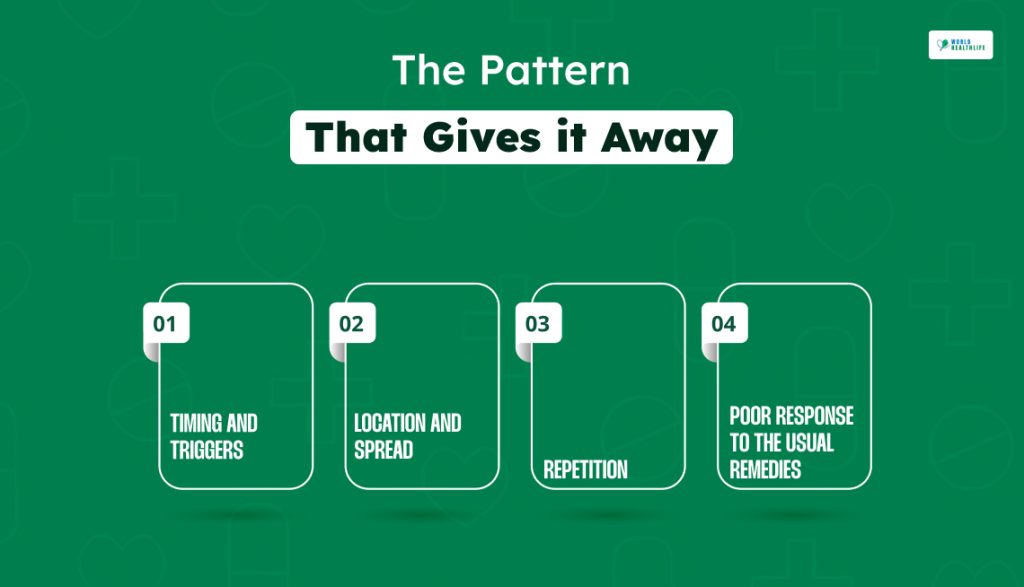
Individual symptoms are poor evidence, but their pattern is strong evidence.
Doctors diagnose gallbladder disease largely from your story. Thus, noticing the pattern puts you ahead.
Here, four features matter most.
Timing And Triggers
Look for symptoms that follow rich meals by 30 minutes to a few hours.
When you have large, late dinners, they can be a common trigger. This is exactly why night-time attacks are typical.
If the same foods set it off repeatedly, the gallbladder moves higher on the list.
Location And Spread
Pain that starts under the right ribs or in the upper middle abdomen and travels toward the right shoulder blade is characteristic. Heartburn, by contrast, sits behind the breastbone and burns.
Repetition
A one-time upset stomach is not a pattern. Three or four similar episodes over a few weeks or months is. Writing down dates and meals makes this much easier to see.
Poor Response To The Usual Remedies
Antacids, walking it off, and passing gas rarely settle a gallbladder ache. When the standard fixes don’t work, it is a reason to look elsewhere.
Conditions That Get Mistaken For Early Gallbladder Trouble
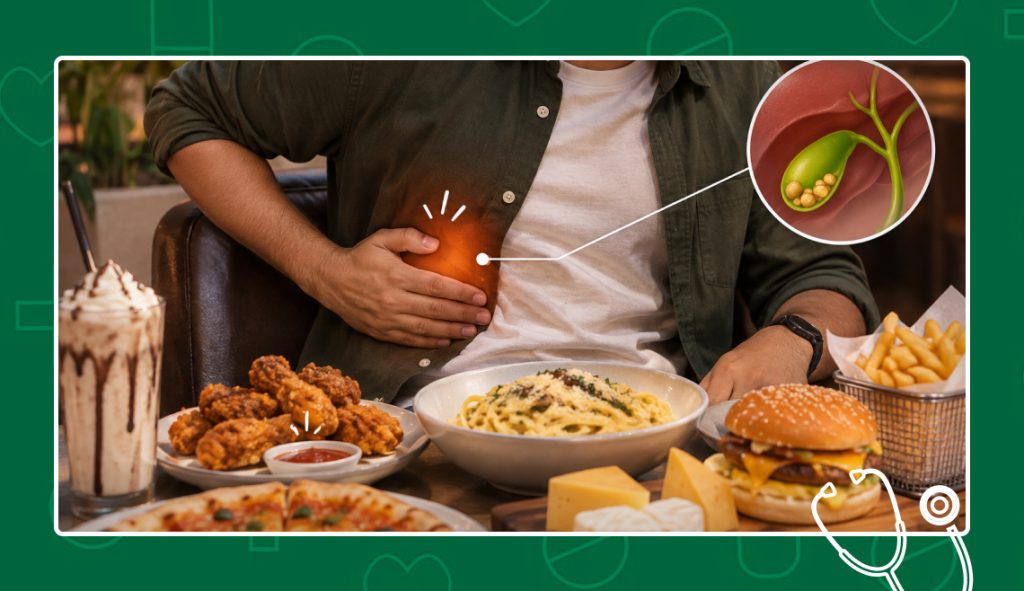
Several common conditions produce similar symptoms, and plenty of people with a gallbladder problem are first treated for one of them.
Below, the table below shows how to tell them apart. However, try to get proper confirmation from a doctor only.
| Condition | Key Difference |
| Acid reflux (GERD) | Burning behind the breastbone, worse lying down, eased by antacids |
| Peptic ulcer | Gnawing pain linked to an empty or full stomach, may improve with food |
| Irritable bowel syndrome | Cramping tied to bowel movements, relief after passing stool |
| Gastritis | Burning upper abdominal pain, often with alcohol or painkiller use |
| Pancreatitis | Severe pain through to the back with repeated vomiting |
Chest pressure, sweating, or breathlessness alongside upper abdominal discomfort should never be assumed to be digestive. Call emergency services first in that case, because heart attacks can present this way, especially in women and older adults.
Who Tends To Notice The First Signs
Risk factors don’t cause symptoms by themselves, but they raise the odds that stones form and become troublesome.
Being aware of them helps you take mild signs more seriously.
Risk Factors You Can’t Change
Factors such as the following are the ones you cannot change:
- Age over 40
- Female sex
- A family history of gallstones
- Certain ethnic backgrounds, including Native American and Mexican American
- Pregnancy, temporary risk
Risk Factors You Can Influence
Excess weight and rapid weight loss are the main ones.
This is because crash dieting makes the liver release extra cholesterol into bile. Diabetes, high triglycerides, a low-fiber diet, and long gaps between meals also contribute.
Aiming for gradual weight loss of about one to two pounds a week is gentler on the gallbladder.
What To Do When You Notice The First Signs
Nothing here replaces a medical exam.
However, a few steps will make that visit more useful and may ease symptoms in the meantime.
Keep A Short Symptom Log
For one to two weeks, note the following positively:
- When each episode starts
- How long each episode lasts
- What you ate in the previous few hours
- Where you felt it
- Whether it has spread.
Add any nausea, fever, or changes in urine or stool color. A clear link between meals and symptoms often speeds up the diagnosis.
Make Gentler Food Choices
Smaller, lower-fat meals ask less of the gallbladder. Build meals around vegetables, fruit, whole grains, and lean protein, and go easy on deep-fried food, fatty meats, and heavy cream sauces.
Don’t skip meals for long stretches, either. Diet can reduce symptoms, but it cannot dissolve stones, so persistent symptoms still need to be checked.
What The Doctor Will Do
Expect questions about your pain pattern and a gentle exam under the right ribs. An abdominal ultrasound is the usual first test, and it is fast, painless, and good at finding stones.
Blood tests check for infection, liver involvement, and pancreas irritation.
If the ultrasound is normal but the symptoms persist, a HIDA scan can measure how well the gallbladder empties.
Why It Pays Not To Wait
Early signs are manageable, but untreated stones can lead to real complications.
A stone that stays lodged can inflame the gallbladder (cholecystitis), travel into the bile duct and cause jaundice, or block the pancreas outlet and trigger pancreatitis. Infection of the bile ducts can turn dangerous within hours.
These problems are far easier to avoid when the diagnosis comes during the early stage, because planned surgery to remove the gallbladder is usually a short, routine operation. Emergency surgery for a complication is harder on the body.
When To See A Doctor
Book an appointment if you have repeated bloating, nausea, or upper right discomfort after meals.
This is especially if episodes last longer than 30 minutes or wake you at night. Mention any gallstones found incidentally on a scan, even if you feel well.
Go to the emergency room if the pain lasts more than five or six hours, or comes with fever and chills, yellowing of the skin or eyes, dark urine, pale stools, or repeated vomiting.
Call emergency services for severe pain with chest pressure, shortness of breath, a racing heart, or confusion.
The first signs of a gallbladder problem are quiet, but they are not random. They follow food, they repeat, and they point to the same spot under your ribs.
Treat that pattern as information rather than an annoyance, and you can deal with it calmly, long before it becomes an emergency.
Disclaimer: The information provided in this article is for general informational purposes only. It does not, and is not intended to, constitute medical or health advice. Please consult a qualified healthcare professional for medical guidance or expert health assistance.
References
- WebMD. (2026). How to keep your gallbladder happy. WebMD.
- Buhavac, M., Elsaadi, A., & Dissanaike, S. (2021). The Bad Gallbladder. Surgical Clinics of North America, 101(6), 1053–1065. NCBI Literature Resources.
- Jones, M. W., Kashyap, S., & Deppen, J. G. (2023, May 1). Physiology, gallbladder. StatPearls – NCBI Bookshelf.
- Takahashi, H., Raj, R., Hughes, A., Katz, O., & Gunasekaran, G. (2026). A Systematic review of gallbladder anomalies. JSLS Journal of the Society of Laparoscopic & Robotic Surgeons, 30(1), e2025.00102. NCBI Bookshelf.
- Lam, R., Zakko, A., Petrov, J. C., Kumar, P., Duffy, A. J., & Muniraj, T. (2021). Gallbladder Disorders: A Comprehensive Review. Disease-a-Month, 67(7), 101130. NCBI Bookshelf.