When you hear the words “You have Parkinson’s disease,” it can make the ground feel like it is shifting beneath your feet.
Be it having just received a diagnosis yourself or you are supporting a loved one, it is completely normal to feel overwhelmed by questions about the future.
Many of us tend to picture how Parkinson’s is portrayed in movies. For instance, take Anne Hathaway’s character, Maggie, in Love & Other Drugs. Here, a diagnosis felt like the sudden unraveling of a person’s entire life and independence. This fear of uncertainty is often one of the hardest parts to carry.
While there is no crystal ball for how this condition unfolds, learning about the Parkinson’s disease stages can replace some of this fear with clarity. In fact, doctors use these stages as a roadmap to describe the way symptoms typically progress over time.
However, real life rarely looks like a Hollywood script. The reason behind that is the fact that Parkinson’s affects everyone in a different manner. There are some people who tend to experience very slow changes over decades. On the other hand, others tend to notice these shifts sooner.
Many never even reach the most advanced stages at all.
So, in this guide, you will be walked through each stage in plain, simple language. In this way, you can be aware of what to watch for, manage symptoms, and how to plan ahead with confidence.
What Exactly Is Parkinson’s Disease?
Before we delve deep into the different stages of the disease, let us first have a comprehensive evaluation of the condition first.
At its core, Parkinson’s disease is a progressive condition that tends to affect the nervous system. This is specifically the way your brain communicates with the rest of your body.
How Dopamine Works: Healthy Brain Vs. Parkinson’s Brain
| Area Affected | In a Healthy Brain (Normal Dopamine) | In a Parkinson’s Brain (Low Dopamine) |
| Brain-to-Body Signals | Nerve cells produce steady dopamine, sending fast, clear messages to muscles | Dopamine-producing cells decline, causing signals to slow down or misfire |
| Everyday Movement | Movements like walking, writing, or buttoning a shirt feel smooth and automatic | Muscles may feel stiff, movements take more effort, and tremors can appear |
| Balance & Posture | The body automatically adjusts to keep you steady when standing or turning | Reflexes slow down, making balance and quick turns harder to control |
| Mood & Motivation | Helps keep mood balanced and supports drive, focus, and emotional resilience | Low levels can trigger apathy, low motivation, anxiety, or depression |
| Sleep & Energy | Helps regulate healthy sleep-wake cycles so you feel rested | Disrupted signals can lead to insomnia, vivid dreams, or daytime fatigue |
The Role Of Dopamine
In order to understand why it even happens, it would help to look at a tiny chemical messenger in your brain. This is known as dopamine.
So, try to think of dopamine as the brain’s “smooth movement” coordinator. Whenever you want to button a shirt, take a step, or smile, dopamine carries those signals from your brain to your muscles. In this way, your body moves smoothly and effortlessly.
According to the Parkinson’s Foundation (2026), Parkinson’s disease is defined as a neurodegenerative disorder that predominantly affects the dopamine-producing or dopaminergic neurons. This occurs in a specific area of the brain, which is known as substanatia nigra.
However, when a person has Parkinson’s, the specific nerve cells in the brain that produce dopamine slowly become damaged or die off. So, as dopamine levels drop, those messages between the brain and body get delayed or disrupted.
That is the reason why the hallmark signs of Parkinson’s show up in the way a person moves. As a result, this leads to stiffness, slowed motion, or shaky hands (tremors).
So, When Dopamine Runs Low
However, dopamine is not just responsible for physical movement. In fact, this chemical messenger is responsible for playing a major role in regulating:
- Mood
- Motivation
- Sleep
- Memory.
On the contrary, when dopamine runs low, it can explain why many people experience emotional shifts or trouble sleeping, sometimes even before they notice any physical changes. For example, anxiety or depression are emotional shifts you may experience.
While doctors do not yet have a cure to stop these nerve cells from declining, understanding how dopamine works is the exact reason modern treatments exist.
In addition, most medications work by either replacing lost dopamine or helping the brain use what it has more effectively.
The 5 Stages Of Parkinson’s Disease: Understanding The Hoehn And Yahr Scale
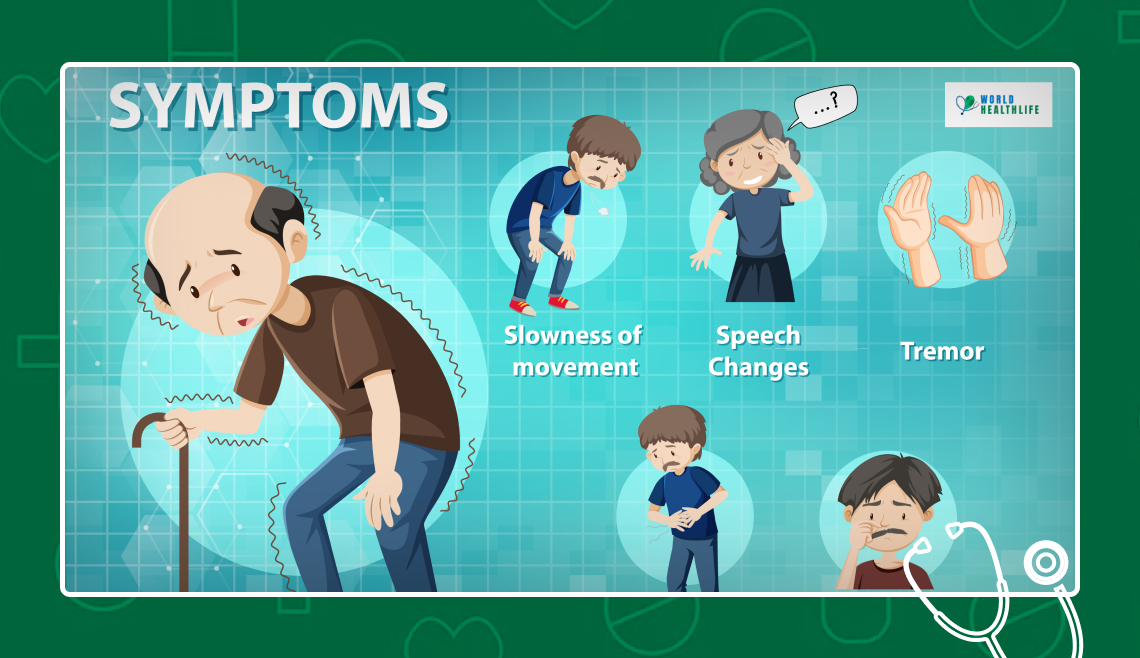
In order to help you track how symptoms evolve over time, doctors rely on a standard clinical tool known as the Hoehn and Yahr scale.
First introduced in 1967 by neurologists Margaret Hoehn and Melvin Yahr, the system divides the progression of Parkinson’s into five distinct stages on the basis of physical movement and daily independence.
While most medical websites tend to treat these stages as some sort of a rigid checklist, real life rarely follows a textbook. Moreover, it is far more helpful to view this scale as a practical planning tool instead of a countdown.
Every person moves through these stages at their own pace. Some people remain in Stage 1 or 2 for decades. On the other hand, some respond pretty well to treatment, and their symptoms stay mild for years.
Quick-Reference Guide: The 5 Stages At A Glance
| Stage | Clinical Focus | Everyday Real-Life Impact | Primary Care Goal |
| Stage 1 | Unilateral symptoms (one side only) | Subtle tremor or stiffness on one side; daily life feels normal | Building an exercise routine and finding a specialist |
| Stage 2 | Bilateral symptoms (both sides), normal balance | Tasks like buttoning shirts or walking take slightly longer | Maintaining strength, posture, and daily independence |
| Stage 3 | Mid-stage; noticeable loss of balance | Slower reflexes and higher fall risk, though still self-sufficient | Fall prevention, home safety, and targeted physical therapy |
| Stage 4 | Severe symptoms; limited mobility | Walking requires a walker; daily self-care needs assistance | Arranging daily caregiver support and adapting the home |
| Stage 5 | Most advanced; full-time mobility support | Wheelchair or bed care required; non-motor symptoms peak | Maximizing comfort, dignity, and round-the-clock care |
Stage 1: Early Stage (Unilateral Symptoms)
In Parkinson’s disease, this initial phase is all about subtle whispers from the body rather than loud alarms, making it easy to overlook at first.
What It Looks Like In Real Life
During stage 1, symptoms tend to be mild, affecting only one side of the body. Doctors call this unilateral involvement. Instead of dramatic shaking, this often looks like a slight tremor in one thumb while doing pretty ordinary things.
For example, you may be watching television and feel a subtle stiffness in one shoulder that feels like a pulled muscle. Or it can be one arm swinging slightly less than the other during a walk.
You might also notice your handwriting becoming noticeably smaller and more cramped, a classic early sign known as micrographia.
Beneath The Surface
Even though physical movement is barely affected, Stage 1 is usually the heaviest stage on an emotional level. Moreover, adjusting to a new diagnosis can trigger anxiety, grief, or hyper-awareness of every minor twitch in your body.
Subtle non-motor signs, such as a fading sense of smell, vivid dreams, or unexplained fatigue, usually tend to accompany this phase.
What To Focus On Right Now
Since daily routines, careers, and hobbies remain fully intact, Stage 1 is known as the golden window for building protective habits.
Moreover, establishment of a regular aerobic exercise routine has been shown to help the brain use dopamine in a more efficient way. Also, connecting with a movement disorder specialist early ensures you have a personalized baseline for the future.
Stage 2: Mild-Stage (Bilateral Symptoms Without Balance Loss)
In Stage 2, symptoms gently expand their reach. However your steady footing remains intact.
What It Looks Like In Real Life
As Parkinson’s transitions into Stage 2, the symptoms tend to appear on both sides of the body. It may also be along the center line, such as the neck and back.
Now, in this stage, a tremor that began in one hand may now appear in the opposite hand. Furthermore, you may notice that your walking speed slows down noticeably and posture may begin to stoop slightly forward.
Everyday fine-motor tasks suddenly require conscious concentration rather than muscle memory. For instance, these tasks may include fastening small buttons, slicing vegetables, or typing.
Beneath The Surface
Physical tasks take more effort. As a result, mental fatigue usually sets in faster by the end of the day.
When it comes to speech, it may grow softer or even lose some of its natural vocal inflection, which can sometimes make a person seem withdrawn or overly serious in social settings even when they feel completely engaged inside.
What To Focus On Right Now
The defining hallmark of Stage 2 is that balance remains completely intact. This indicates that full independent living is still very much the norm.
The smartest strategy during this phase is modifying your environment to save energy. This is switching to adaptive clothing with magnetic closures. In fact, this allows extra buffer time for morning routines and starting speech or physical therapy before bigger hurdles appear.
Stage 3: Mid-Stage Or Transitional (Loss Of Balance And Slowness)
Stage 3 of Parkinson’s disease represents a noticeable shift in daily rhythm. Here, stability becomes the main focus alongside movement.
What It Looks Like In Real Life
This stage marks a critical turning point. This is because it is defined by a noticeable loss of balance and significantly slower movement. This is medically known as bradykinesia.
All the symptoms of Stage 2 remain in this stage too. However, the body’s automatic righting reflexes no longer fire as quickly.
Turning around in a narrow kitchen, stepping off a curb, or being bumped in a crowded hallway can easily throw you off center. This makes falls a real concern.
Beneath The Surface
Experiencing a fall or even the constant fear of falling often causes people in Stage 3 to quietly pull back from social outings or hobbies they love.
Medications may also begin wearing off slightly faster between doses. Consequently, this creates predictable “on” and “off” periods throughout the day, where movement feels fluid one hour but stiff the next.
What To Focus On Right Now
As stated by Paul et al. (2014), despite the increased fall risk, most people in Stage 3 can still dress, eat, and manage personal hygiene independently.
The focus now shifts heavily toward smart home safety, such as removing loose throw rugs and installing sturdy grab bars in the bathroom.
Working with a physical therapist on balance-training techniques such as taking wide, deliberate turns instead of pivoting quickly.
Stage 4: Advanced Stage
By Stage 4, independence shifts from doing everything solo to thriving with reliable daily support.
What It Looks Like In Real Life
As mentioned by Parkinsons.Org (2026), in Parkinson’s, as Stage 4 comes, the symptoms start becoming severe and noticeably limiting. Moreover this makes lying alone completely unsafe.
Muscle rigidity and slowness make routine self-care exhausting or nearly impossible without help. Say, like stepping into a shower, preparing meals, or rising from a low chair.
While a person in Stage 4 can still stand unassisted for brief moments, walking safely almost always requires a rolling walker.
It may also need steady physical support from another person.
Beneath The Surface
As physical independence narrows, emotional strain often impacts both the individual and their family.
Cognitive changes, such as slower processing speed or difficulty multitasking may become more apparent alongside physical fatigue.
What To Focus On Right Now
The priority in Stage 4 is shifting from solo independence to supported independence.
Moving in with family caregivers, hiring in-home care aides, or transitioning to an assisted living community ensures help is always within reach. As a result, this dramatically lowers the risk of serious falls while preserving dignity and comfort.
Stage 5: Most Advanced Stage
The final stage, Stage 5, calls for comprehensive, compassionate care centered entirely around comfort and dignity.
What It Looks Like In Real Life
This stage represents the most advanced phase of Parkinson’s disease, where severe stiffness in the legs and trunk makes standing or walking impossible even with assistance eventually spend most of their time in bed,
Every daily activity requires dedicated, hands-on assistance. Be it eating and bathing or shifting positions for comfort.
Beneath The Surface
Non-motor symptoms often take center stage during this phase. Moreover, certain individuals experience visual hallucinations, delusions, or advanced memory decline.
This is alongside difficulty swallowing or speaking clearly.
What To Focus On Right Now
In Stage 5, care evolves entirely around comfort, safety, and quality of life. Moreover, round-the-clock nursing or specialized caregiver support becomes vital for preventing secondary complications like bedsores or swallowing difficulties.
In terms of palliative care teams, they can help manage complex symptoms while supporting family caregivers every step of the way.
General Associated Symptoms Across Stages
While the Hoehn and Yahr scale puts a focus on physical mobility, Parkinson’s involves two broad categories of symptoms.
These are:
- Movement or motor signs you can see
- Non-movement or non-motor signs that happen beneath the surface
| Feature | Movement (Motor) Symptoms | Non-Movement (Non-Motor) Symptoms |
| Visibility | Easily noticed by the individual, family, and doctors | Invisible from the outside; often mistaken for stress or aging |
| When They Appear | Typically mark the clinical onset of Stage 1 onward | Can appear years before Stage 1 or emerge at any stage |
| Common Examples | Resting tremors, muscle stiffness, slow movement (bradykinesia), balance loss | Loss of smell, constipation, sleep disturbances, anxiety, fatigue |
| Primary Impact | Affects walking, posture, handwriting, and speech volume | Affects energy levels, digestion, mood, sleep, and memory |
What Causes Parkinson’s Disease And Who Is At Risk?
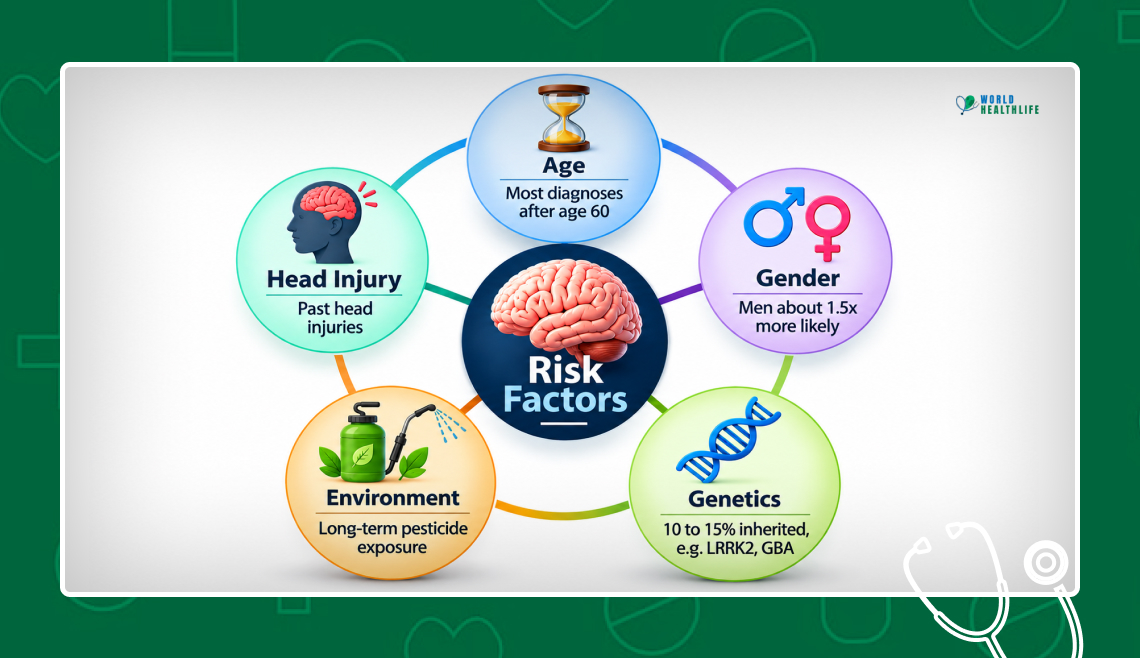
In roughly 85 to 90% of cases, Parkinson’s happens sporadically without a single known trigger. Moreover, they tend to start developing from a mix of aging, genetics, and environmental factors.
Here, age is considered the strongest risk factor, with most diagnoses occurring after age 60. In fact, men are about 1.5 times more likely to develop Parkinson’s disease than women.
Only 10 to 15% of cases involve inherited genetic links. For example, these links can be LRRK2 or GBA gene variations.
On the other hand, long-term exposure to certain pesticides or past head injuries can also modestly raise risk.
How Can You Manage Parkinson’s Disease At Every Stage?
Although there is no cure yet, Parkinson’s is highly manageable when care plans adapt alongside the stages.
Medications And Advanced Therapies
Most treatments work by replenishing or mimicking dopamine.
Levodopa, paired with carbidopa, remains the gold-standard medication for easing stiffness and slowness, alongside dopamine agonists and enzyme inhibitors.
For mid-to-advanced stages where symptoms fluctuate unpredictably, Deep Brain Stimulation (DBS) uses targeted electrical pulses. That is compared to a brain pacemaker, where DBS helps to calm tremors and rigidity.
Physical, Occupational, And Speech Therapy
Targeted rehabilitation helps protect independence at every stage.
Physical therapy improves balance and stride length, whereas occupational therapy simplifies daily tasks like dressing and eating. On the other hand, speech therapy strengthens vocal volume and safe swallowing.
Daily Lifestyle Habits And Support Systems
Regular aerobic exercise like the following is proven to slow physical decline while boosting mood:
- Brisk walking
- Cycling
- Swimming
- Tai chi
Pairing movement with a fiber-rich diet, hydration, and local caregiver support groups helps both patients and families navigate daily life with confidence.
Disclaimer:
The information provided in this article is for general informational purposes only. It does not, and is not intended to, constitute medical or health advice. Please consult a qualified healthcare professional for medical guidance or expert health assistance.
References
- Parkinson’s Foundation. (2026). What is Parkinson’s? Parkinson’s Foundation.
- National Institute of Neurological Disorders and Stroke. (2026). Parkinson’s Disease. National Institute of Neurological Disorders and Stroke.
- Paul, S. S., Allen, N. E., Sherrington, C., Heller, G., Fung, V. S. C., Close, J. C. T., Lord, S. R., & Canning, C. G. (2014). Risk Factors for Frequent Falls in People with Parkinson’s Disease. Journal of Parkinson’s Disease, 4(4), 699–703. ResearchGate.
- Stage 4 Parkinson’s Disease: Symptoms, Care Needs, and What to Expect. (2026, March 20). Parkinsons.Org.