When it comes to proper vaginal health, hygiene is of utmost importance. Moreover, the most important part of that is maintaining its pH.
However, any disruptions to that health, be it an itch or a burning sensation, can give any lady quite a scare!
But here is the thing. Vaginal itching is actually quite a common phenomenon, where it affects approximately 75% of women at some point in their lives.
As a result, it is one of the most common feminine health concerns.
So, if you find yourself anxiously and quite irritatingly wondering, “why is my vagina itchy?” do not worry.
The good news is that most vaginal itching cases resolve within a week of home treatment.
However, persistent symptoms lasting beyond this period may require you to warrant a doctor’s evaluation.
Thus, considering everything, the following guide aims to give you a detailed breakdown.
What Is Vaginal Itching
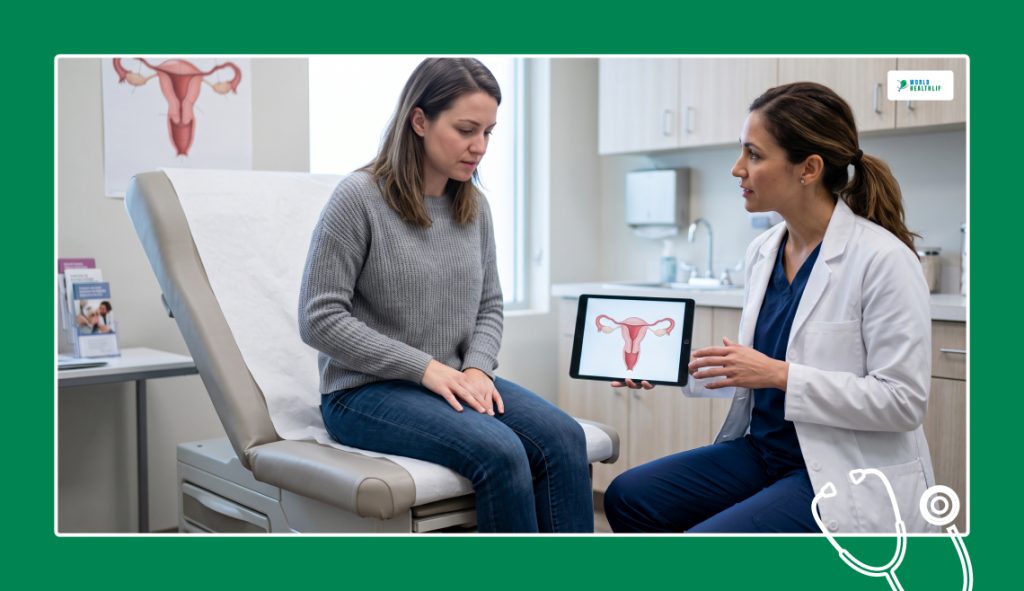
Before we understand the science behind an itchy vagina, first identify the area of irritation.
Identify The Area Of Itching
If the itching occurs in your visible genital area, including your clitoris, vulva, and pubic area, then what you are facing is vulvitis. This is vulvar itching.
Conversely, if the itching is in your vagina, which is the internal muscular canal leading up to the cervix, then it is vaginal itching.
A Breakdown Of Vaginitis
First, let us break down the term. Medically, this is termed vaginitis. The term literally translates to inflammation of the vagina, where vagin is vagina and it is inflammation.
In vaginitis, there is inflammation or irritation of the vagina and the outer genital area, the vulva. This frequently causes vaginal itching, redness, soreness, pain, or abnormal discharge.
The literal breakdown means inflammation. In modern medicine, vaginitis is used as an umbrella term for a variety of conditions that cause irritation, abnormal discharge, itching, or pain in the vaginal area.
It is most commonly triggered by an imbalance in the natural vaginal flora, microbial infections (such as yeast or bacteria), chemical irritants, or hormonal changes.
Vaginal Itching Vs. Vulvar Itching
The primary difference between vulvar and vaginal itching comes down to location and root cause.
The vulva is the outer, visible genital area, which includes the lips and your clitoris. Conversely, the vagina is the internal canal.
Thus, itching in these areas differs.
| Point of Difference | Vulvar Itching | Vaginal Itching |
| Actual Term Used | Pruritus Vulvae / Vulvitis | Vaginitis |
| Location | The external skin and folds (labia majora, labia minora, clitoris, and vaginal opening) | Inside the internal muscular canal leading up to the cervix |
| Common Causes | • Contact dermatitis • Skin conditions such as eczema, psoriasis, lichen planus, etc. • Frictional or environmental factors • Hormonal changes • Infections such as yeast infections | • Yeast infection or candidiasis • Bacterial Vaginosis (BV) • Sexually Transmitted Diseases (STDs) • Hormonal shifts such as fluctuations in estrogen altering the vaginal lining and pH |
| Typical Symptoms | • Visible redness • Swelling • Skin cracks • Raw patches • Burning • Soreness | • Internal itching or irritation • Changes in vaginal discharge (color, consistency, or smell) • Sometimes discomfort or pain during urination or sex |
Common Causes Behind An Itchy Vagina
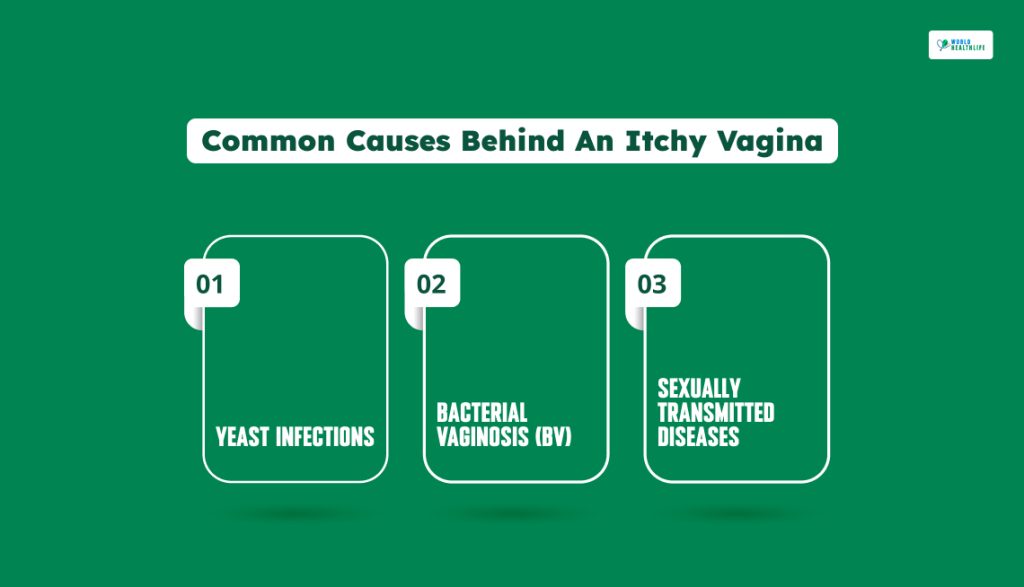
An itchy vagina may be common and highly treatable. However, you still need to understand the wide range of factors that actually contribute to yours.
Understanding the distinct mechanisms and secondary symptoms behind each cause helps pinpoint the root issue.
Yeast Infections
A vaginal yeast infection occurs when there is an overgrowth of Candida, a fungus that naturally lives in the vaginal ecosystem in small numbers.
The vagina is typically kept in check by beneficial bacteria known as Lactobacilli.
However, when this balance is disrupted, the yeast tends to thrive and trigger inflammation.
The key accompanying symptoms include having an intense itching and burning in the vulva and vagina. Moreover, it can cause thick, odorless white discharge that resembles cottage cheese.
Apart from these, there is also redness, swelling, and superficial micro-cracks in the skin.
Bacterial Vaginosis (BV)
Bacterial vaginosis (BV) is considered the most common vaginal infection for women of reproductive age.
Though linked to sexual activity, the condition is not an STI.
BV arises when the natural vaginal flora shifts, which causes a significant drop in protective lactobacilli and a massive overgrowth of anaerobic bacteria.
This alters the vaginal pH, which shifts it from healthy acidity to alkalinity. Consequently, this creates localized irritation.
Along with mild to moderate itching, if you have BV, note these key symptoms:
- General vaginal irritation
- A distinct and strong fishy odor becoming more noticeable after unprotected intercourse or during menstruation
- Thin, watery, grayish-white or off-white discharge
Sexually Transmitted Diseases
Several sexually transmitted infections directly target the delicate mucosal linings of the reproductive tract, manifesting as severe itchiness or discomfort.
Pathogens such as parasites, bacteria, or viruses, introduced through unprotected sexual contact, invade the vaginal and vulvar tissues.
As a result, this provokes an aggressive immune response and tissue inflammation.
Trichomoniasis
This condition is caused by the single-celled parasite Trichomonas vaginalis, which features a frothy greenish-yellow or grey-green vaginal discharge.
This is accompanied by an unpleasant odor, severe vaginal itching, burning, soreness and pain during urination or sex.
Moreover, it can also create a “strawberry cervix” appearance visible during a medical exam.
Chlamydia And Gonorrhea
Chlamydia and gonorrhea are two of the most prevalent bacterial sexually transmitted infections (STIs) globally.
According to the World Health Organization (WHO), chlamydia holds the top spot as the most frequent STI worldwide.
On the other hand, gonorrhoea, often colloquially termed “the clap”, ranks as the second most common.’
A major challenge with both conditions is that they frequently show no symptoms, meaning individuals can carry and spread them without realization.
Over 50% of women with gonorrhea do not experience symptoms, whereas more than 90% of men show clear signs.
Gonorrhea is especially prominent among sexually active young adults between the ages of 15 and 24.
When physical signs do emerge, they can overlap significantly:
| STI | Associated Symptoms |
| Chlamydia | • Itching (primarily anal, but can affect the vaginal region) • Painful burning sensation during urination • Stomach or pelvic pain • Atypical vaginal discharge (unusual color or odour) • Bleeding following intercourse |
| Gonorrhea | • Vaginal or rectal itching • Painful urination • Unusual discharge from the vagina or rectum • Discomfort/pain during intercourse • Post-sex spotting • Fever • Abdominal and joint pain • Throat soreness • Irritated, itchy eyes |
Genital Herpes
Genital herpes is a highly common viral infection that is caused by the herpes simplex virus (HSV) and frequently triggers intense localized itching.
For many individuals, a localized itch, tingle, or burning sensation in the genital, anal, or thigh regions is the very first sign (prodrome) that a herpes outbreak is about to occur.
The virus settles in the nerve pathways near the infection site.
During a flare-up, it travels down the nerves to the skin surface, causing a distinct persistent itch or tingling sensation.
Apart from this, the itching usually intensifies as small fluid-filled blisters. Eventually, they rupture and leave shallow, painful sores that crust over and heal.
Genital Warts
Genital warts also cause itching.
Typically caused by a virus called Human Papillomavirus (HPV), it is contracted during sexual contact.
According to common belief, it affects 1% of adults in the world under the age of 50. However, only 10% of those with HPV develop genital warts.
Symptoms apart from itchiness include the following:
- redness and swelling in the vaginal area
- groupings of warts on your private parts, including the anus
- Bleeding or discomfort due to warts
The disease can be diagnosed with a visual examination, where doctors usually send at least one wart for lab testing.
Contact Dermatitis And Chemical Irritants
Unlike STIs, contact dermatitis is a non-infectious skin reaction that occurs when the delicate genital tissue comes into direct contact with an irritating substance or allergen.
Compared to other sexual infections, it is not caused by bacteria or viruses. Moreover, it cannot be transmitted to anyone else.
It is one of the most frequent non-sexually transmitted culprits behind sudden, intense vaginal itching.
The vulva and vagina are highly sensitive and easily irritated by everyday household personal care items.
Using heavily scented soaps, harsh laundry detergents, and scented sanitary pads or tampons can cause an allergic reaction.
Irritant Contact Dermatitis
This happens when a harsh substance directly damages the skin’s protective outer barrier.
It is the most common form and can cause an immediate reaction after just one exposure, or develop gradually over weeks of repeated use.
Allergic Contact Dermatitis
This is an immune system reaction that occurs when the skin becomes sensitized to a specific ingredient.
The intense itching and rash usually show up 24 to 48 hours after contact.
Menopause And Hormonal Drops
Hormonal transitions alter the physical layout and baseline health of the vaginal tissue.
Estrogen is responsible for keeping vaginal walls elastic, lubricated, and thick.
But during menopause or breastfeeding/ovarian damage, estrogen levels plummet. As a result, this leads to a condition known as Atrophic Vaginitis or Genitourinary Syndrome of Menopause (GSM).
Here, the vaginal lining thins, loses its natural moisture, and becomes highly fragile. The key accompanying symptoms include:
- Persistent, uncomfortable vaginal dryness.
- A constant prickling or itching sensation due to thin, easily irritated tissue.
- Pain or bleeding during or after sexual intercourse.
Skin Conditions
Systemic dermatological issues that affect the rest of your body can also manifest locally on the vulva.
Moreover, here is the mechanism. Immune-mediated skin diseases can trigger chronic inflammation, abnormal skin cell turnover, or localized scarring right outside the vaginal opening.
Common conditions such as lichen sclerosus, eczema and psoriasis cause itching.
Physical Friction And Moisture
External mechanical stress and everyday environment play a massive role in vulvovaginal comfort.
The combination of prolonged friction and trapped sweat creates an ideal breeding ground for microscopic skin tears, heat rashes, and secondary bacterial or fungal growth.
Certain common triggers include:
- Wearing tight-fitting, synthetic clothing (like nylon underwear, yoga pants, or tight jeans) that doesn’t allow the area to “breathe”
- Sitting in wet bathing suits or sweaty workout gear for extended periods
- Physical friction from athletic activities like cycling or horseback riding
- Irritation or razor bumps from close-shaving, waxing, or pubic hair removal
General Relief Tips
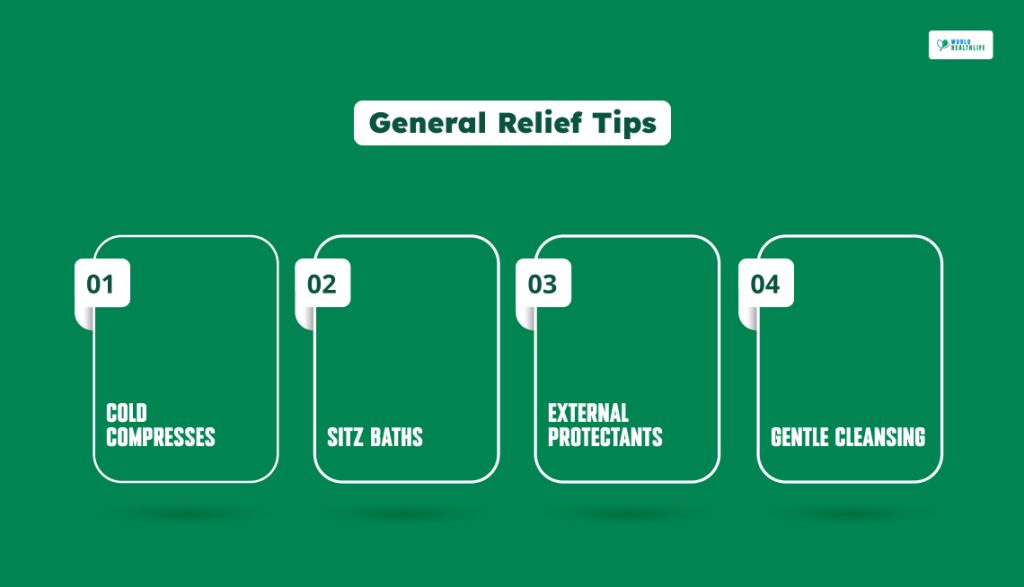
Relief tips for vaginitis focus on soothing external irritation, avoiding triggers, and addressing the underlying cause with proper medical care.
It can take time for the symptoms to go away completely. However, with the right treatment, you can still address your symptoms.
Cold Compresses
Place a cool, damp washcloth or an ice pack wrapped securely in a soft towel against the vulva for 10 to 15 minutes.
Consequently, this safely numbs localized itching and reduces tissue swelling.
Sitz Baths
Soak the pelvic area in a clean, warm (never hot) sitz bath for 10 to 20 minutes.
Stirring in a small amount of colloidal oatmeal or baking soda can significantly calm irritated, raw skin.
External Protectants
Spread a thin layer of plain petroleum jelly or pure coconut oil strictly on the eternal skin of the vulva.
This will help you create a defensive barrier against friction and chafing. However, these products must never be inserted inside the vagina.
Gentle Cleansing
Wash the vulva daily using only plain warm water or a mild, entirely fragrance-free cleanser.
Always pat the area completely dry with a fresh towel rather than rubbing, which can further aggravate delicate tissues.
Habits And Hygiene To Avoid Worsening Symptoms
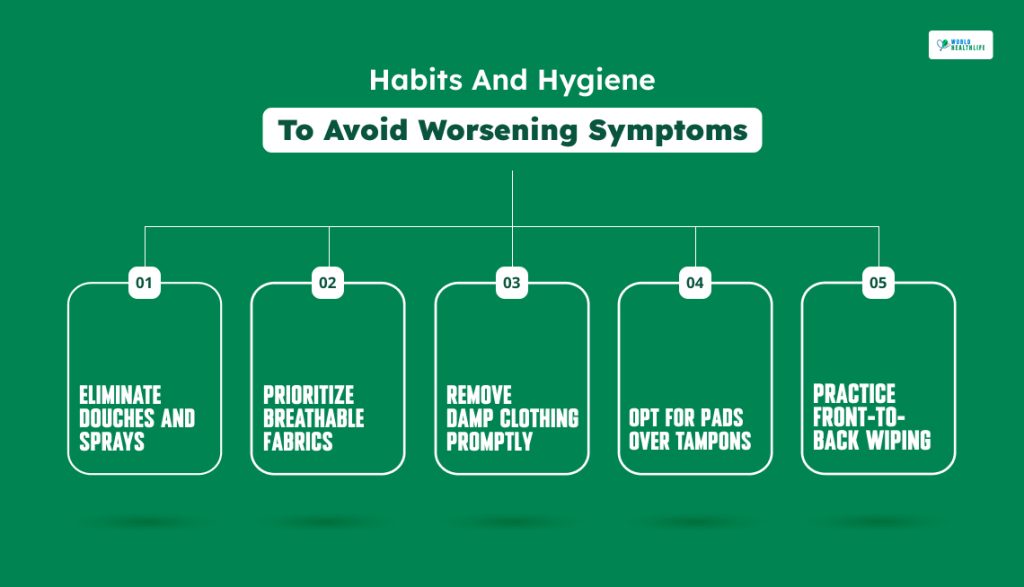
Adopting proper daily habits and personal hygiene practices is very important to prevent exacerbating vaginal itching and protecting the skin’s natural barrier.
Making simple adjustments to your routine can significantly cut down on friction, heat, and moisture.
As a result, this allows irritated tissues to heal more effectively.
Eliminate Douches And Sprays
Avoid all internal douches, feminine hygiene sprays, scented powders, and perfumed soaps. These products strip away the vagina’s healthy, protective bacteria and worsen localized inflammation.
Prioritize Breathable Fabrics
Wear loose-fitting clothing and 100% cotton underwear (or underwear with a cotton crotch lining) to maximize airflow. Avoid tight synthetic pants, nylon underwear, and pantyhose, which trap heat.
Remove Damp Clothing Promptly
Switch out of wet swimsuits or sweaty workout gear immediately after use. Consider sleeping without underwear at night to allow the genital area to breathe naturally.
Opt For Pads Over Tampons
Switch to unscented sanitary pads rather than tampons when experiencing active symptoms or an infection.
Avoid inserting anything into the vagina. This includes unprescribed suppositories, unless explicitly directed by a healthcare professional.
Practice Front-To-Back Wiping
Always wipe from front to back after using the restroom.
This structural habit keeps intestinal bacteria entirely away from the vulvar and vaginal areas, reducing the risk of secondary irritation.
Don’t Ignore These Red Flags: When To Consult A Doctor
Though vaginitis is a common and highly treatable condition, there are several red flags. Here, the advice of a healthcare professional is highly recommended.
- Fever and chills
- Severe lower abdominal pain or pelvic pain
- Foul-smelling or purulent discharge
- Abnormal vaginal bleeding that is not a part of normal menses
- Genital sores, blisters or lumps
- Severe dysuria (painful urination) or severe retention
- Lack of response to standard treatment
Prompt medical evaluation is essential if you experience severe pelvic pain, high fever, or unexpected bleeding alongside vaginal irritation.
In conclusion, consult a healthcare provider or visit an urgent care/gynecological clinic for a proper diagnostic workup.
This may include pH testing, a wet mount, or STI screening.
Disclaimer: The information provided in this article is for general informational purposes only. It does not, and is not intended to, constitute medical or health advice. Please consult a qualified healthcare professional for medical guidance or expert health assistance.
References
- Centers For Disease Control And Prevention. (2026). About Chlamydia. Centers For Disease Control And Prevention.
- Cleveland Clinic. (2026). Vaginitis. Cleveland Clinic.
- World Health Organization: WHO & World Health Organization: WHO. (2025). Chlamydia. WHO.
- Prof, A. O. D. (2023). STIs that cause itching down there. Intimate Rose.
- Berry, J. (2025, February 27). What causes vaginal itching? Medical News Today.
- Kliman, L. (2025). Common causes for vulval and vaginal burning & itchiness. Dr. Len Kliman.
- Kumari, P. (2025). Vaginal itching: From common causes to quick relief. @Medanta.
- Sudhakar, S., MD. (2026). How to stop vaginal burning (Vaginitis): Remedies and treatments. GoodRx.
- BDMS Wellness Clinic. (2020). 6 warning signs that you may have vaginal problems. BDMS Wellness Clinic.